Summary information and primary citation
- PDB-id
-
9ffb;
DSSR-derived features in text and
JSON formats; DNAproDB
- Class
- DNA binding protein
- Method
- cryo-EM (3.59 Å)
- Summary
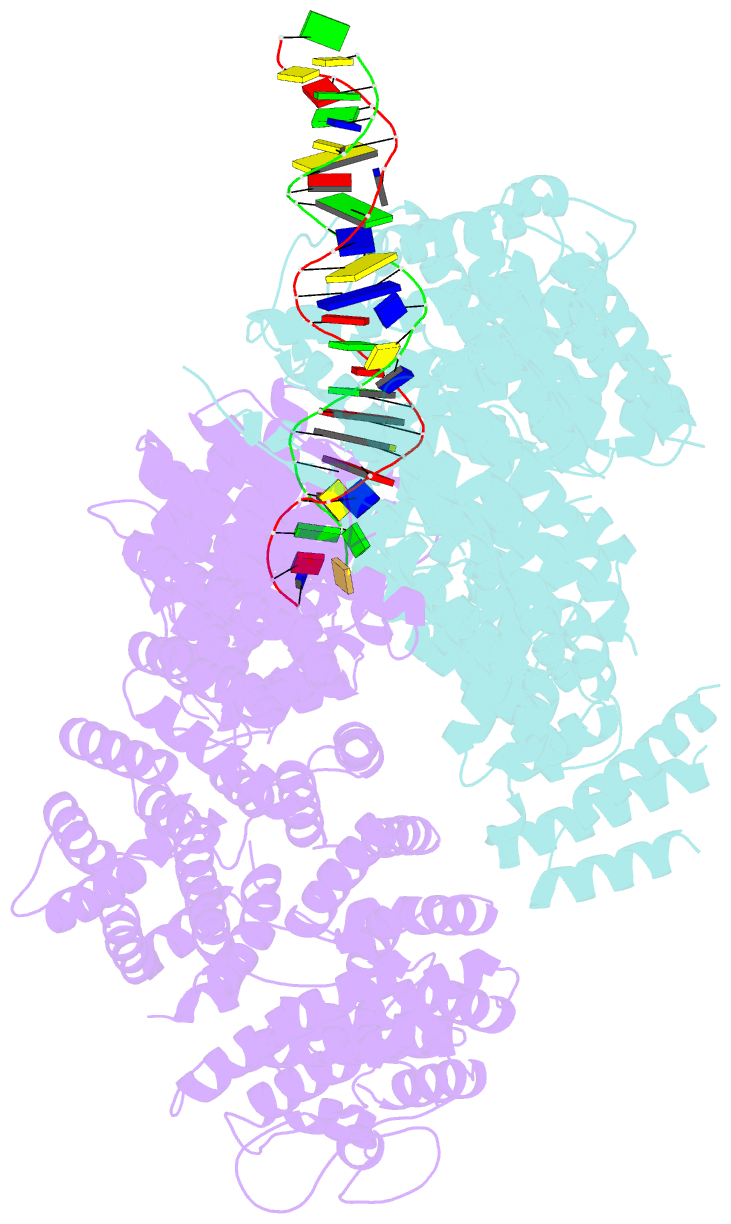
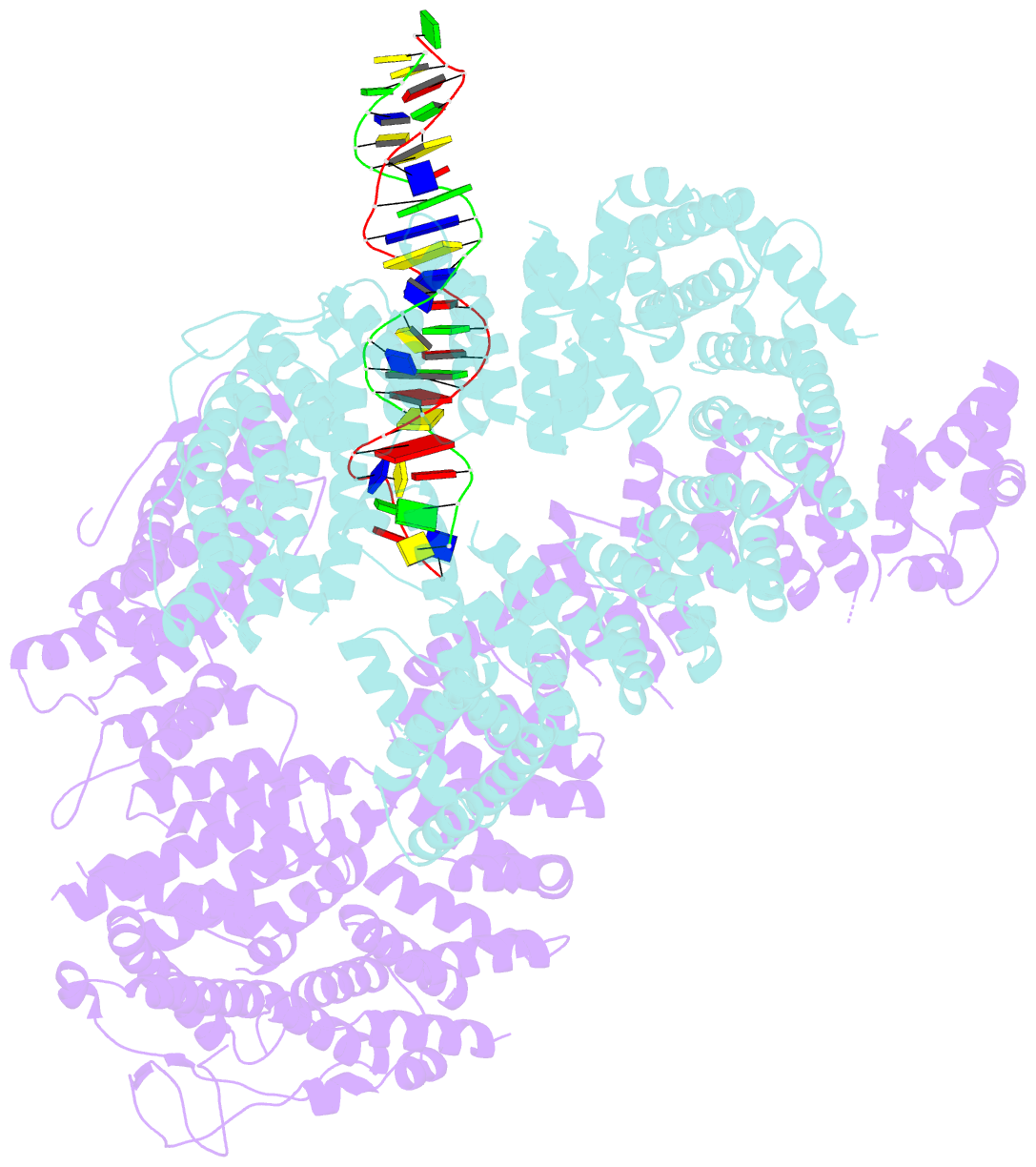
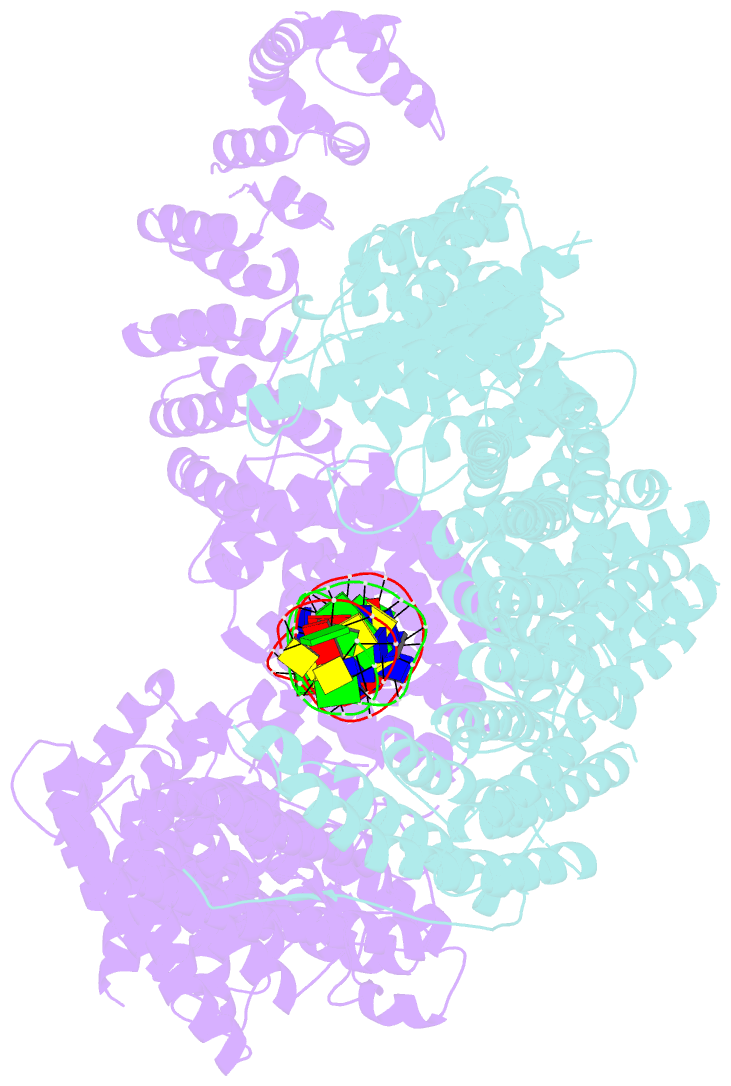
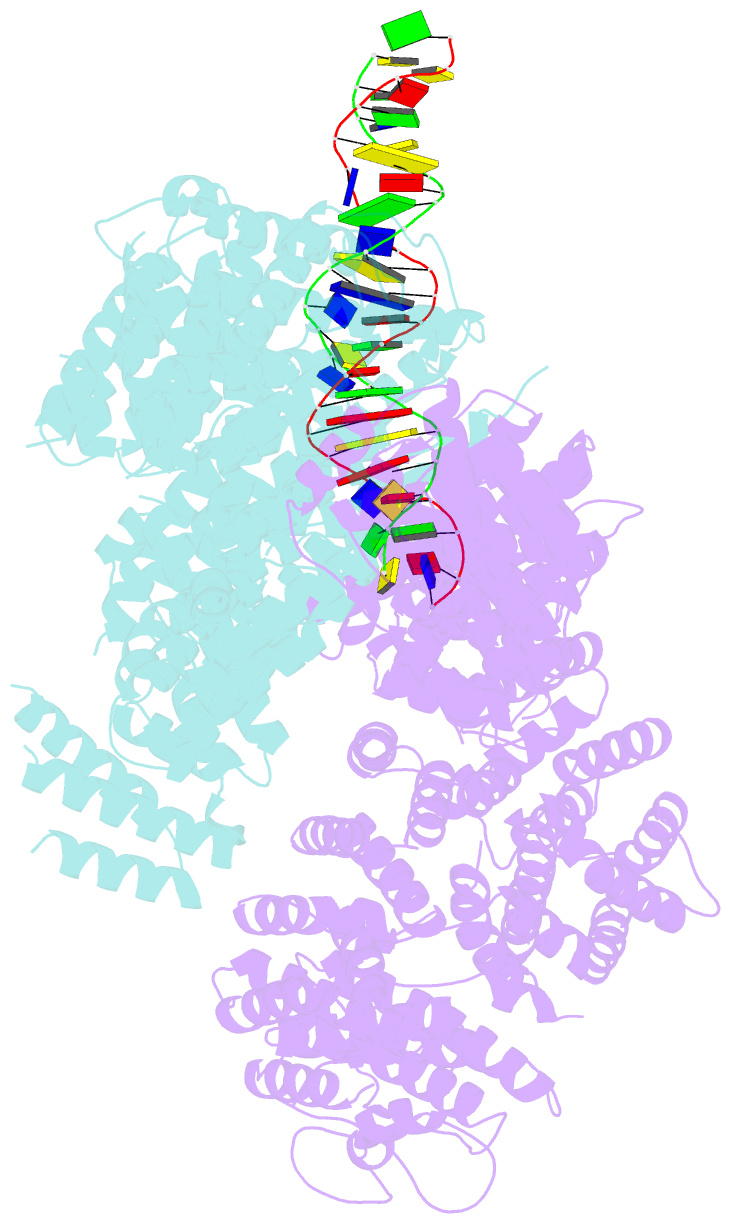
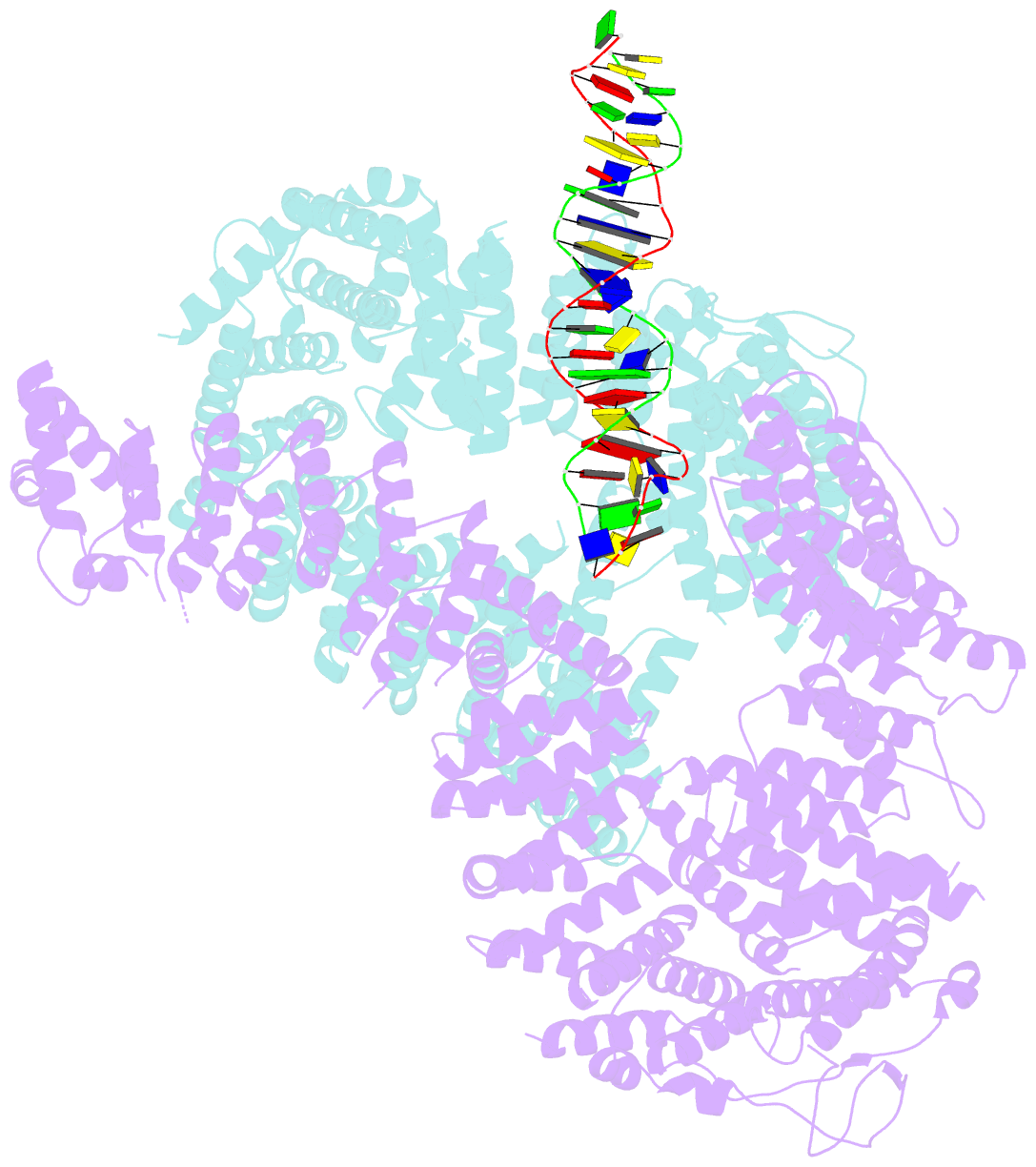
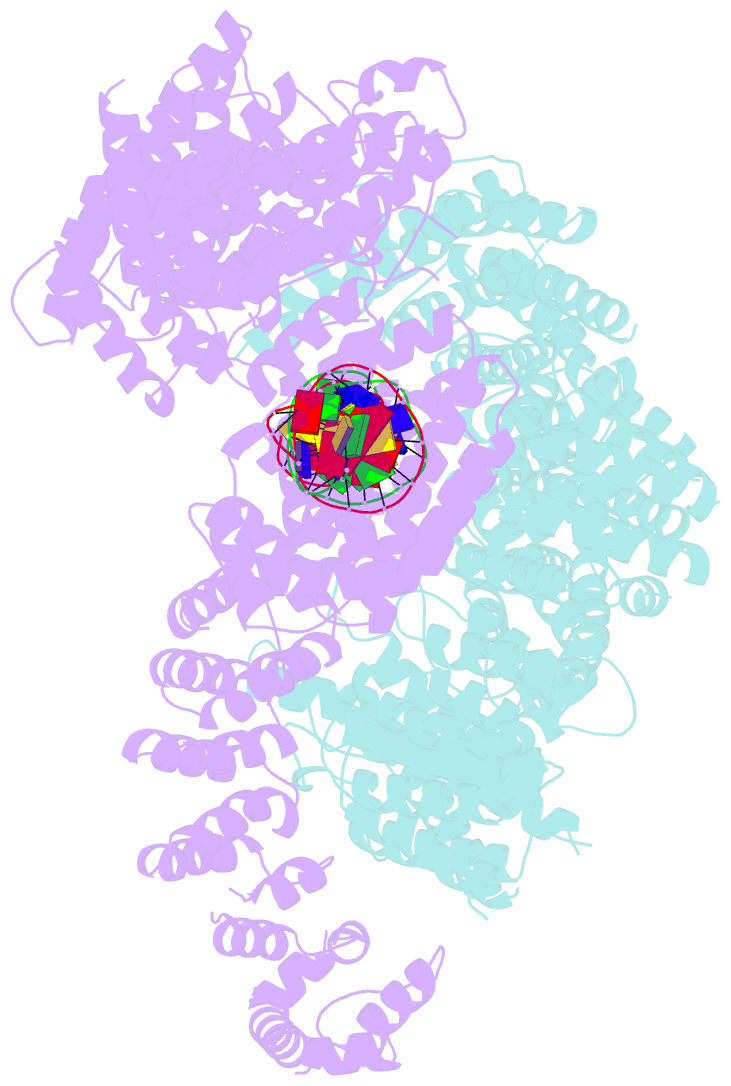
- Ss-dsDNA-fancd2-fanci complex
- Reference
-
Alcon P, Kaczmarczyk AP, Ray KK, Liolios T, Guilbaud G,
Sijacki T, Shen Y, McLaughlin SH, Sale JE, Knipscheer P,
Rueda DS, Passmore LA (2024): "FANCD2-FANCI
surveys DNA and recognizes double- to single-stranded
junctions." Nature, 632,
1165-1173. doi: 10.1038/s41586-024-07770-w.
- Abstract
- DNA crosslinks block DNA replication and are repaired
by the Fanconi anaemia pathway. The FANCD2-FANCI (D2-I)
protein complex is central to this process as it initiates
repair by coordinating DNA incisions around the
lesion<sub>1</sub>. However, D2-I is also known
to have a more general role in DNA repair and in protecting
stalled replication forks from unscheduled
degradation<sub>2-4</sub>. At present, it is
unclear how DNA crosslinks are recognized and how D2-I
functions in replication fork protection. Here, using
single-molecule imaging, we show that D2-I is a sliding
clamp that binds to and diffuses on double-stranded DNA.
Notably, sliding D2-I stalls on encountering
single-stranded-double-stranded (ss-ds) DNA junctions,
structures that are generated when replication forks stall
at DNA lesions<sub>5</sub>. Using cryogenic
electron microscopy, we determined structures of D2-I on
DNA that show that stalled D2-I makes specific interactions
with the ss-dsDNA junction that are distinct from those
made by sliding D2-I. Thus, D2-I surveys dsDNA and, when it
reaches an ssDNA gap, it specifically clamps onto ss-dsDNA
junctions. Because ss-dsDNA junctions are found at stalled
replication forks, D2-I can identify sites of DNA damage.
Therefore, our data provide a unified molecular mechanism
that reconciles the roles of D2-I in the recognition and
protection of stalled replication forks in several DNA
repair pathways.