Summary information and primary citation
- PDB-id
-
8vr8;
DSSR-derived features in text and
JSON formats; DNAproDB
- Class
- ribosome
- Method
- cryo-EM (3.25 Å)
- Summary
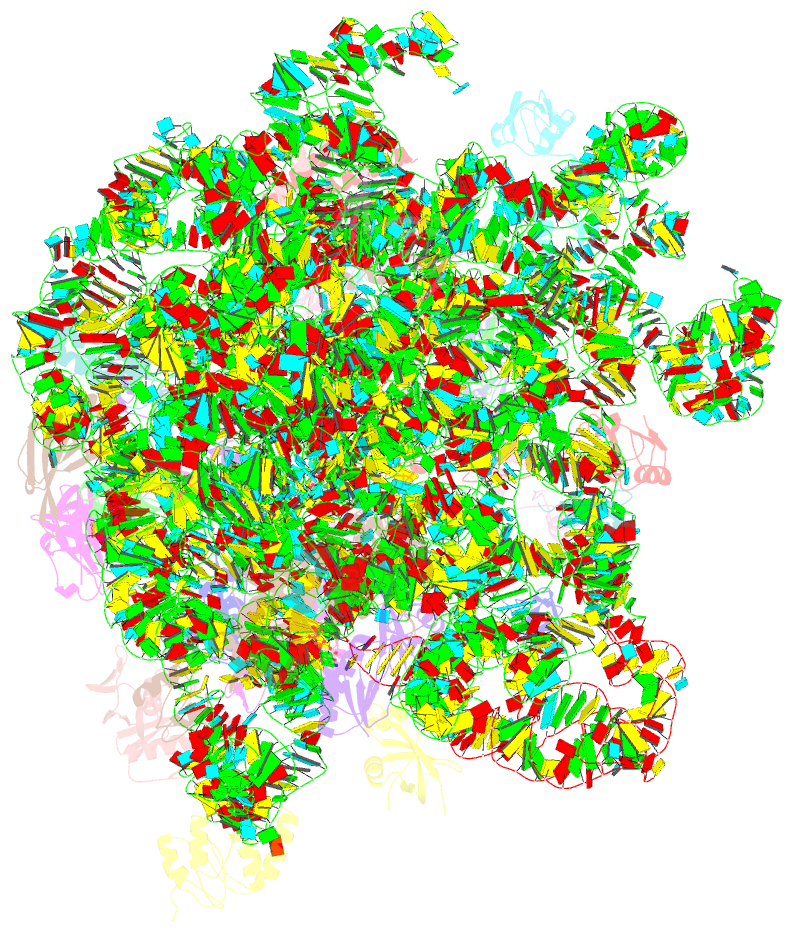
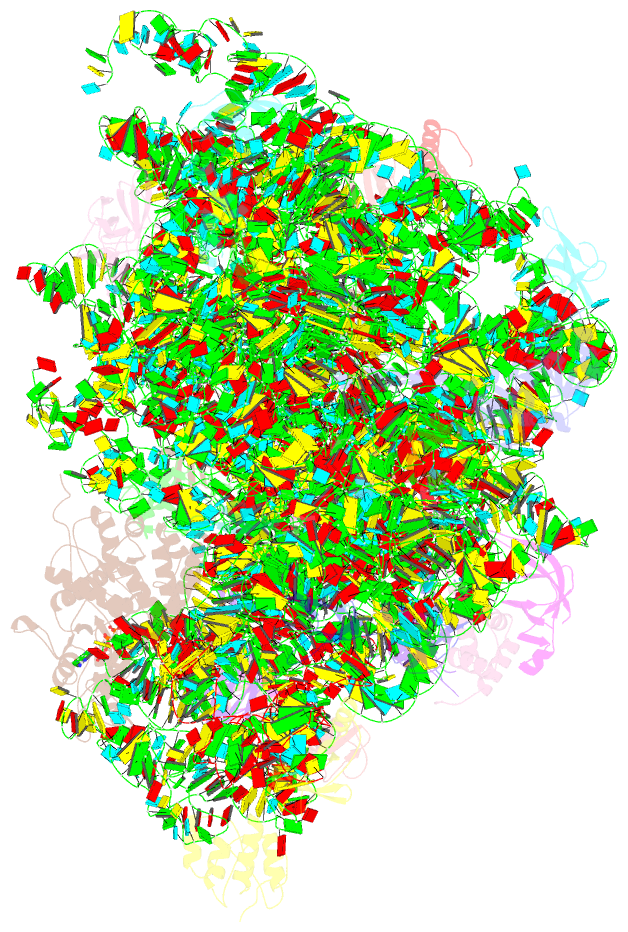
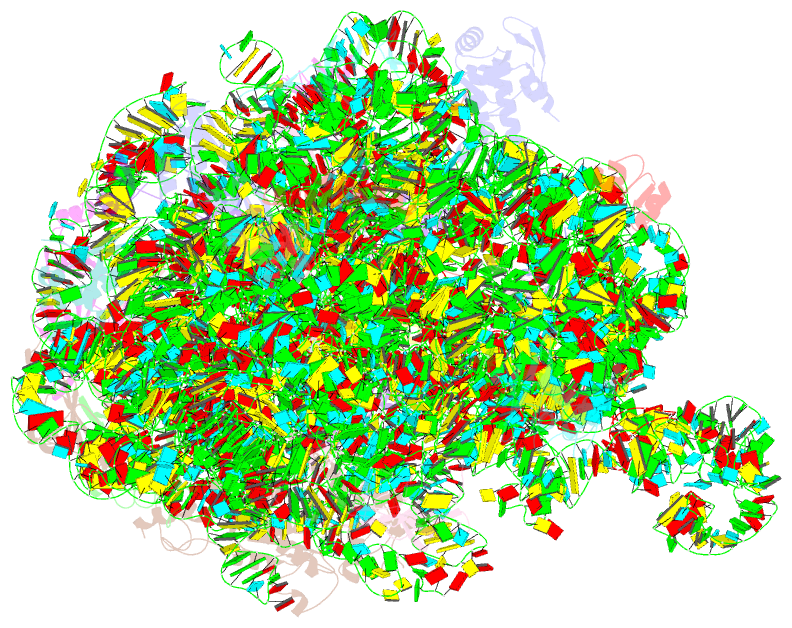
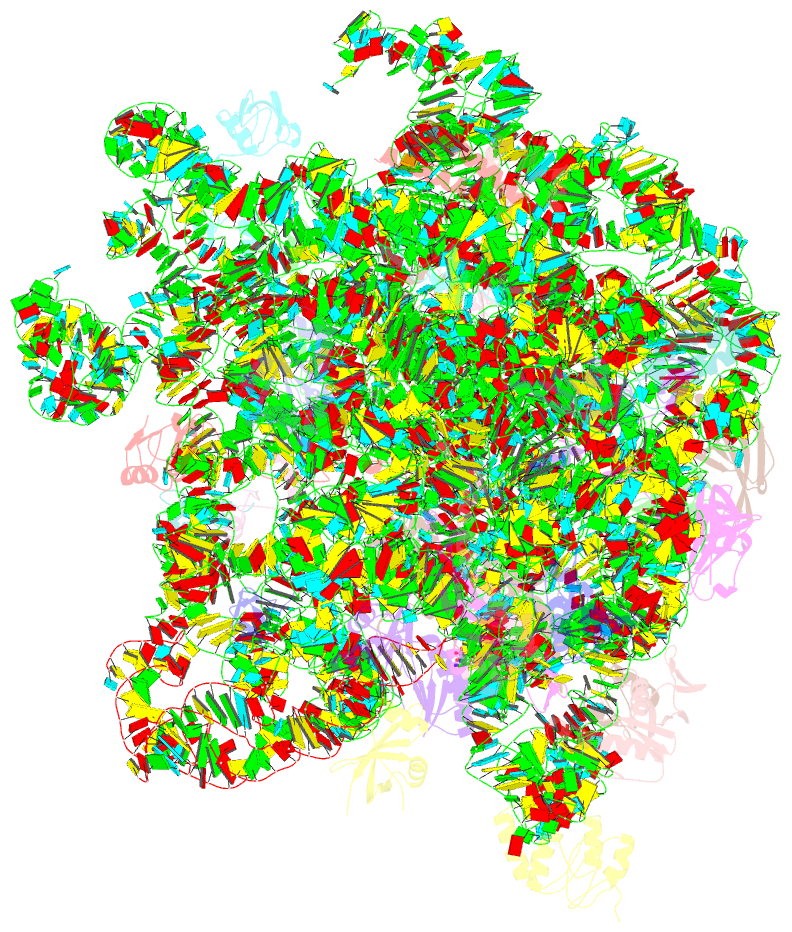
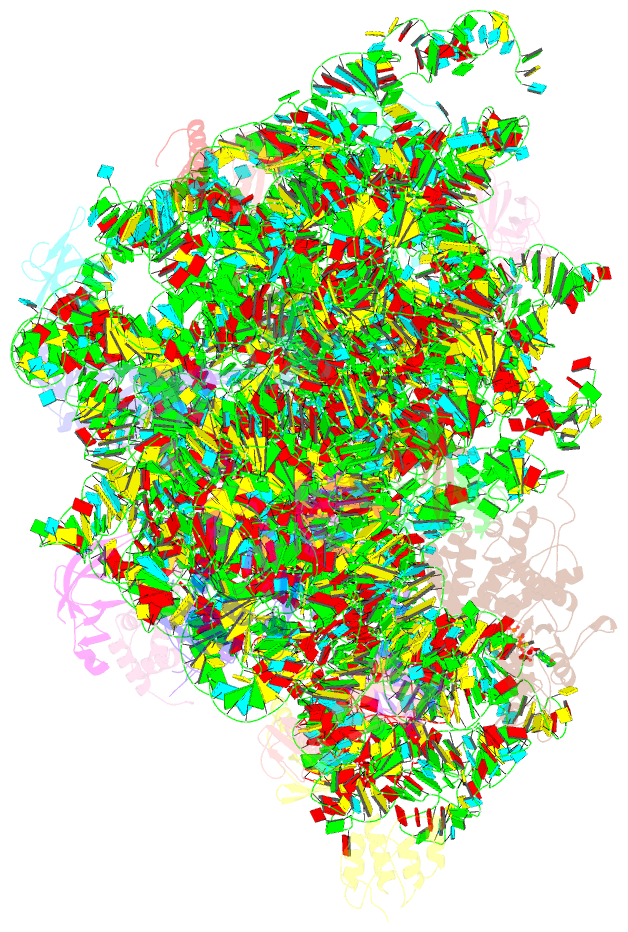
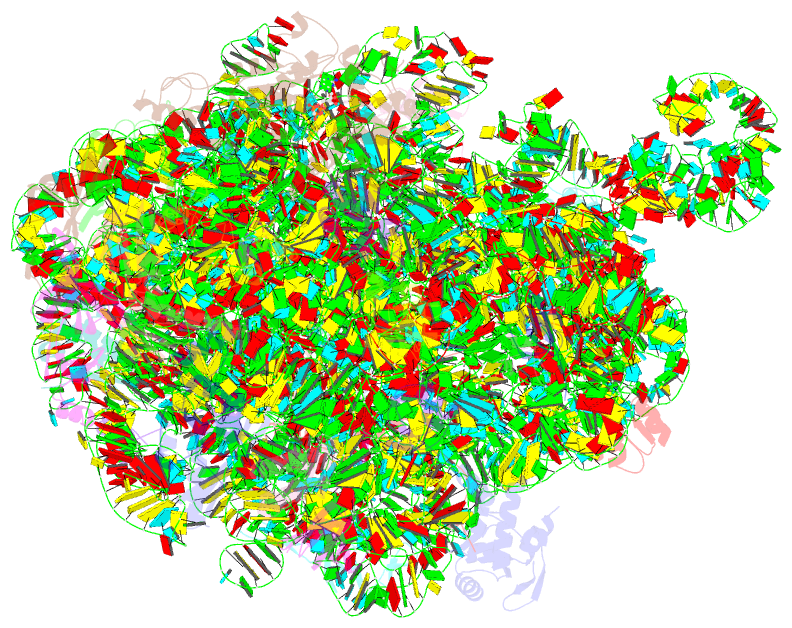
- Structure of mycobacterium smegmatis 50s ribosomal
subunit bound to hflx and
chloramphenicol:50s-hflx-b-clm
- Reference
-
Majumdar S, Kashyap A, Koripella RK, Sharma MR,
Hurst-Hess K, Manjari SR, Banavali NK, Ghosh P, Agrawal
RK (2025): "HflX-mediated
drug resistance through ribosome splitting and rRNA
disordering in mycobacteria."
Proc.Natl.Acad.Sci.USA, 122,
e2419826122. doi: 10.1073/pnas.2419826122.
- Abstract
- HflX is a highly conserved ribosome-associated GTPase
implicated in rescuing stalled ribosomes and mediating
antibiotic resistance in several bacteria, including
macrolide-lincosamide antibiotic resistance in
mycobacteria. Mycobacterial HflXs carry a distinct
N-terminal extension (NTE) and a small insertion, as
compared to their eubacterial homologs. Here, we present
several high-resolution cryo-EM structures of mycobacterial
HflX in complex with the 70S ribosome and its 50S subunit,
with and without antibiotics. These structures reveal a
distinct mechanism for HflX-mediated ribosome splitting and
antibiotic resistance in mycobacteria. Our findings
indicate that the NTE of mycobacterial HflX induces
persistent disordering of multiple 23S rRNA helices,
facilitating the dissociation of the 70S ribosome and
generating an inactive pool of 50S subunits. During this
process, HflX undergoes a large conformational change that
stabilizes its NTE. Mycobacterial HflX also acts as an
anti-association factor by binding to predissociated 50S
subunits. Our structures show that a mycobacteria-specific
insertion in HflX reaches far into the peptidyl transferase
center (PTC), such that it would overlap with the
ribosome-bound macrolide antibiotics. However, in the
presence of antibiotics, this insertion retracts, adjusts
around, and interacts with the antibiotic molecules. These
results suggest that mycobacterial HflX is agnostic to
antibiotic presence in the PTC. It mediates antibiotic
resistance by splitting antibiotic-stalled 70S ribosomes
and inactivating the resulting 50S subunits.