Summary information and primary citation
- PDB-id
-
8ukr;
DSSR-derived features in text and
JSON formats; DNAproDB
- Class
- transcription-DNA-RNA
- Method
- X-ray (3.78 Å)
- Summary
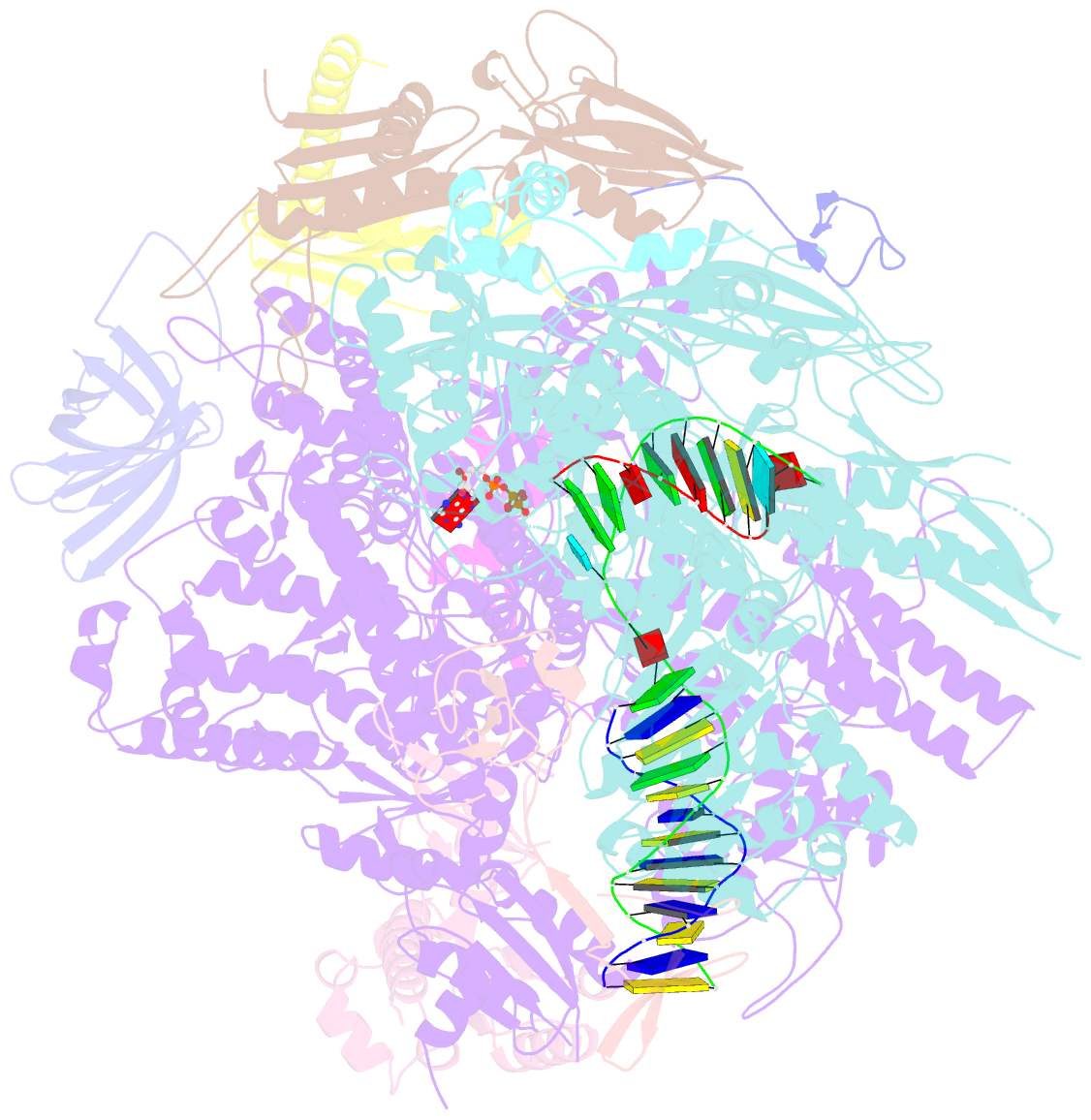
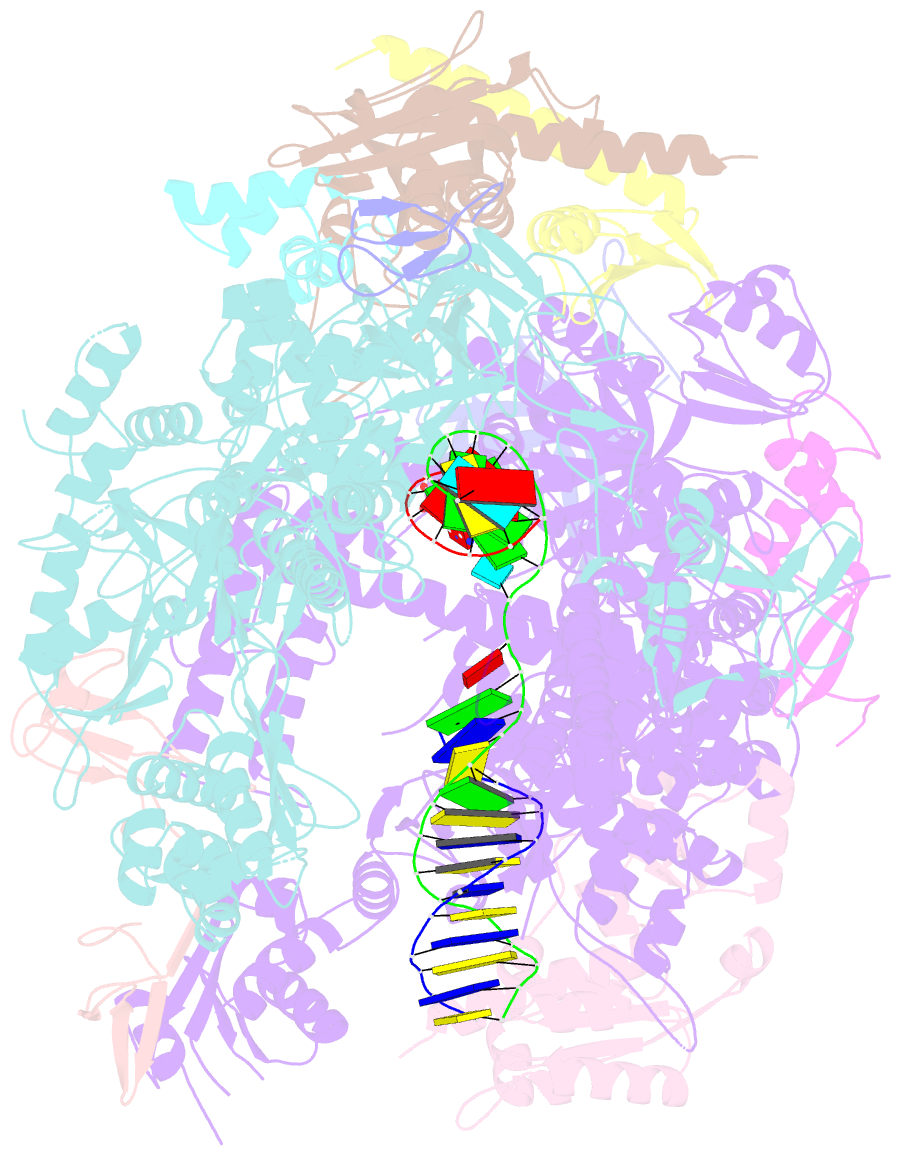
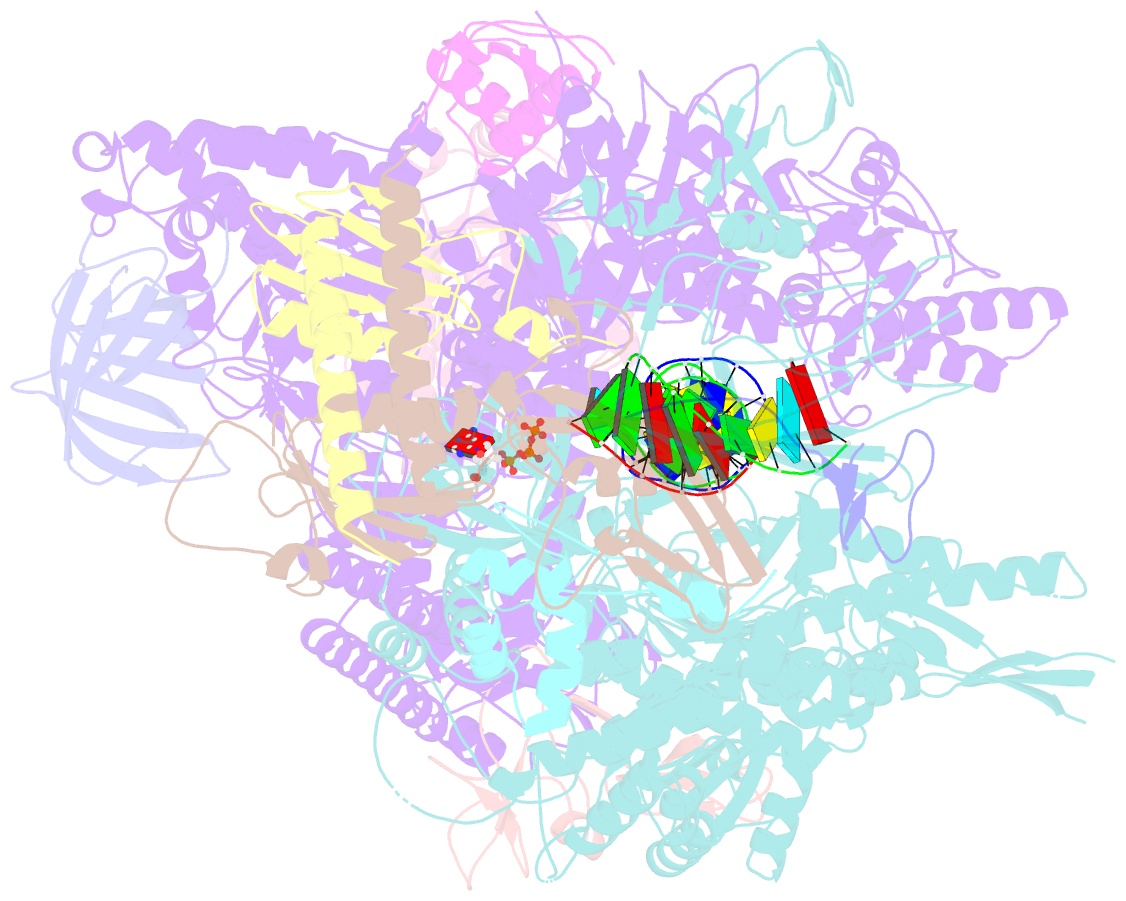
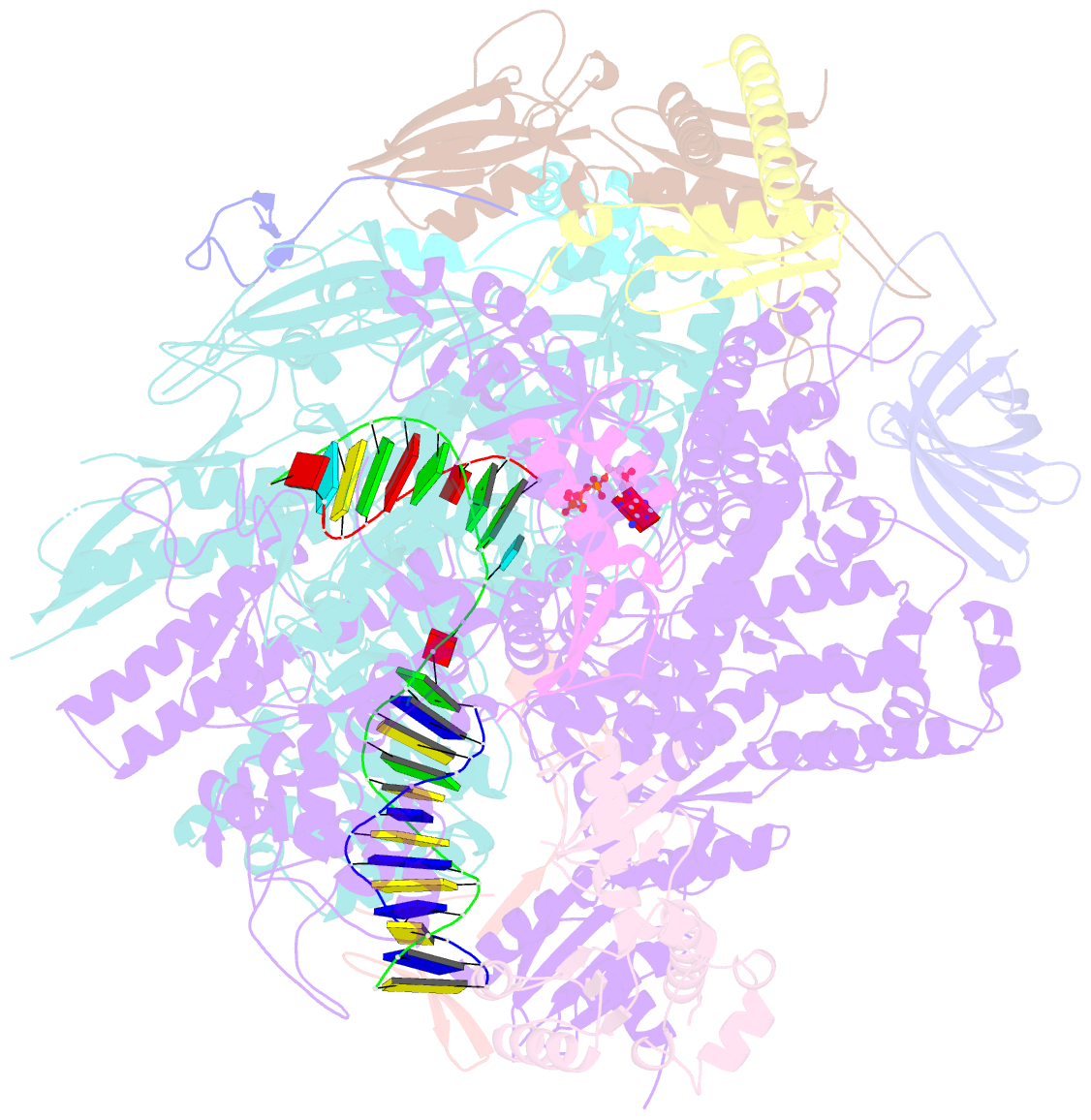
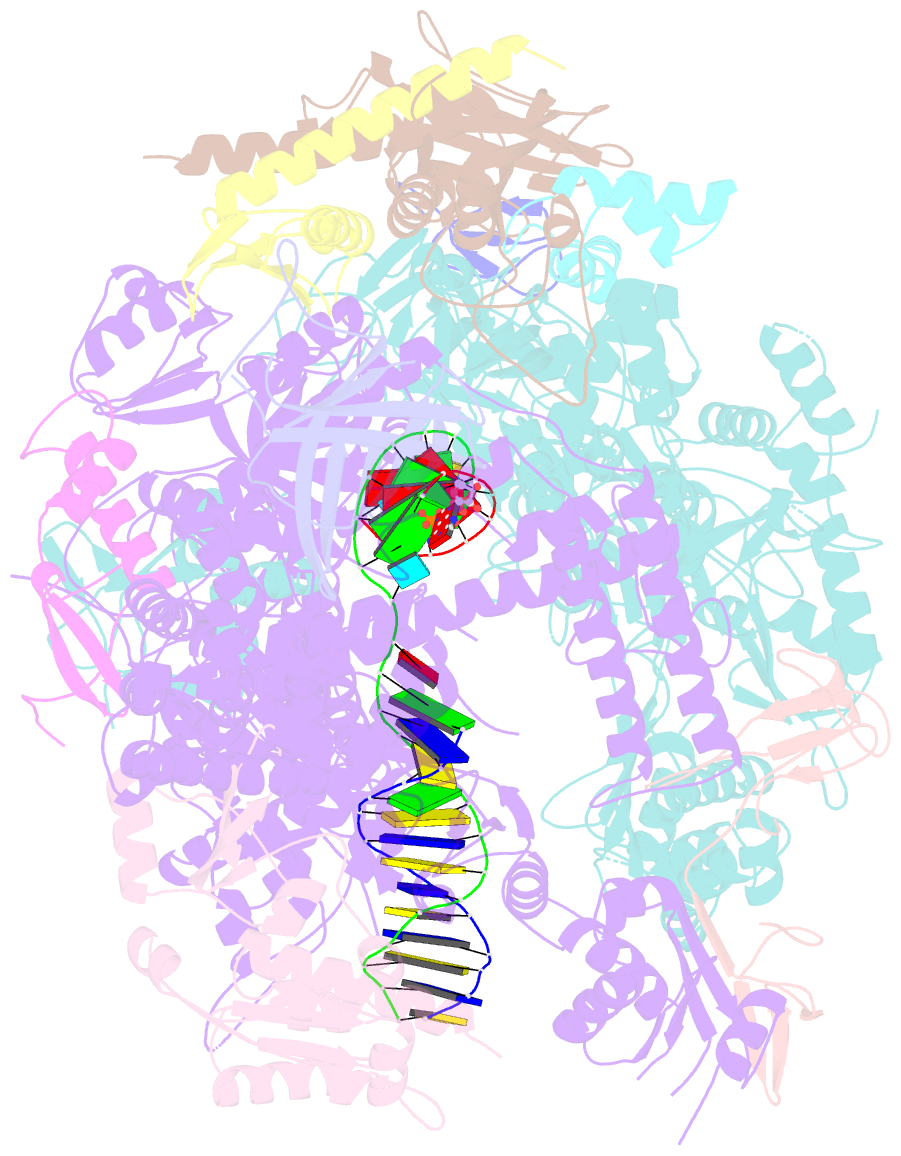
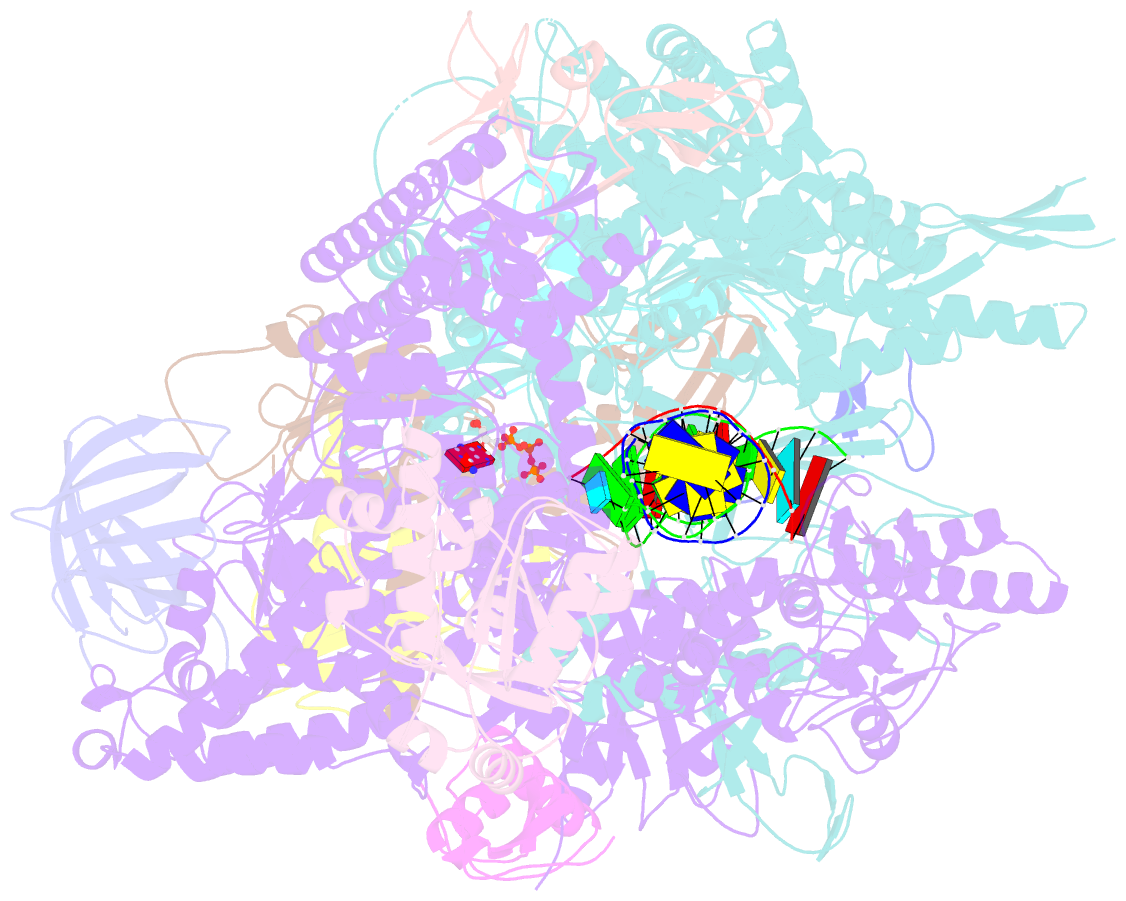
- RNA polymerase ii elongation complex with fapy-dg
lesion soaking with atp before chemistry
- Reference
-
Gao S, Hou P, Oh J, Wang D, Greenberg MM (2024):
"Molecular
Mechanism of RNA Polymerase II Transcriptional
Mutagenesis by the Epimerizable DNA Lesion, Fapy·dG."
J.Am.Chem.Soc., 146, 6274-6282.
doi: 10.1021/jacs.3c14476.
- Abstract
- Oxidative DNA lesions cause significant detrimental
effects on a living species. Two major DNA lesions
resulting from dG oxidation,
8-oxo-7,8-dihydro-2'-deoxyguanosine (8-OxodGuo) and
formamidopyrimidine (Fapy·dG), are produced from a common
chemical intermediate. Fapy·dG is formed in comparable
yields under oxygen-deficient conditions. Replicative
bypass of Fapy·dG in human cells is more mutagenic than
that of 8-OxodGuo. Despite the biological importance of
transcriptional mutagenesis, there are no reports of the
effects of Fapy·dG on RNA polymerase II (Pol II) activity.
Here we perform comprehensive kinetic studies to
investigate the impact of Fapy·dG on three key
transcriptional fidelity checkpoint steps by Pol II:
insertion, extension, and proofreading steps. The ratios of
error-free versus error-prone incorporation opposite
Fapy·dG are significantly reduced in comparison with
undamaged dG. Similarly, Fapy·dG:A mispair is extended with
comparable efficiency as that of the error-free, Fapy·dG:C
base pair. The α- and β-configurational isomers of Fapy·dG
have distinct effects on Pol II insertion and extension.
Pol II can preferentially cleave error-prone products by
proofreading. To further understand the structural basis of
transcription processing of Fapy·dG, five different
structures were solved, including Fapy·dG template-loading
state (apo), error-free cytidine triphosphate (CTP) binding
state (prechemistry), error-prone ATP binding state
(prechemistry), error-free Fapy·dG:C product state
(postchemistry), and error-prone Fapy·dG:A product state
(postchemistry), revealing distinctive nucleotide binding
and product states. Taken together, our study provides a
comprehensive mechanistic framework for better
understanding how Fapy·dG lesions impact transcription and
subsequent pathological consequences.