Summary information and primary citation
- PDB-id
-
8tci;
DSSR-derived features in text and
JSON formats; DNAproDB
- Class
- transferase
- Method
- X-ray (3.19 Å)
- Summary
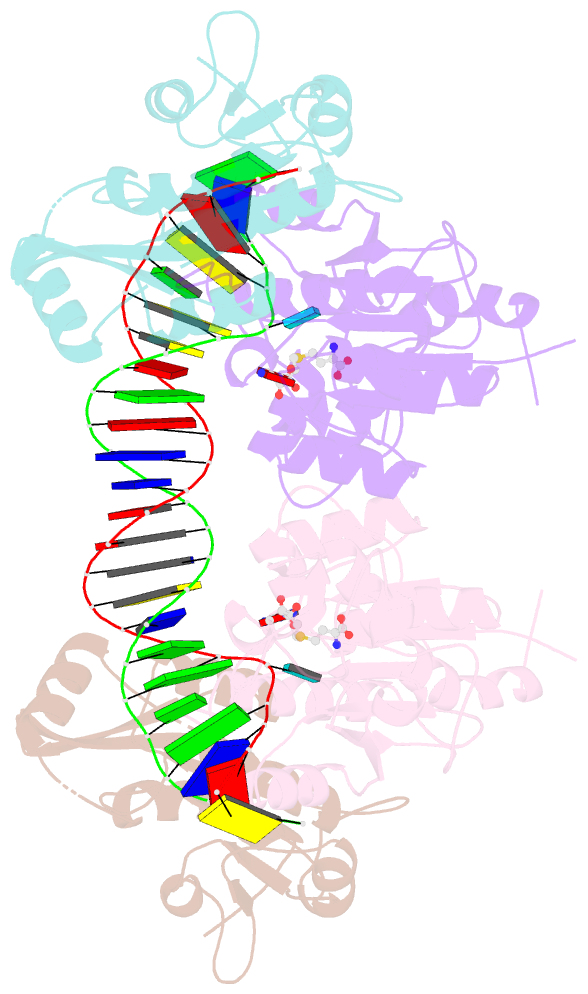
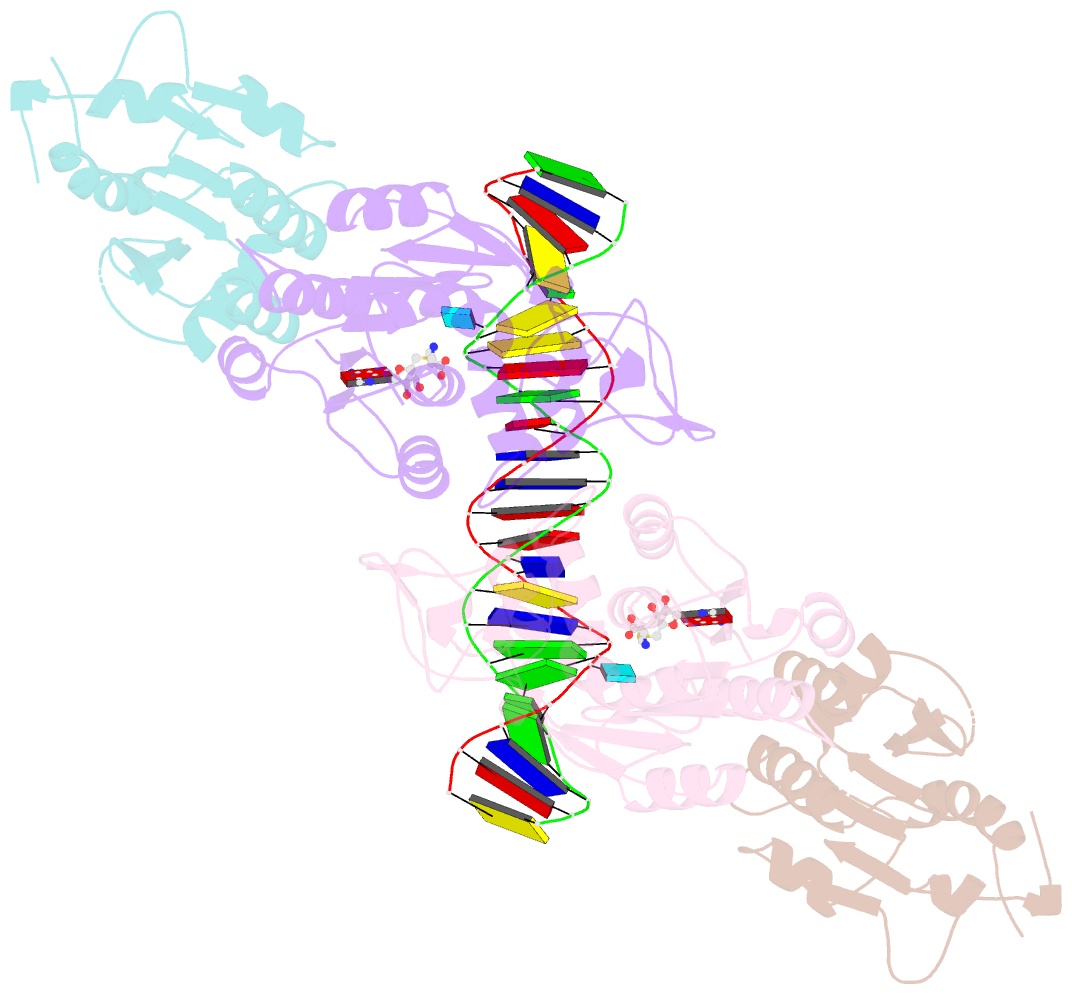
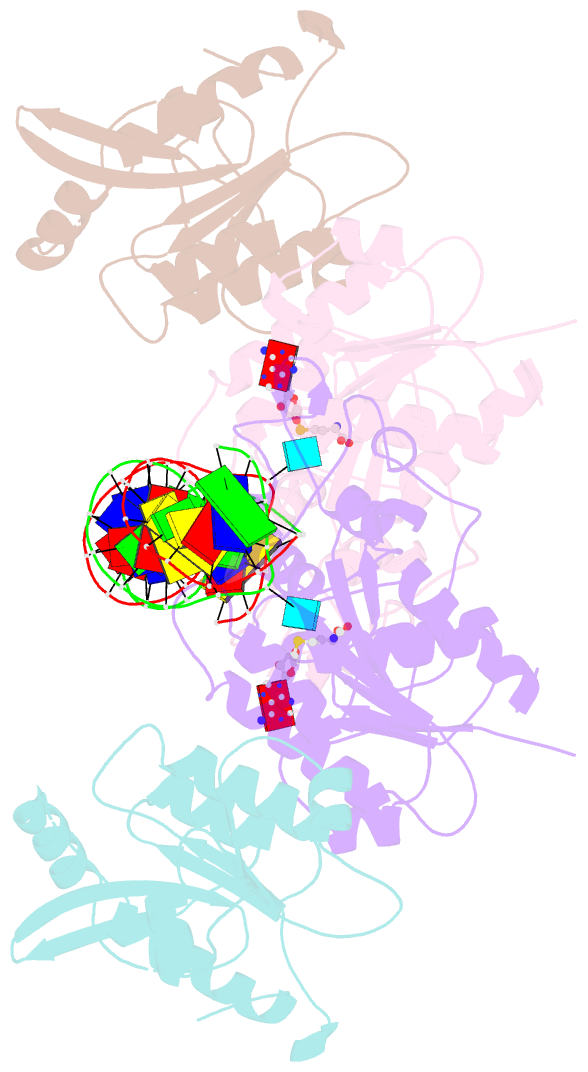
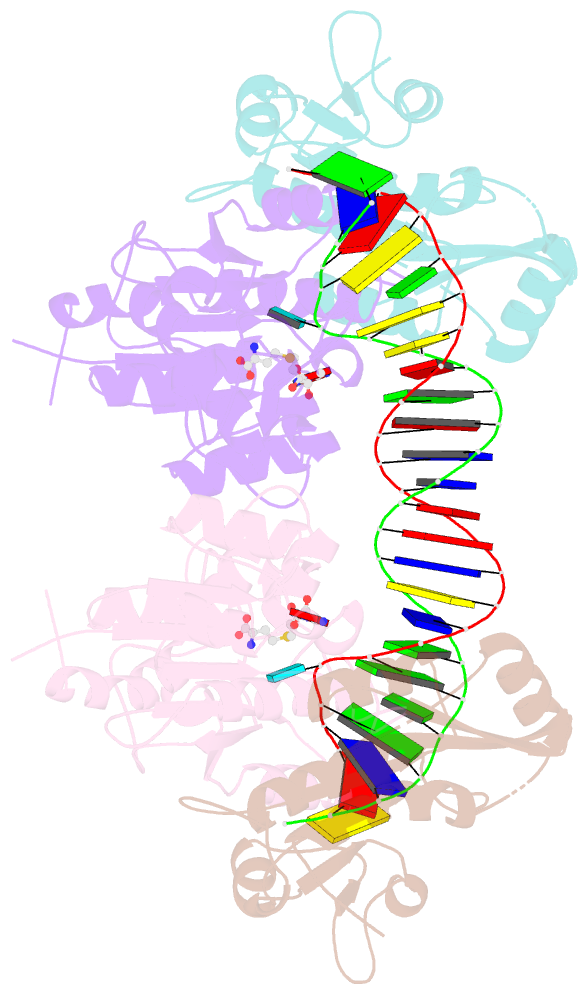
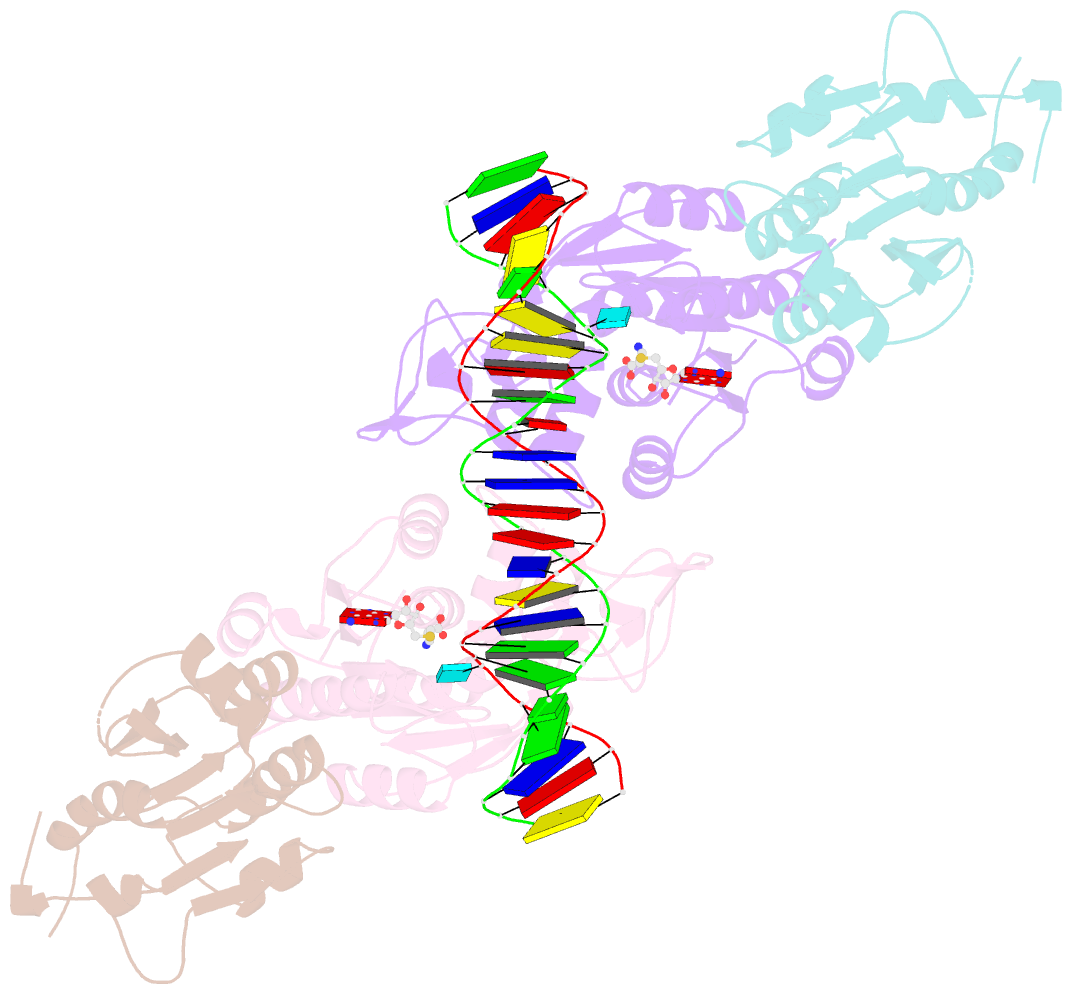
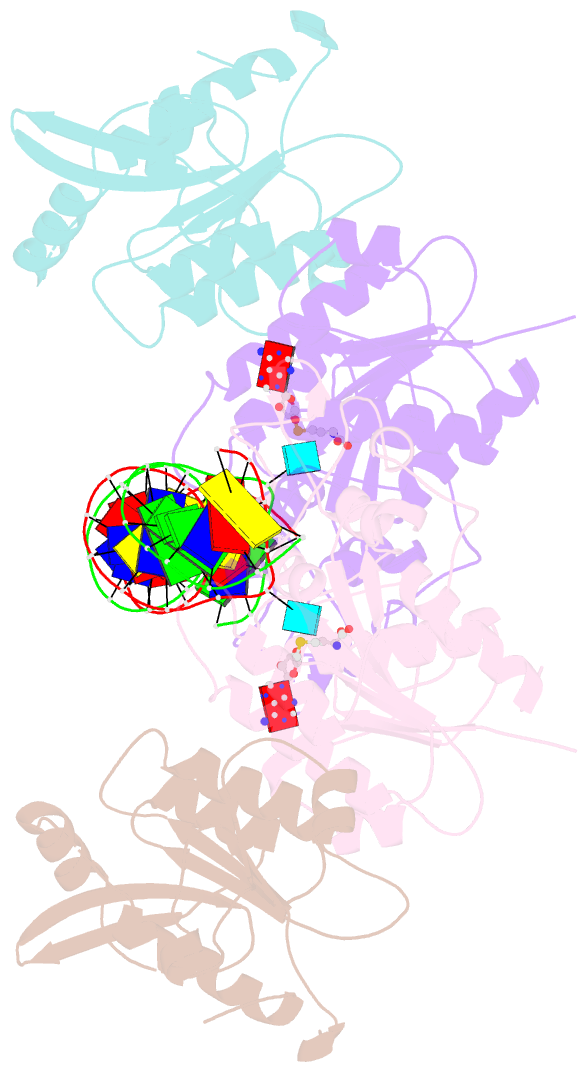
- Crystal structure of dnmt3c-dnmt3l in complex with cgg
DNA
- Reference
-
Khudaverdyan N, Lu J, Chen X, Herle G, Song J (2024):
"The
structure of DNA methyltransferase DNMT3C reveals an
activity-tuning mechanism for DNA methylation."
J.Biol.Chem., 300, 107633. doi:
10.1016/j.jbc.2024.107633.
- Abstract
- DNA methylation is one of the major epigenetic
mechanisms crucial for gene regulation and genome
stability. De novo DNA methyltransferase DNMT3C is required
for silencing evolutionarily young transposons during mice
spermatogenesis. Mutation of DNMT3C led to a sterility
phenotype that cannot be rescued by its homologues DNMT3A
and DNMT3B. However, the structural basis of
DNMT3C-mediated DNA methylation remains unknown. Here, we
report the structure and mechanism of DNMT3C-mediated DNA
methylation. The DNMT3C methyltransferase domain recognizes
CpG-containing DNA in a manner similar to that of DNMT3A
and DNMT3B, in line with their high sequence similarity.
However, two evolutionary covariation sites, C543 and E590,
diversify the substrate interaction among DNMT3C, DNMT3A
and DNMT3B, resulting in distinct DNA methylation activity
and specificity between DNMT3C, DNMT3A and DNMT3B in vitro.
In addition, our combined structural and biochemical
analysis reveals that the disease-causing rahu mutation of
DNMT3C compromises its oligomerization and DNA-binding
activities, providing an explanation for the loss of DNA
methylation activity caused by this mutation. This study
provides a mechanistic insight into DNMT3C-mediated DNA
methylation that complements DNMT3A- and DNMT3B-mediated
DNA methylation in mice, unravelling a regulatory mechanism
by which evolutionary conservation and diversification
fine-tunes the activity of de novo DNA
methyltransferases.