Summary information and primary citation
- PDB-id
-
8que;
DSSR-derived features in text and
JSON formats; DNAproDB
- Class
- RNA binding protein
- Method
- cryo-EM (3.3 Å)
- Summary
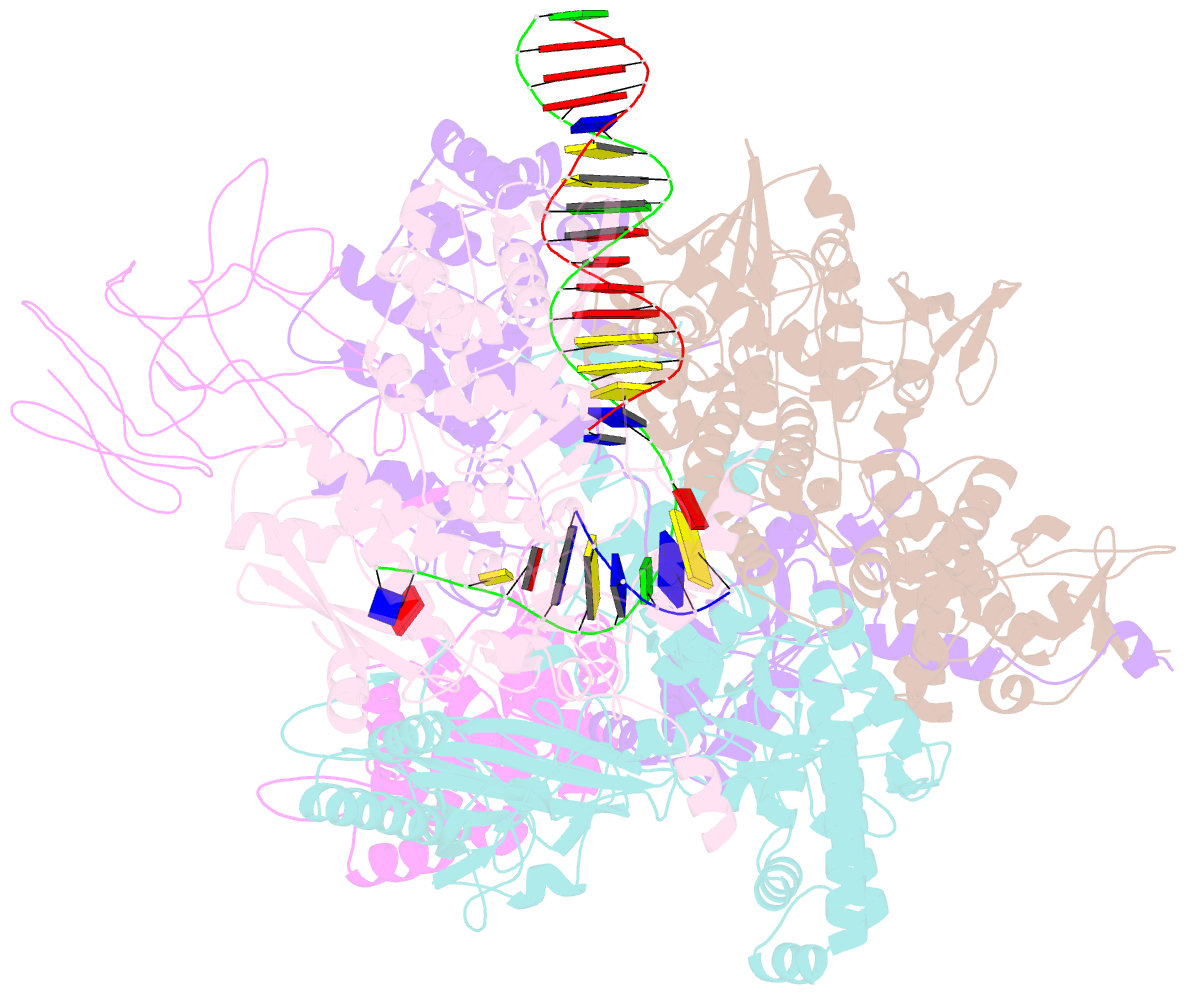
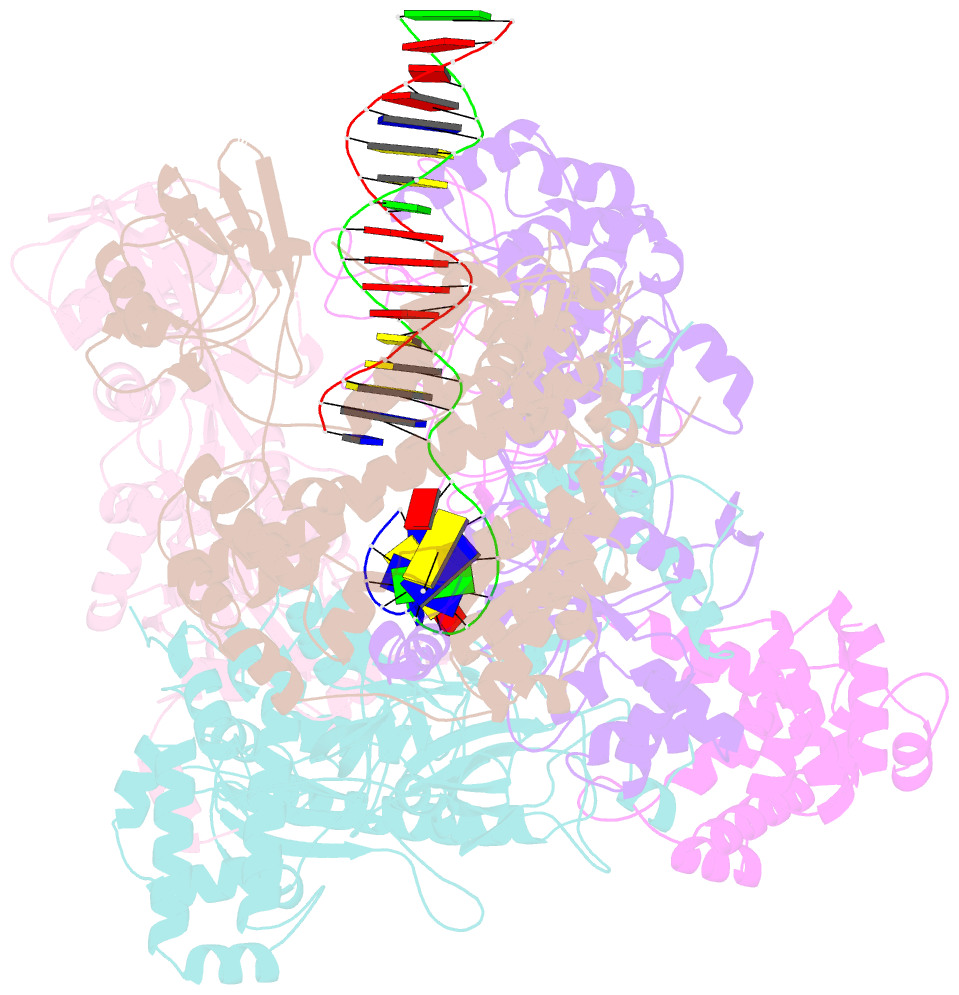
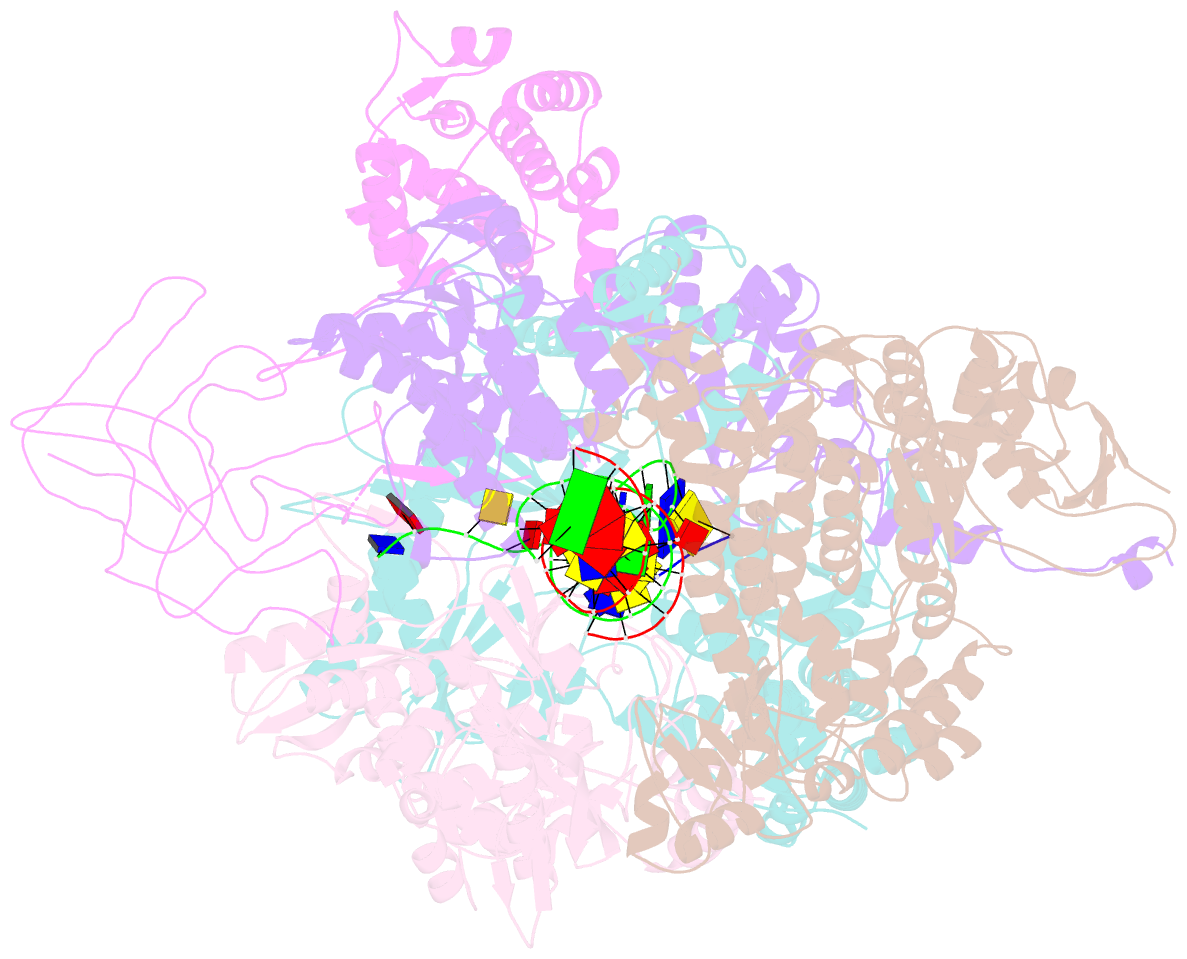
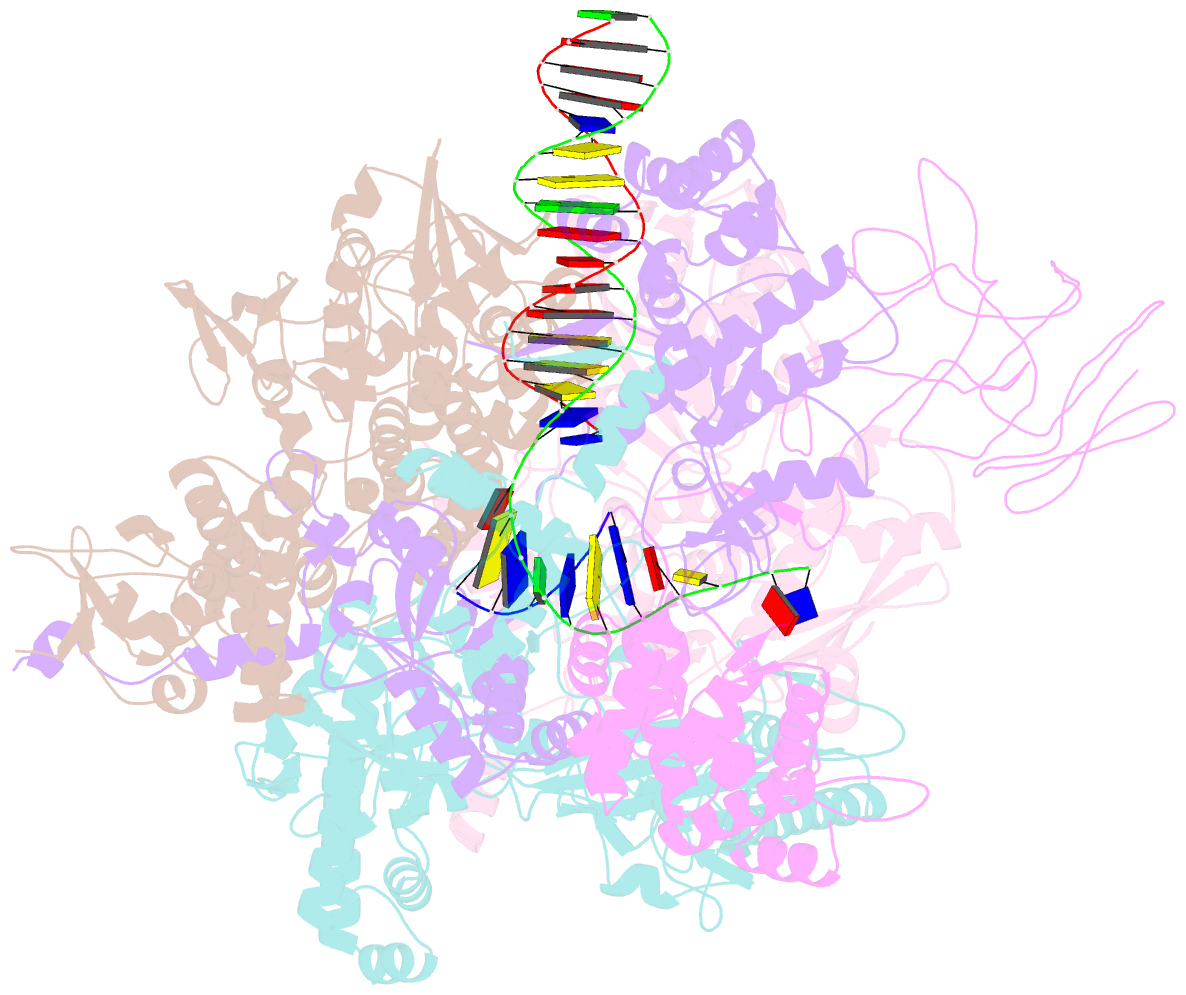
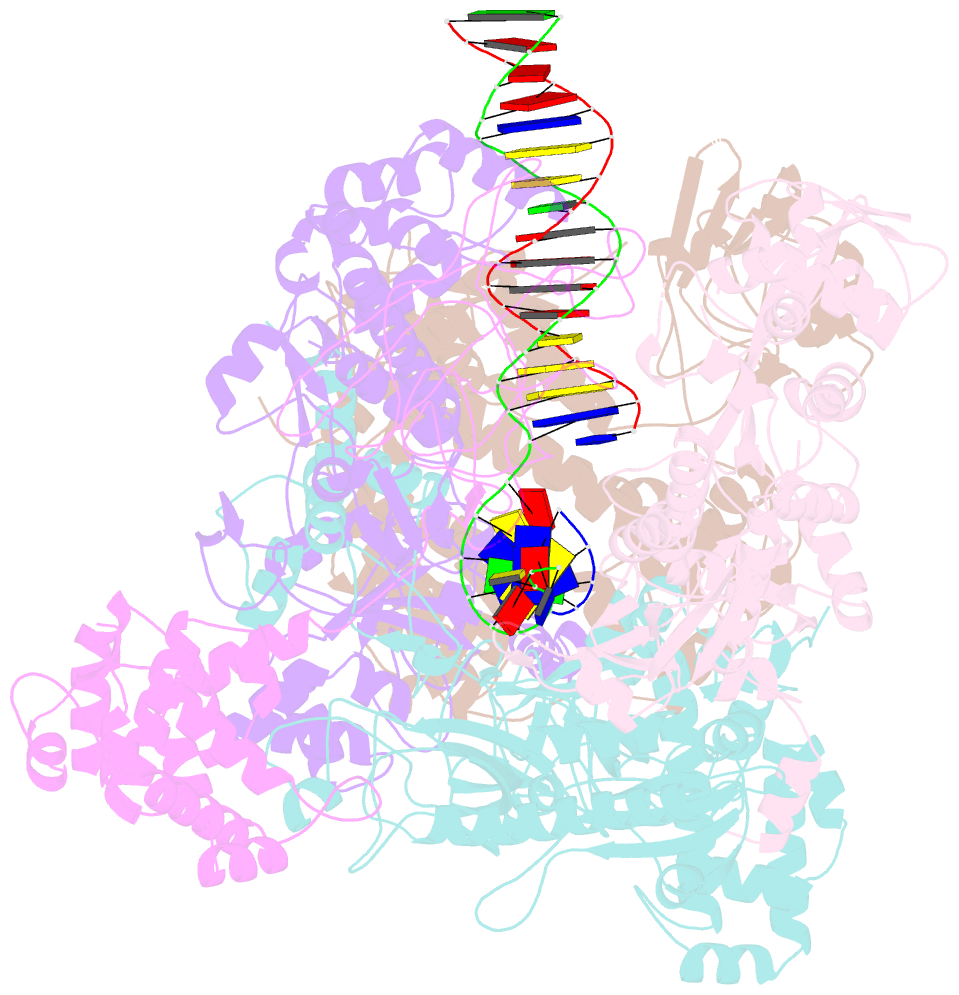
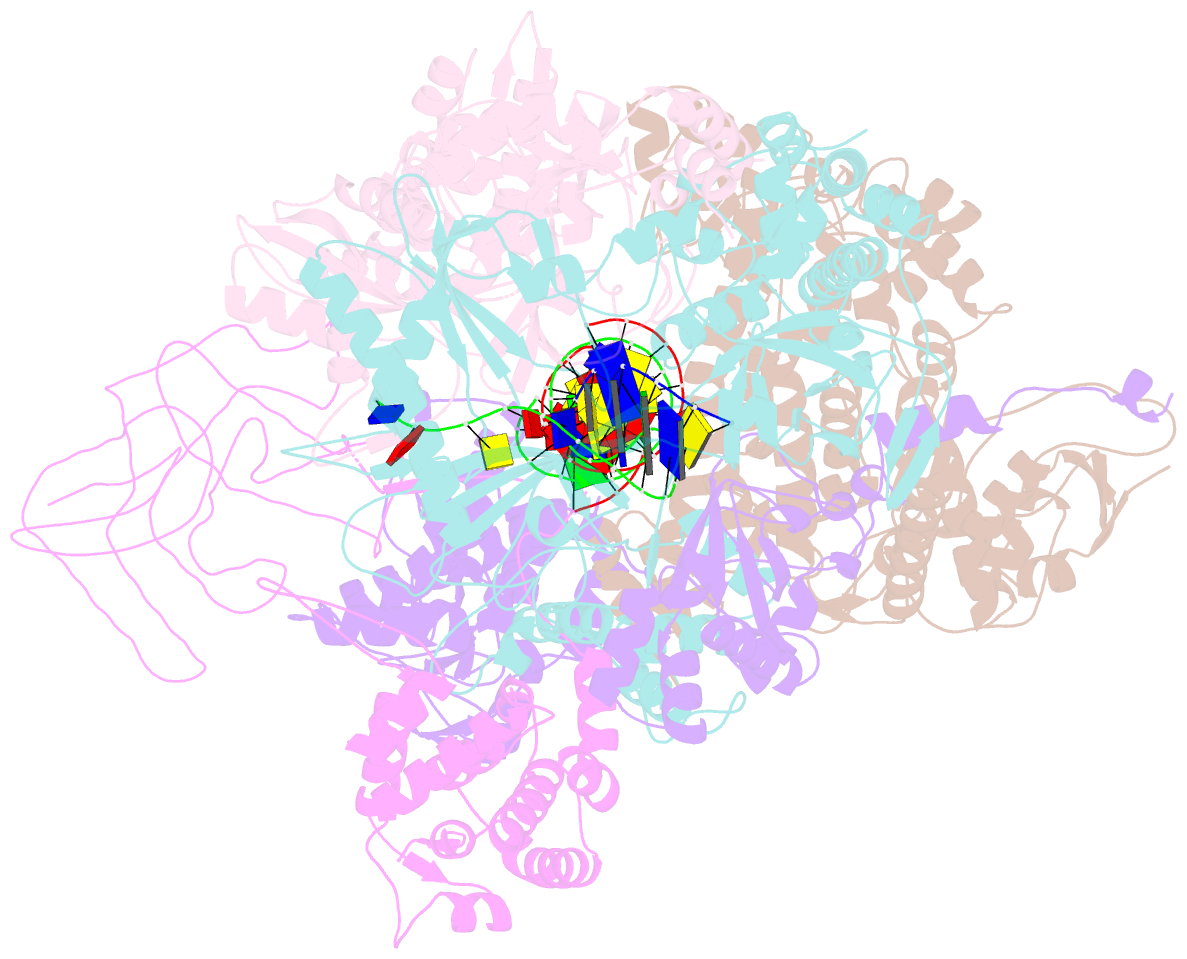
- Structure of the bacteriophage phikz non-virion RNA
polymerase bound to DNA and RNA
- Reference
-
de Martin Garrido N, Chen CS, Ramlaul K, Aylett CHS,
Yakunina M (2024): "Structure
of the Bacteriophage PhiKZ Non-virion RNA Polymerase
Transcribing from its Promoter p119L."
J.Mol.Biol., 436, 168713. doi:
10.1016/j.jmb.2024.168713.
- Abstract
- Bacteriophage ΦKZ (phiKZ) is the founding member of a
family of giant bacterial viruses. It has potential as a
therapeutic as its host, Pseudomonas aeruginosa, kills tens
of thousands of people worldwide each year. ΦKZ infection
is independent of the host transcriptional apparatus; the
virus forms a "nucleus", producing a proteinaceous barrier
around the ΦKZ genome that excludes the host immune
systems. It expresses its own non-canonical multi-subunit
non-virion RNA polymerase (nvRNAP), which is imported into
its "nucleus" to transcribe viral genes. The ΦKZ nvRNAP is
formed by four polypeptides representing homologues of the
eubacterial β/β' subunits, and a fifth that is likely to
have evolved from an ancestral homologue to σ-factor. We
have resolved the structure of the ΦKZ nvRNAP initiating
transcription from its cognate promoter, p119L, including
previously disordered domains and regions. Our results shed
light on the similarities and differences between ΦKZ
nvRNAP mechanisms of transcription and those of canonical
eubacterial RNAPs and the related non-canonical nvRNAP of
bacteriophage AR9.