Summary information and primary citation
- PDB-id
-
8oet;
DSSR-derived features in text and
JSON formats; DNAproDB
- Class
- lyase
- Method
- X-ray (2.11 Å)
- Summary
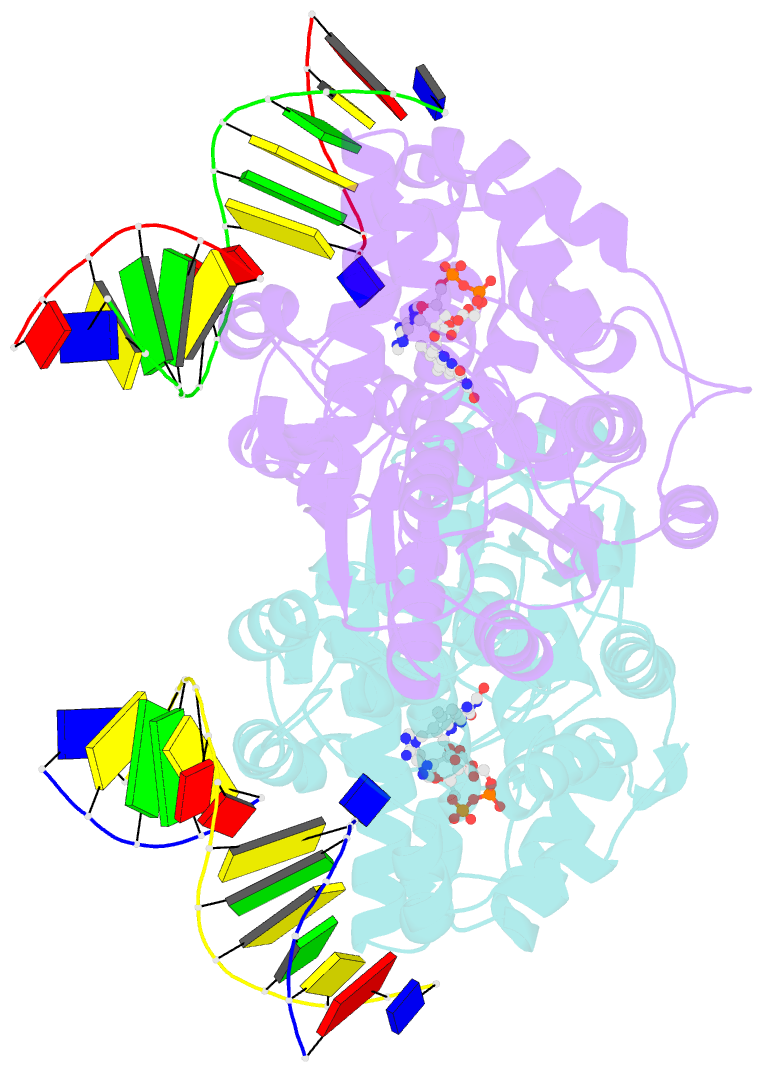
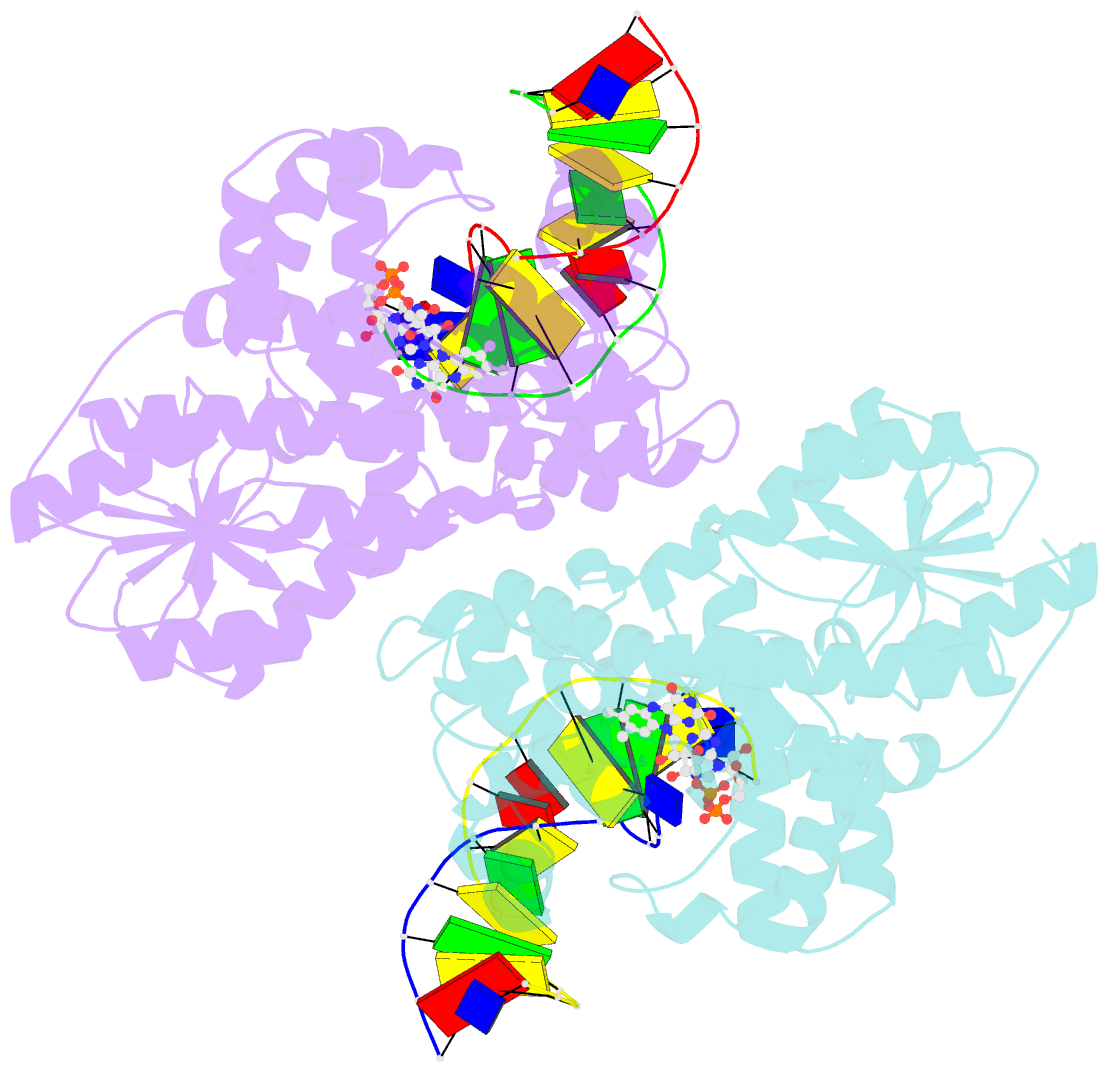
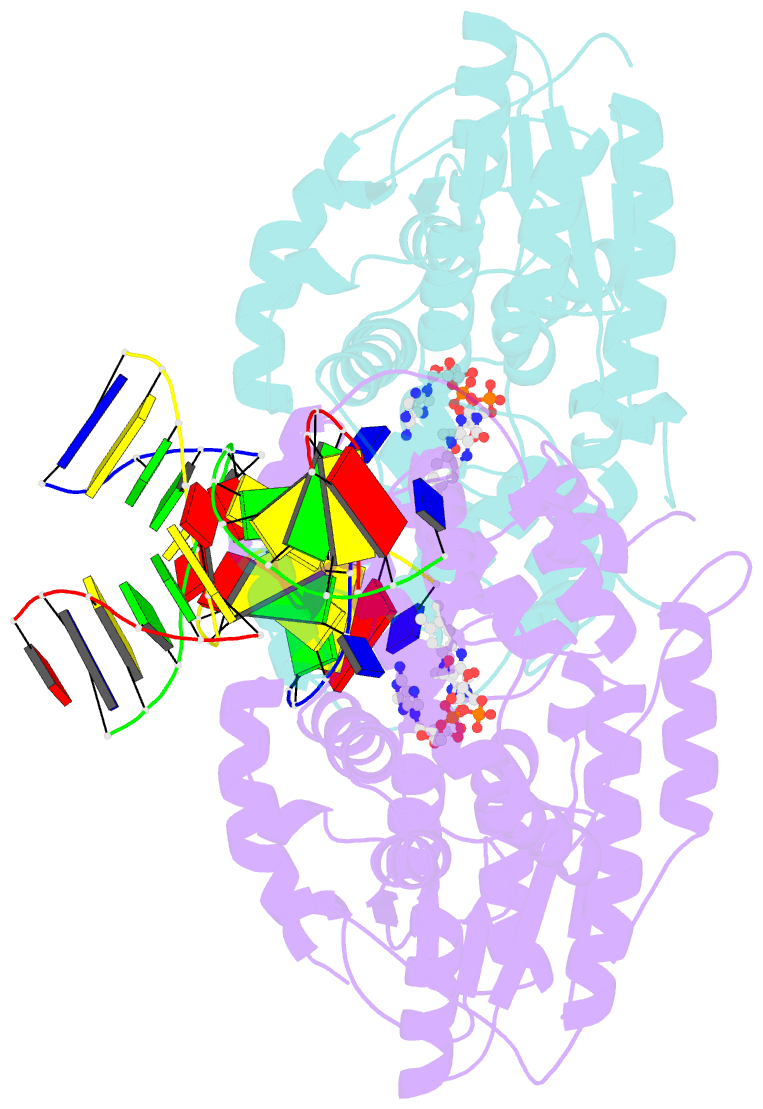
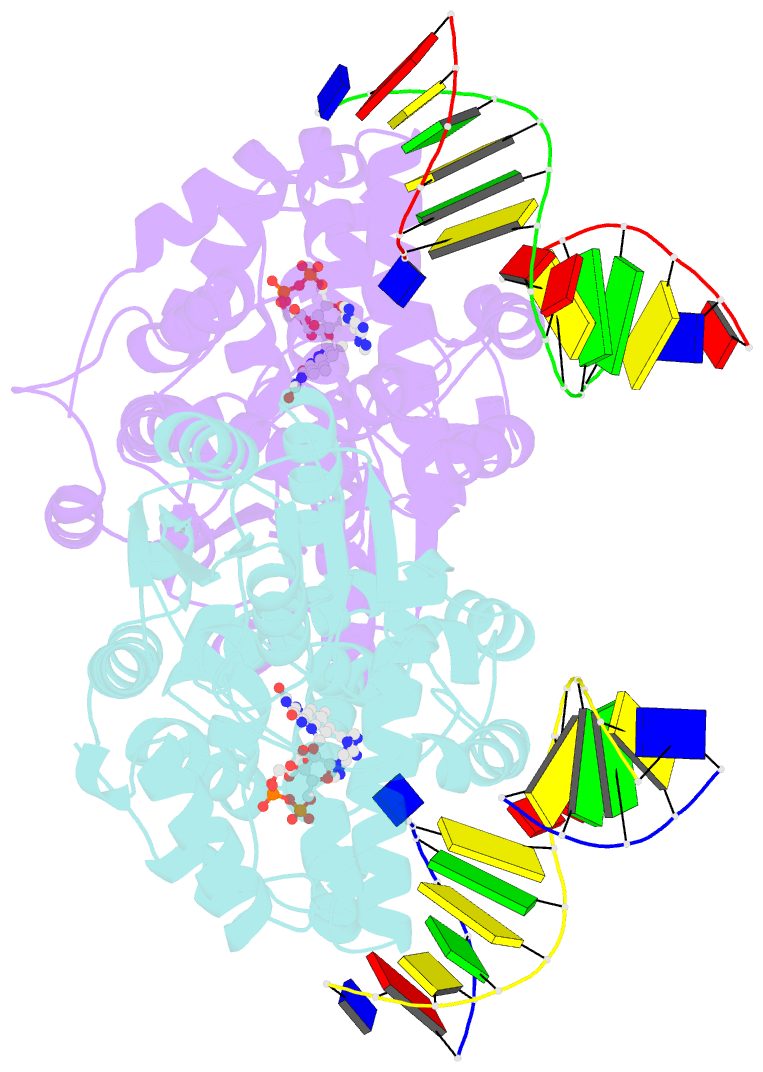
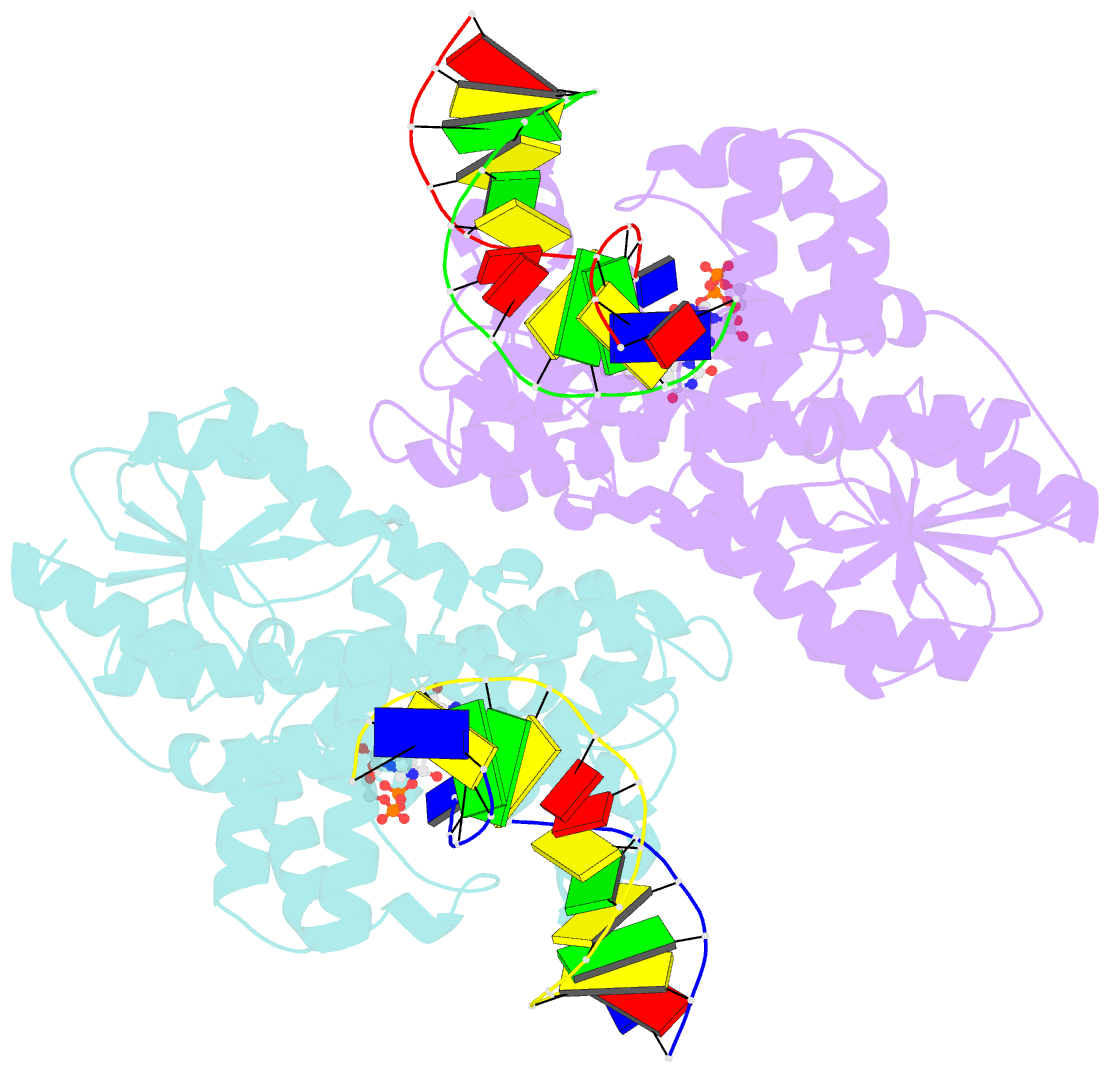
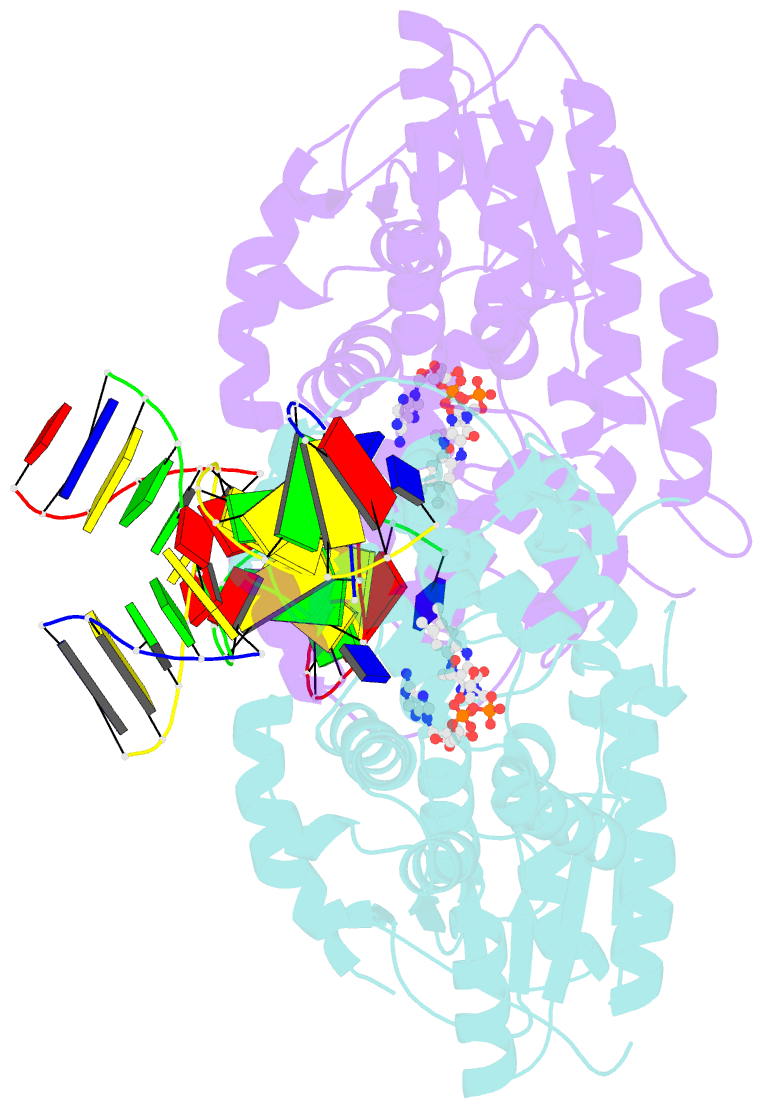
- Sfx structure of the class ii photolyase complexed with
a thymine dimer
- Reference
-
Christou NE, Apostolopoulou V, Melo DVM, Ruppert M,
Fadini A, Henkel A, Sprenger J, Oberthuer D, Gunther S,
Pateras A, Rahmani Mashhour A, Yefanov OM, Galchenkova M,
Reinke PYA, Kremling V, Scheer TES, Lange ER, Middendorf
P, Schubert R, De Zitter E, Lumbao-Conradson K, Herrmann
J, Rahighi S, Kunavar A, Beale EV, Beale JH, Cirelli C,
Johnson PJM, Dworkowski F, Ozerov D, Bertrand Q, Wranik
M, Bacellar C, Bajt S, Wakatsuki S, Sellberg JA, Huse N,
Turk D, Chapman HN, Lane TJ (2023): "Time-resolved
crystallography captures light-driven DNA repair."
Science, 382, 1015-1020. doi:
10.1126/science.adj4270.
- Abstract
- Photolyase is an enzyme that uses light to catalyze DNA
repair. To capture the reaction intermediates involved in
the enzyme's catalytic cycle, we conducted a time-resolved
crystallography experiment. We found that photolyase traps
the excited state of the active cofactor, flavin adenine
dinucleotide (FAD), in a highly bent geometry. This excited
state performs electron transfer to damaged DNA, inducing
repair. We show that the repair reaction, which involves
the lysis of two covalent bonds, occurs through a
single-bond intermediate. The transformation of the
substrate into product crowds the active site and disrupts
hydrogen bonds with the enzyme, resulting in stepwise
product release, with the 3' thymine ejected first,
followed by the 5' base.