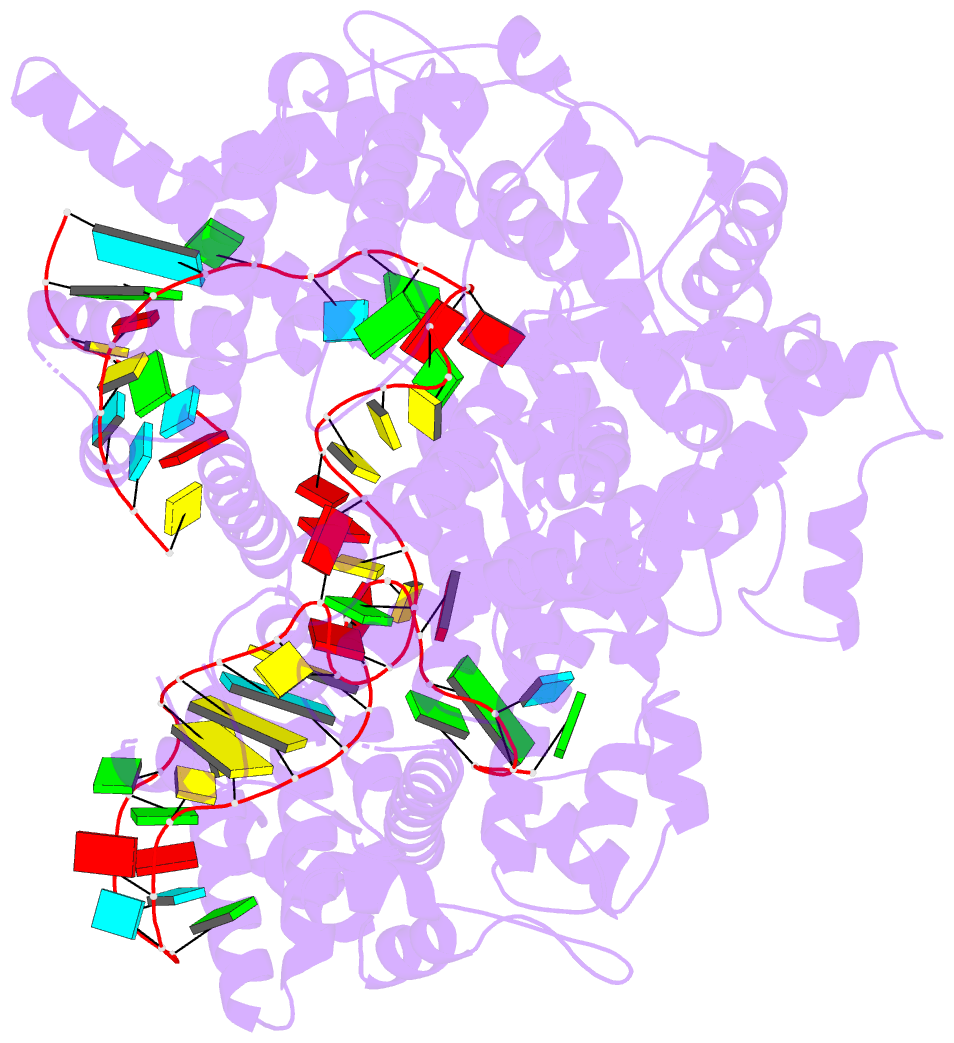
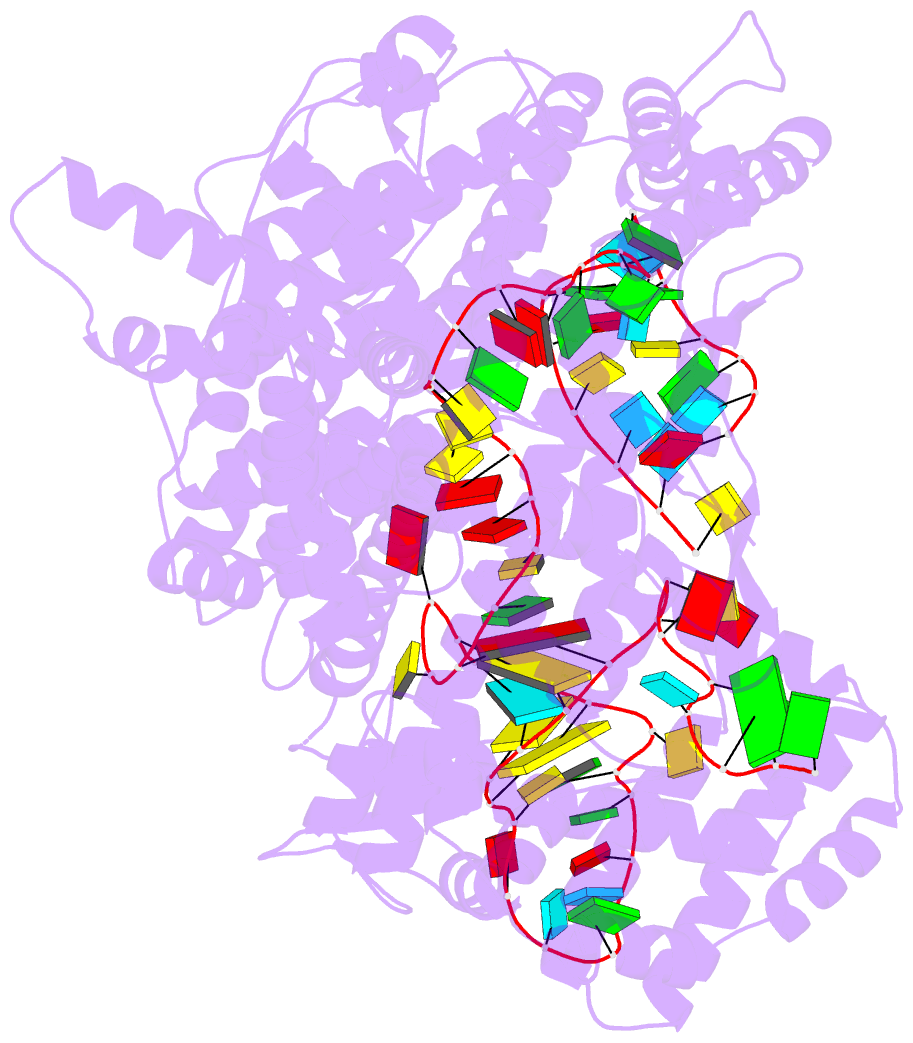
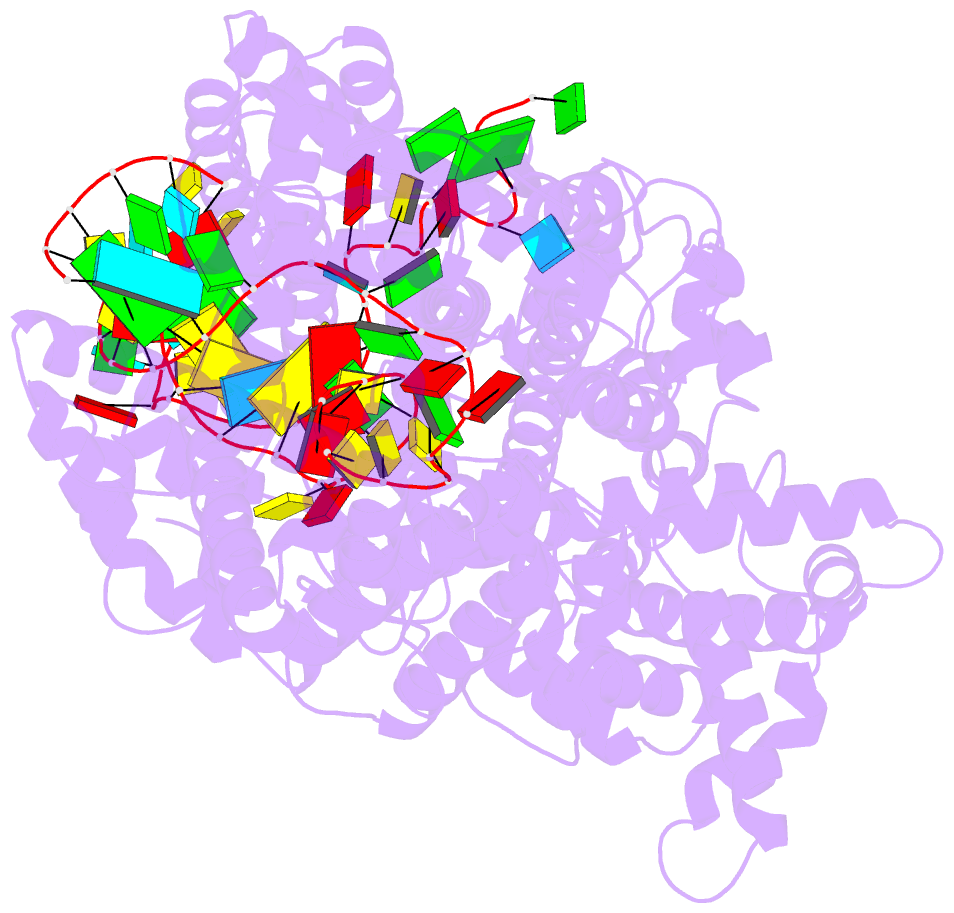
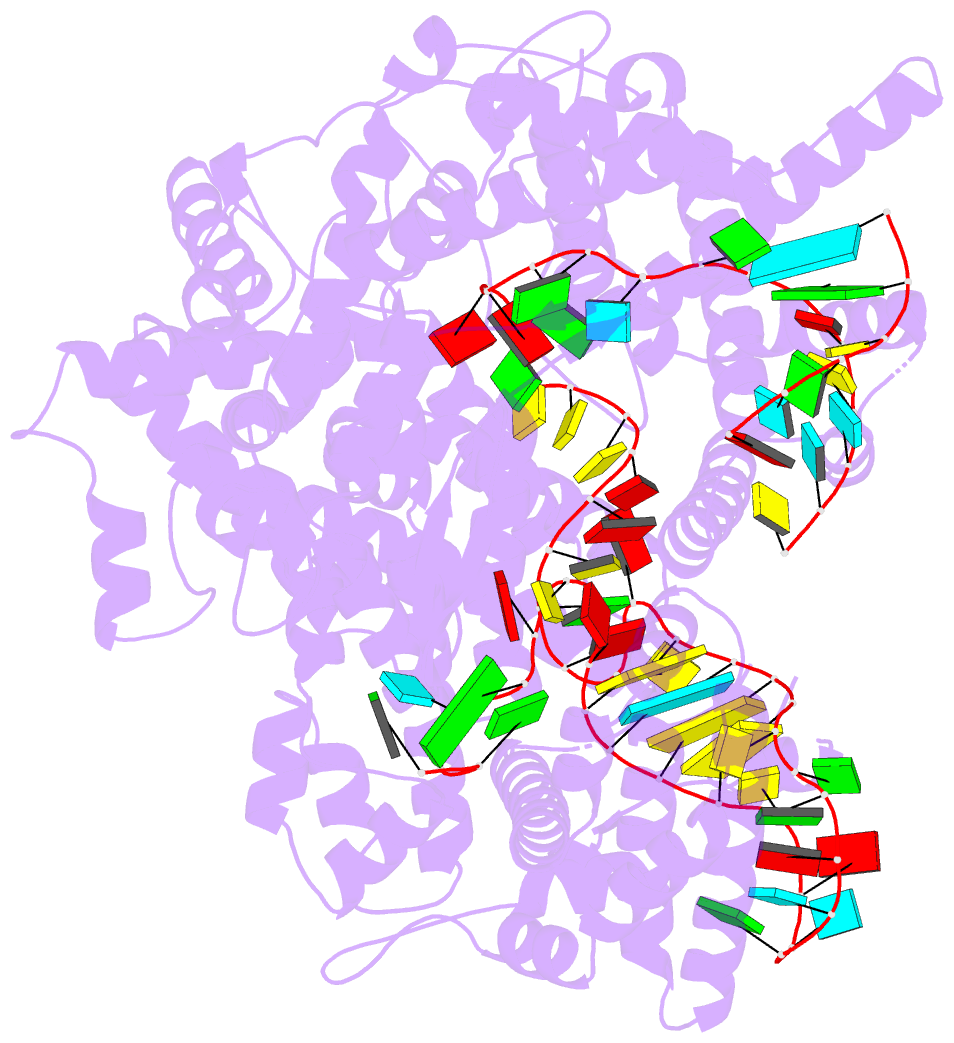
Summary information and primary citation
- PDB-id
-
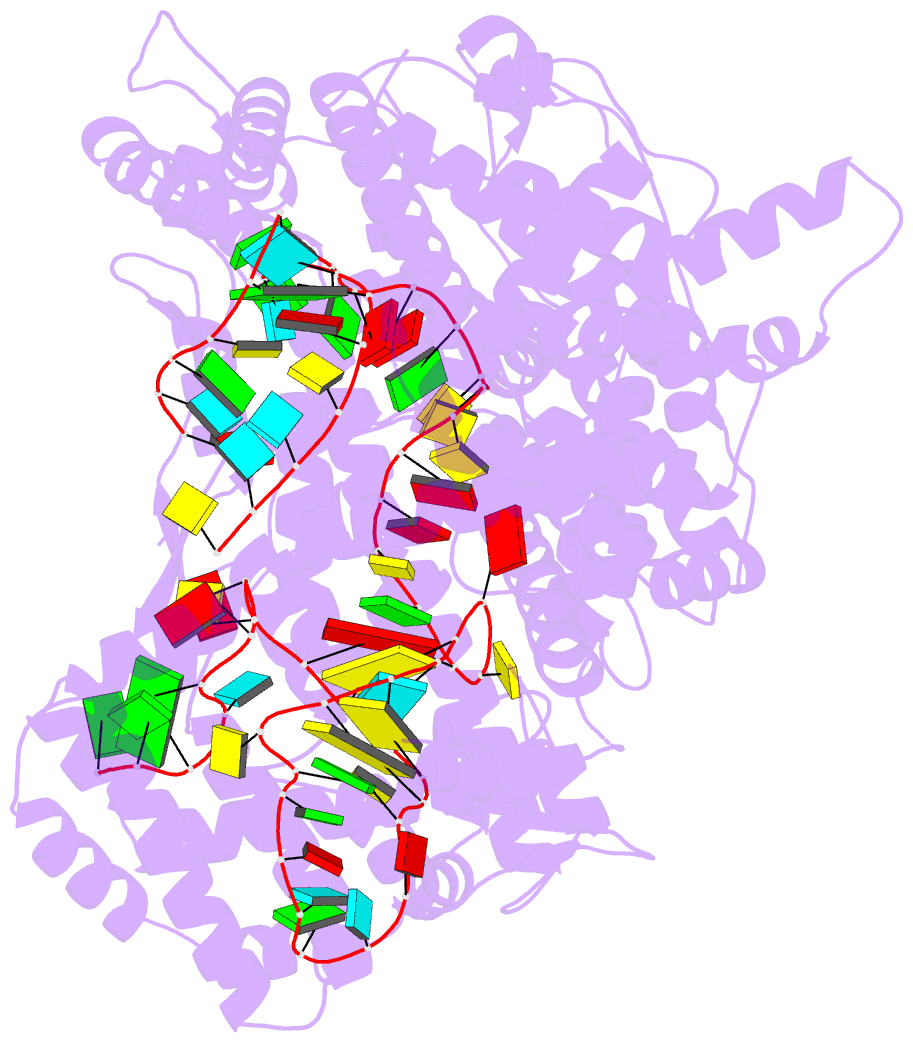
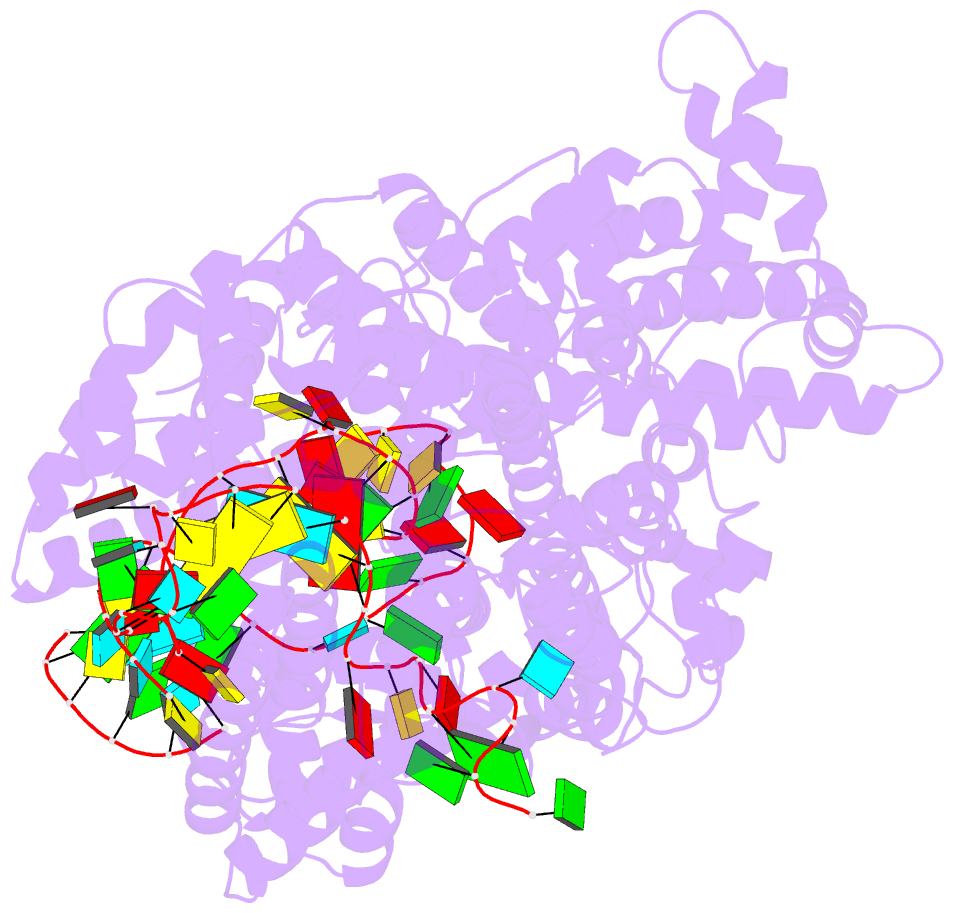
8ewg;
DSSR-derived features in text and
JSON formats; DNAproDB
- Class
- hydrolase-RNA
- Method
- cryo-EM (2.9 Å)
- Summary
- cryo-EM structure of a riboendonclease
- Reference
-
Wang F, Zhang C, Xu H, Zeng W, Ma L, Li Z (2023):
"Structural
Basis for the Ribonuclease Activity of a Thermostable
CRISPR-Cas13a from Thermoclostridium caenicola."
J.Mol.Biol., 435, 168197. doi:
10.1016/j.jmb.2023.168197.
- Abstract
- The RNA-targeting type VI CRISPR-Cas effector complexes
are widely used in biotechnology applications such as gene
knockdown, RNA editing, and molecular diagnostics. Compared
with Cas13a from mesophilic organisms, a newly discovered
Cas13a from thermophilic bacteria Thermoclostridium
caenicola (TccCas13a) shows low sequence similarity, high
thermostability, and lacks pre-crRNA processing activity.
The thermostability of TccCas13a has been harnessed to make
a sensitive and robust tool for nucleic acid detection.
Here we present the structures of TccCas13a-crRNA binary
complex at 2.8 Å, and TccCas13a at 3.5 Å.
Although TccCas13a shares a similarly bilobed architecture
with other mesophilic organism-derived Cas13a proteins,
TccCas13a displayed distinct structure features.
Specifically, it holds a long crRNA 5'-flank, forming
extensive polar contacts with Helical-1 and HEPN2 domains.
The detailed analysis of the interaction between crRNA
5'-flank and TccCas13a suggested lack of suitable
nucleophile to attack the 2'-OH of crRNA 5'-flank may
explain why TccCas13a fails to cleave pre-crRNA. The
stem-loop segment of crRNA spacer toggles between
double-stranded and single-stranded conformational states,
suggesting a potential safeguard mechanism for target
recognition. Superimposition of the structures of TccCas13a
and TccCas13a-crRNA revealed several conformational changes
required for crRNA loading, including dramatic movement of
Helical-2 domain. Collectively, these structural insights
expand our understanding into type VI CRISPR-Cas effectors,
and would facilitate the development of TccCas13a-based
applications.