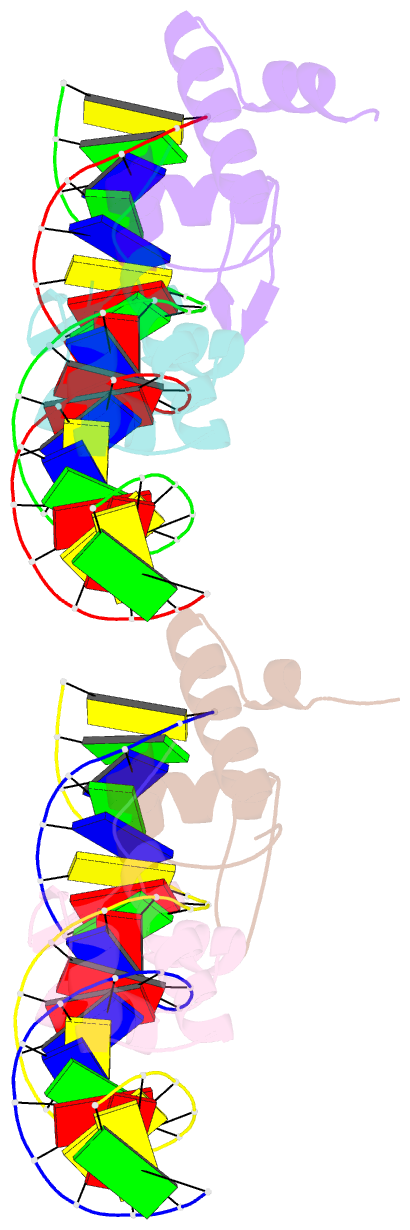
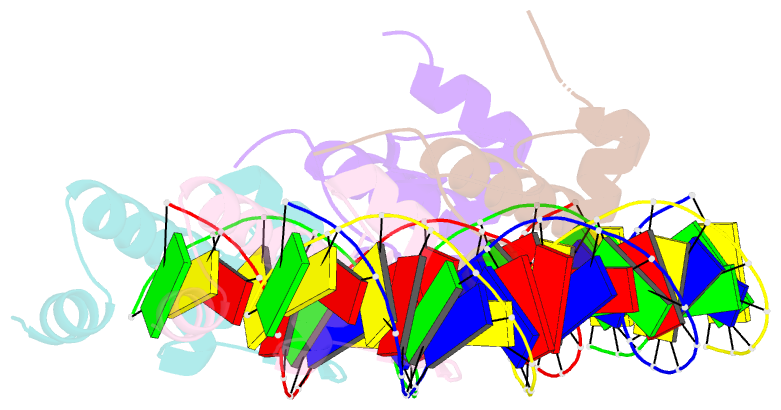
Summary information and primary citation
- PDB-id
-
7tea;
DSSR-derived features in text and
JSON formats; DNAproDB
- Class
- DNA binding protein-DNA
- Method
- X-ray (2.35 Å)
- Summary
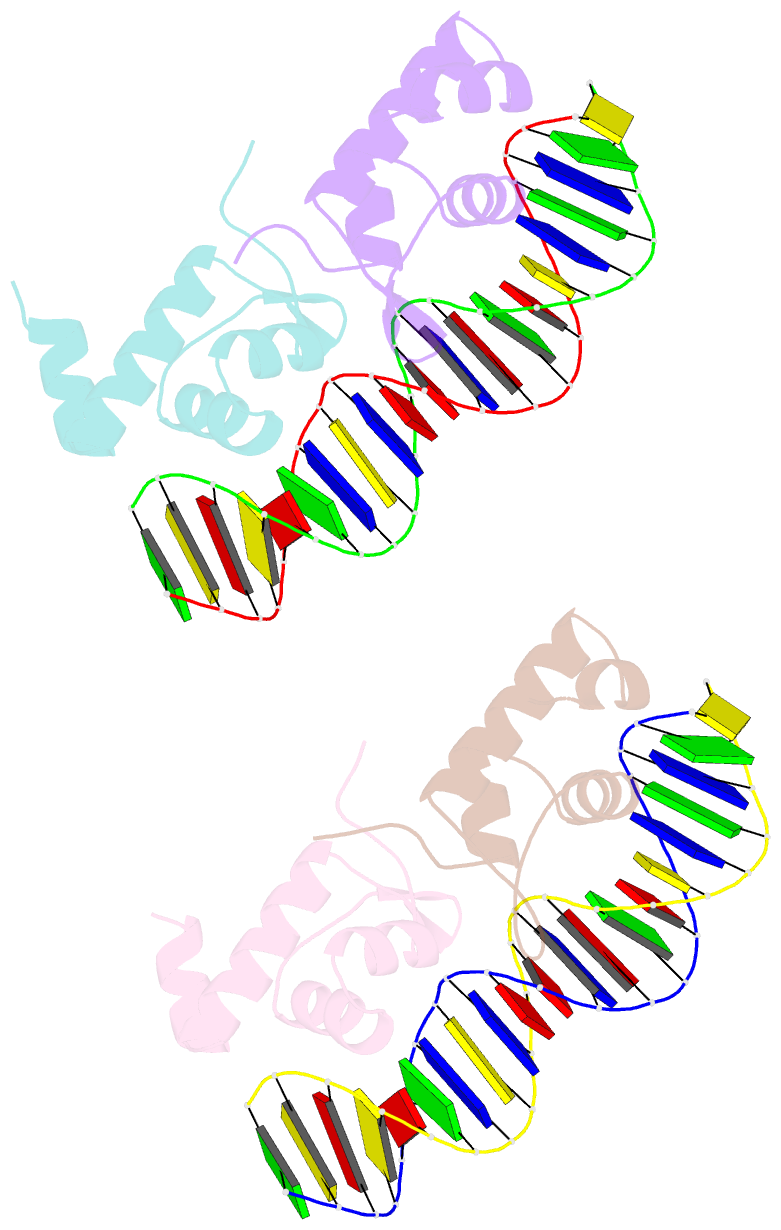
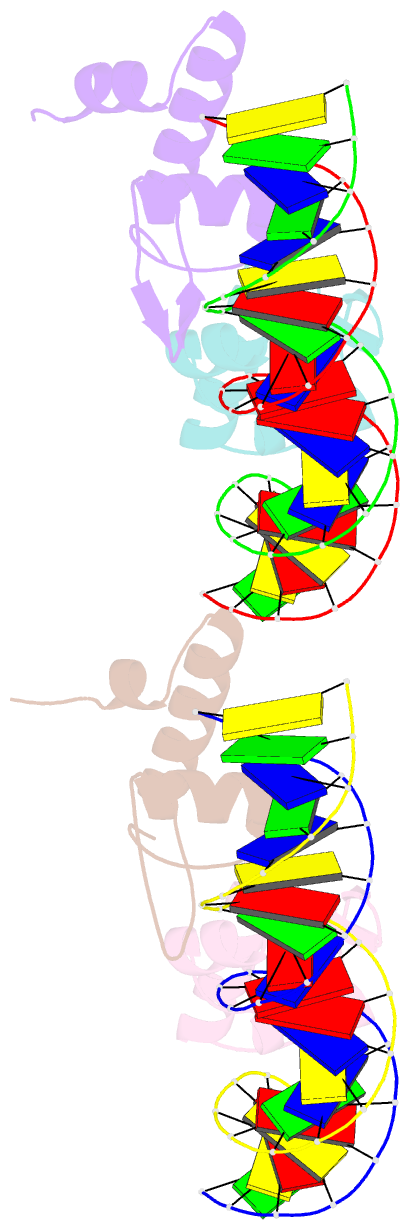
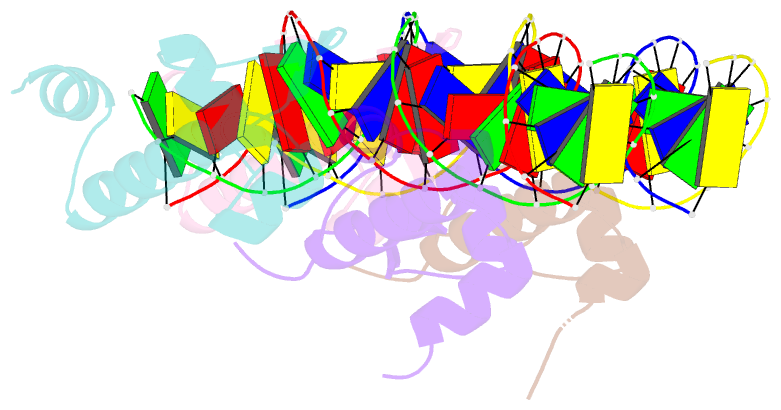
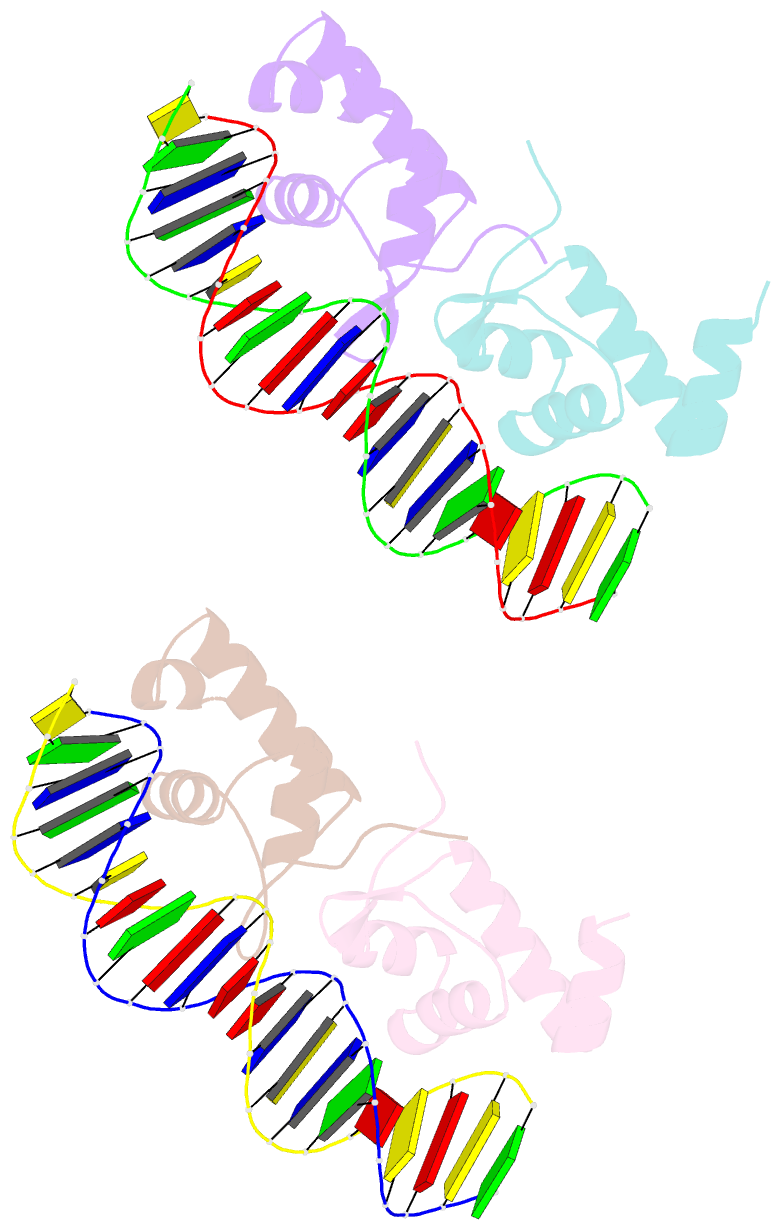
- Crystal structure of s. aureus glnr-DNA complex
- Reference
-
Travis BA, Peck JV, Salinas R, Dopkins B, Lent N, Nguyen
VD, Borgnia MJ, Brennan RG, Schumacher MA (2022):
"Molecular
dissection of the glutamine synthetase-GlnR nitrogen
regulatory circuitry in Gram-positive bacteria."
Nat Commun, 13, 3793. doi:
10.1038/s41467-022-31573-0.
- Abstract
- How bacteria sense and respond to nitrogen levels are
central questions in microbial physiology. In Gram-positive
bacteria, nitrogen homeostasis is controlled by an operon
encoding glutamine synthetase (GS), a dodecameric machine
that assimilates ammonium into glutamine, and the GlnR
repressor. GlnR detects nitrogen excess indirectly by
binding glutamine-feedback-inhibited-GS (FBI-GS), which
activates its transcription-repression function. The
molecular mechanisms behind this regulatory circuitry,
however, are unknown. Here we describe biochemical and
structural analyses of GS and FBI-GS-GlnR complexes from
pathogenic and non-pathogenic Gram-positive bacteria. The
structures show FBI-GS binds the GlnR C-terminal domain
within its active-site cavity, juxtaposing two GlnR
monomers to form a DNA-binding-competent GlnR dimer. The
FBI-GS-GlnR interaction stabilizes the inactive GS
conformation. Strikingly, this interaction also favors a
remarkable dodecamer to tetradecamer transition in some GS,
breaking the paradigm that all bacterial GS are dodecamers.
These data thus unveil unique structural mechanisms of
transcription and enzymatic regulation.