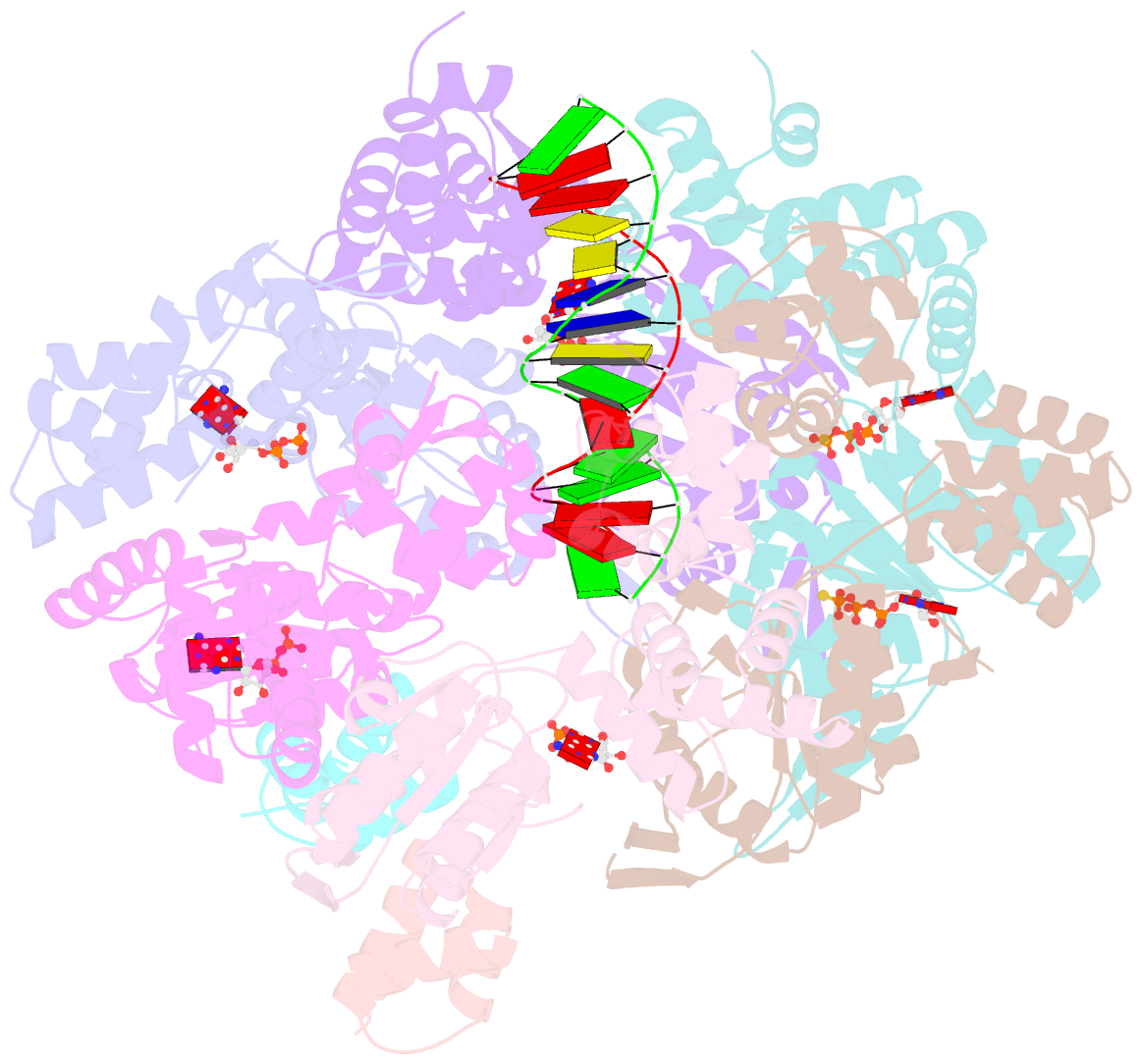
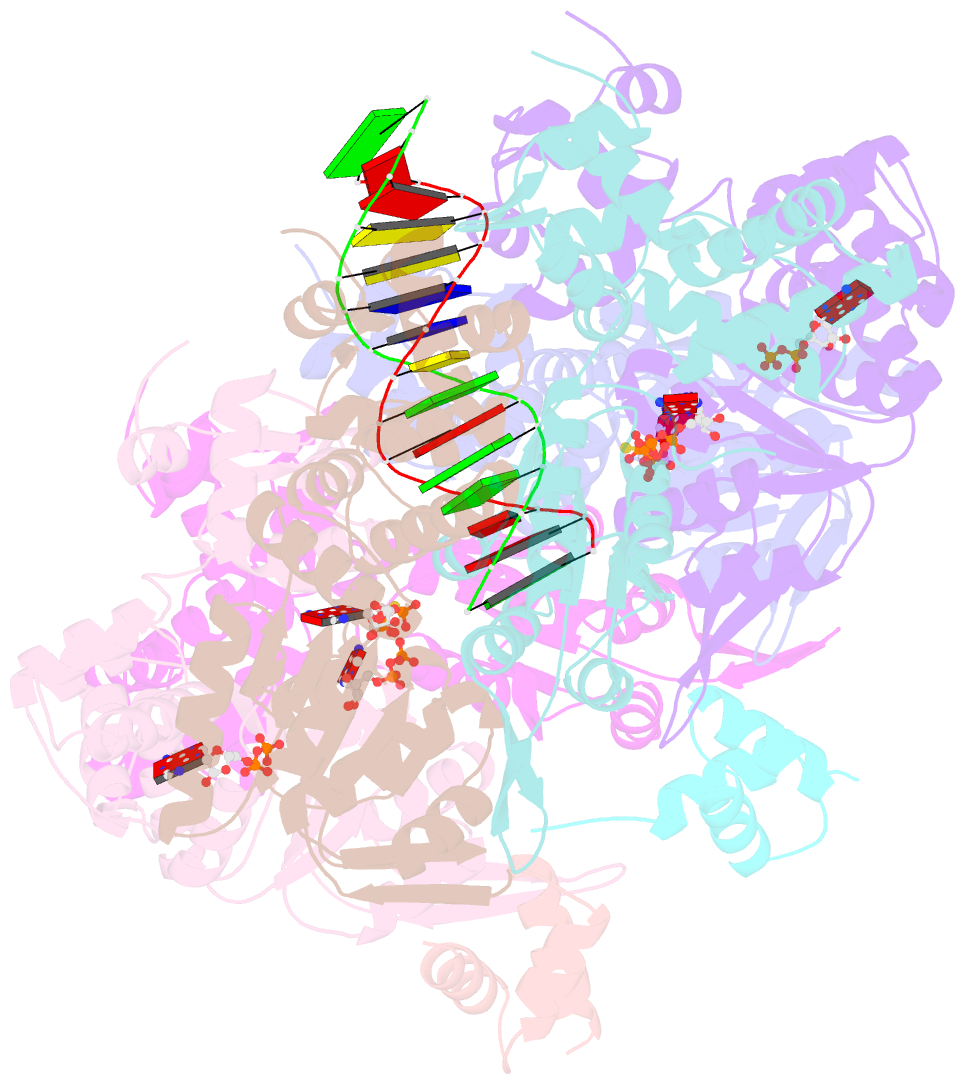
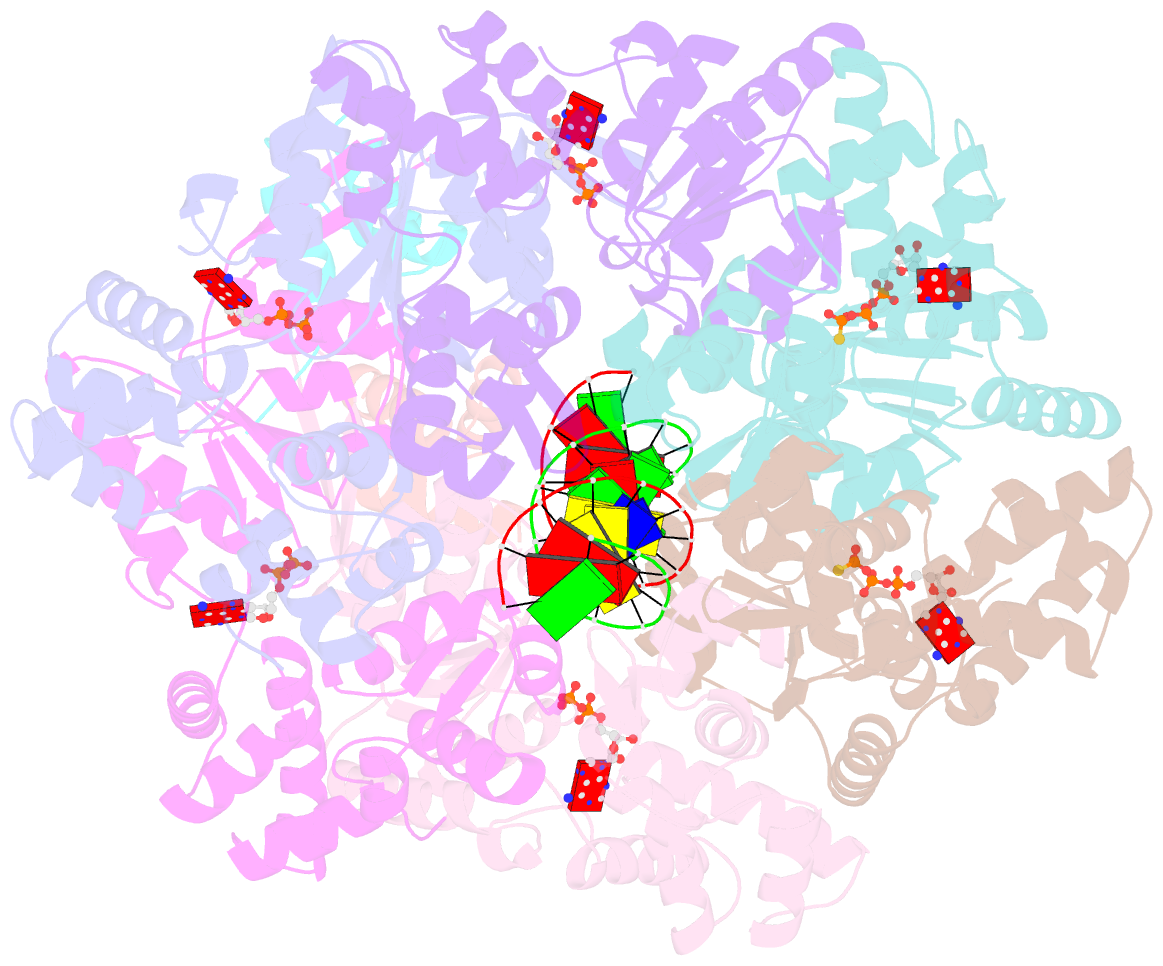
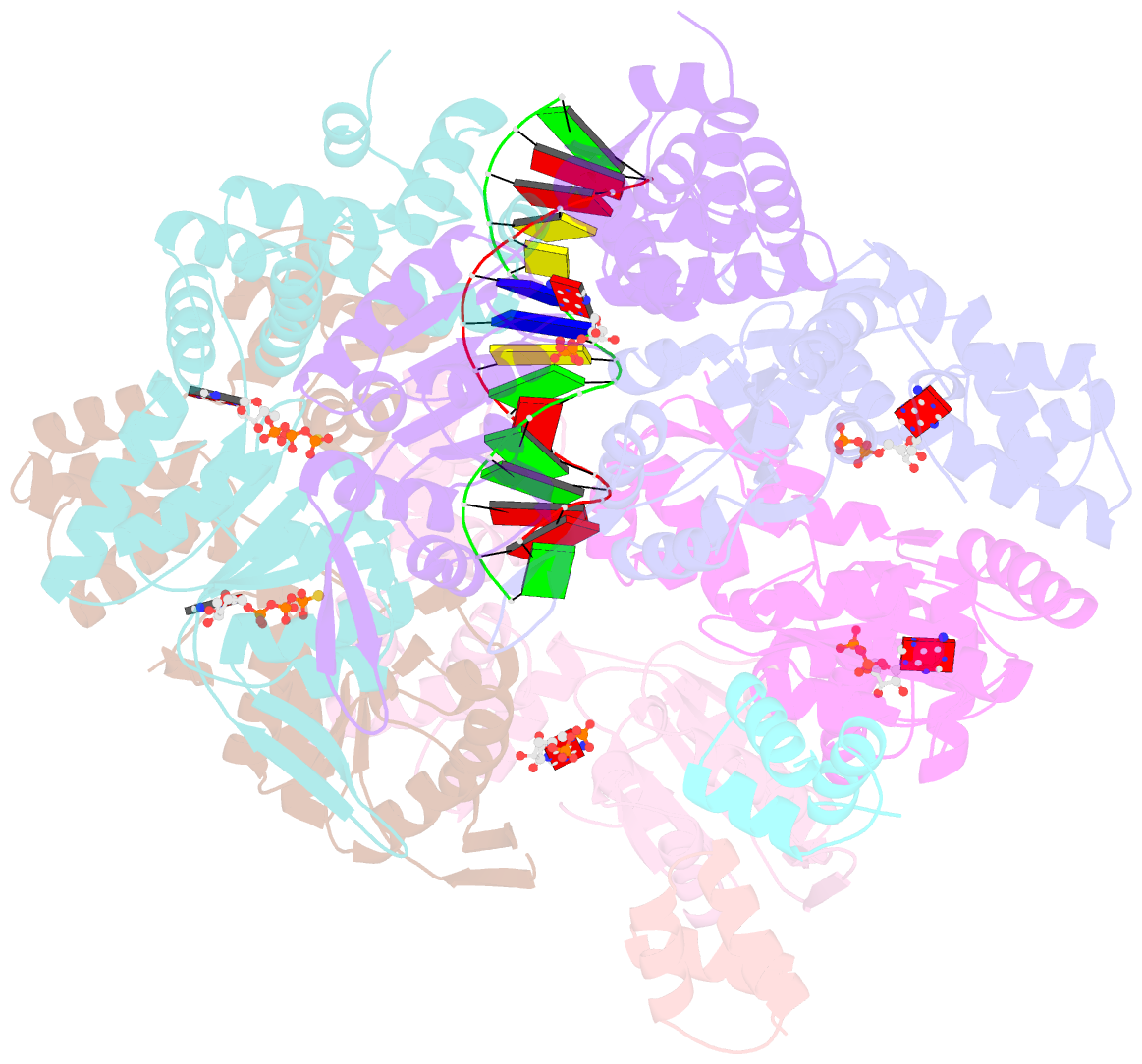
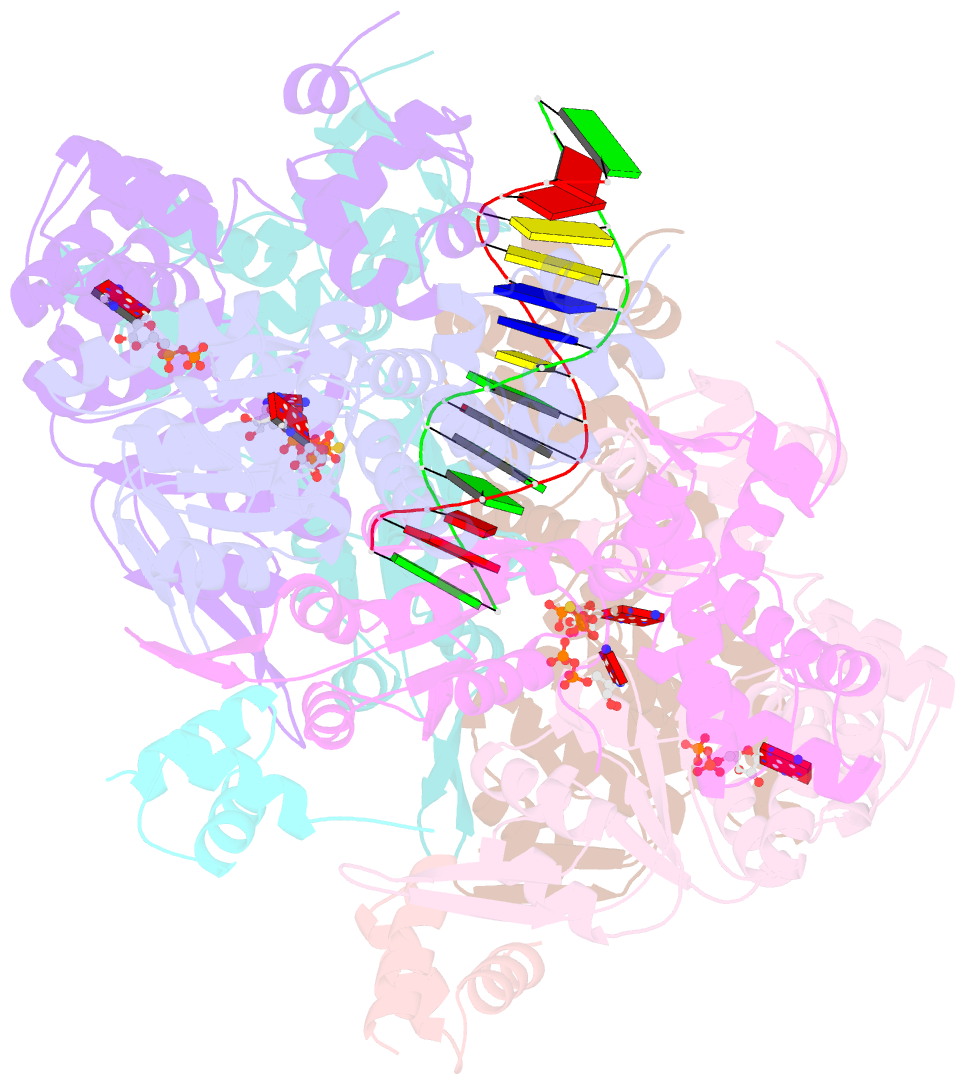
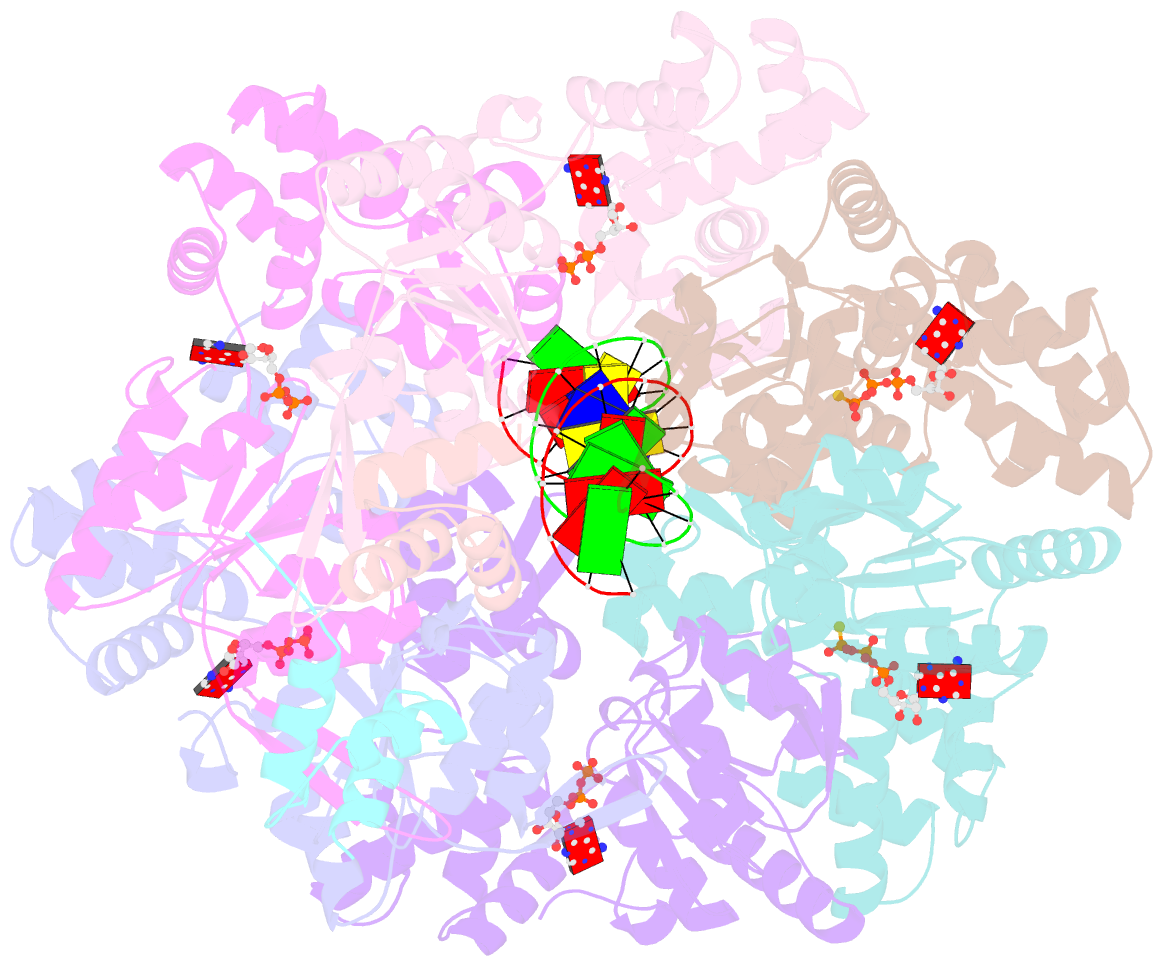
Summary information and primary citation
- PDB-id
-
7pbn;
DSSR-derived features in text and
JSON formats; DNAproDB
- Class
- hydrolase
- Method
- cryo-EM (3.2 Å)
- Summary
- Ruvab branch migration motor complexed to the holliday
junction - ruvb aaa+ state s3 [t2 dataset]
- Reference
-
Wald J, Fahrenkamp D, Goessweiner-Mohr N, Lugmayr W,
Ciccarelli L, Vesper O, Marlovits TC (2022): "Mechanism
of AAA+ ATPase-mediated RuvAB-Holliday junction branch
migration." Nature, 609,
630-639. doi: 10.1038/s41586-022-05121-1.
- Abstract
- The Holliday junction is a key intermediate formed
during DNA recombination across all kingdoms of
life<sub>1</sub>. In bacteria, the Holliday
junction is processed by two homo-hexameric AAA+ ATPase
RuvB motors, which assemble together with the RuvA-Holliday
junction complex to energize the strand-exchange
reaction<sub>2</sub>. Despite its importance
for chromosome maintenance, the structure and mechanism by
which this complex facilitates branch migration are
unknown. Here, using time-resolved cryo-electron
microscopy, we obtained structures of the ATP-hydrolysing
RuvAB complex in seven distinct conformational states,
captured during assembly and processing of a Holliday
junction. Five structures together resolve the complete
nucleotide cycle and reveal the spatiotemporal relationship
between ATP hydrolysis, nucleotide exchange and
context-specific conformational changes in RuvB.
Coordinated motions in a converter formed by DNA-disengaged
RuvB subunits stimulate hydrolysis and nucleotide exchange.
Immobilization of the converter enables RuvB to convert the
ATP-contained energy into a lever motion, which generates
the pulling force driving the branch migration. We show
that RuvB motors rotate together with the DNA substrate,
which, together with a progressing nucleotide cycle, forms
the mechanistic basis for DNA recombination by continuous
branch migration. Together, our data decipher the molecular
principles of homologous recombination by the RuvAB
complex, elucidate discrete and sequential transition-state
intermediates for chemo-mechanical coupling of hexameric
AAA+ motors and provide a blueprint for the design of
state-specific compounds targeting AAA+ motors.