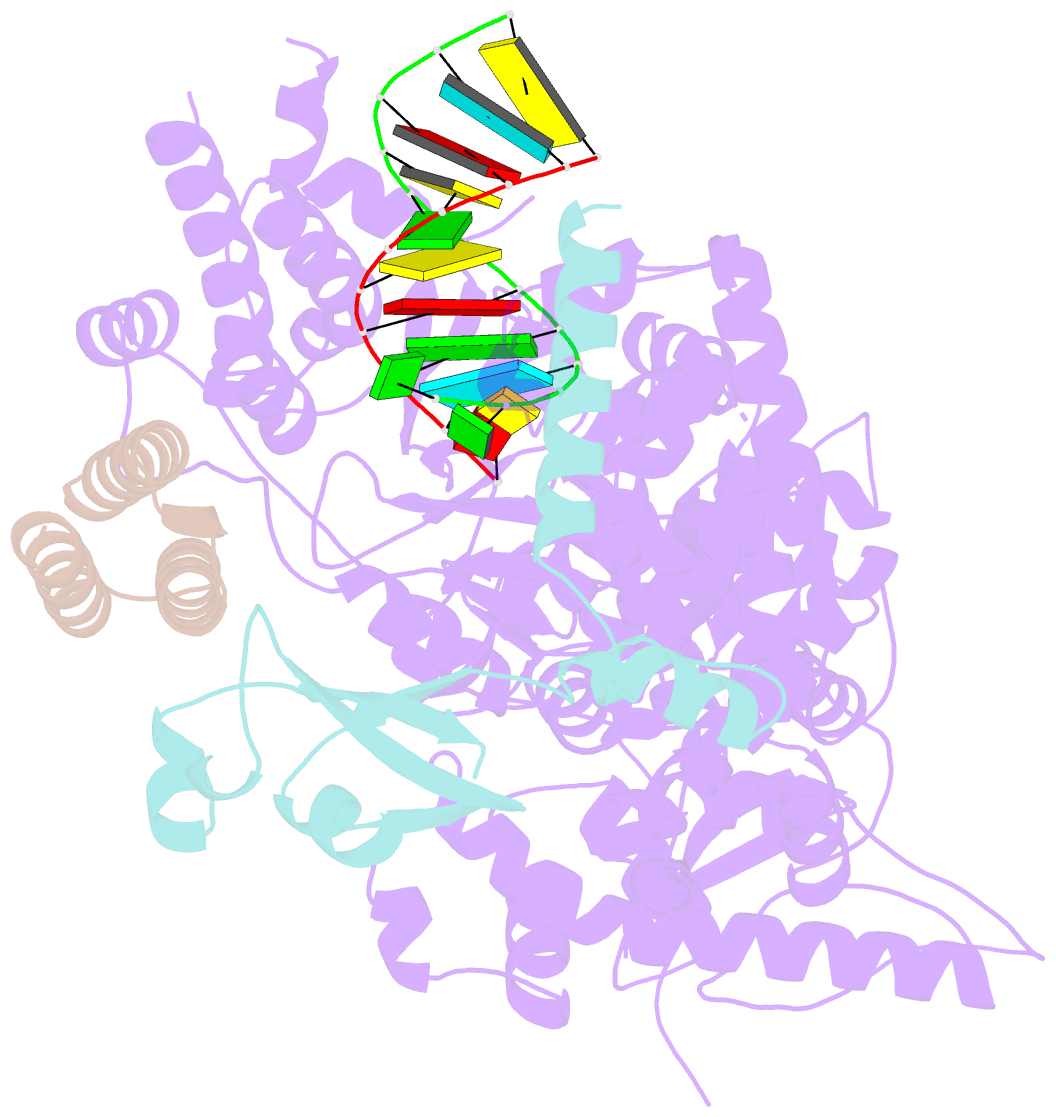
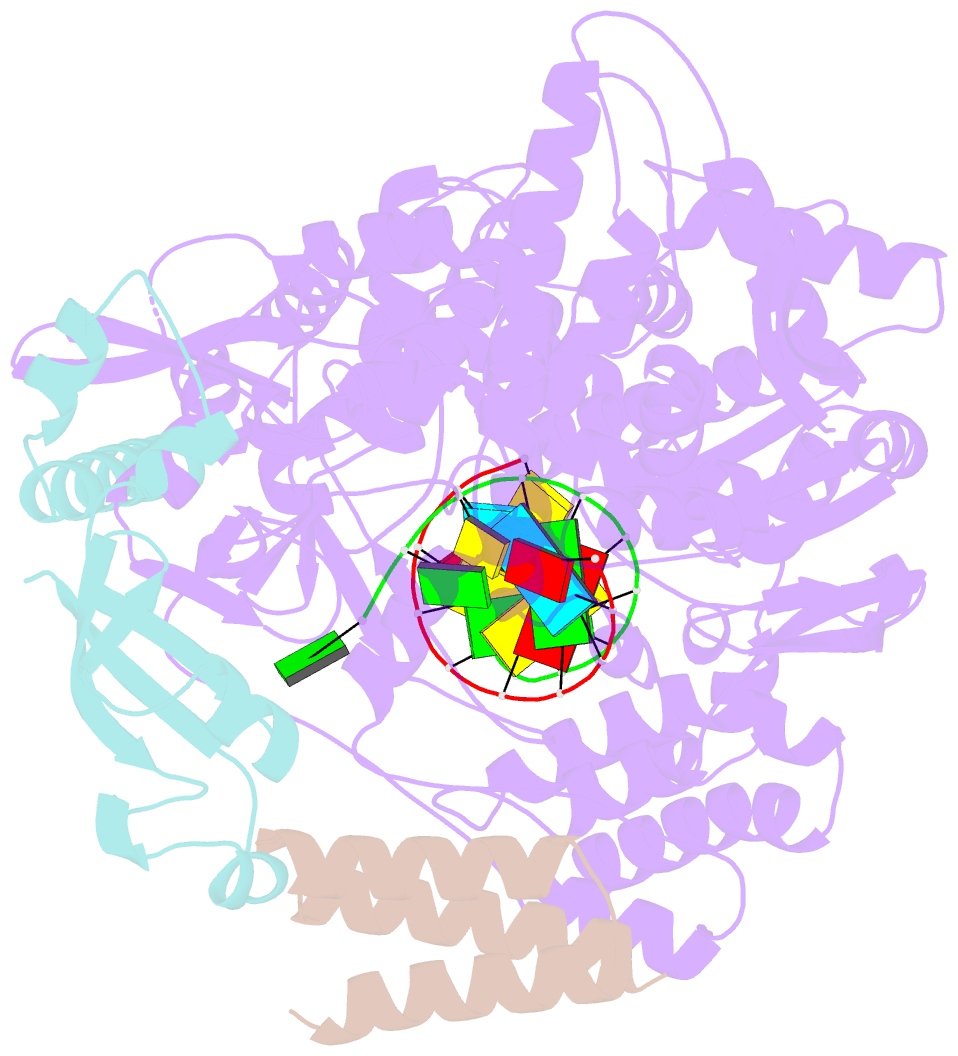
Summary information and primary citation
- PDB-id
-
7ozu;
DSSR-derived features in text and
JSON formats; DNAproDB
- Class
- viral protein
- Method
- cryo-EM (3.3 Å)
- Summary
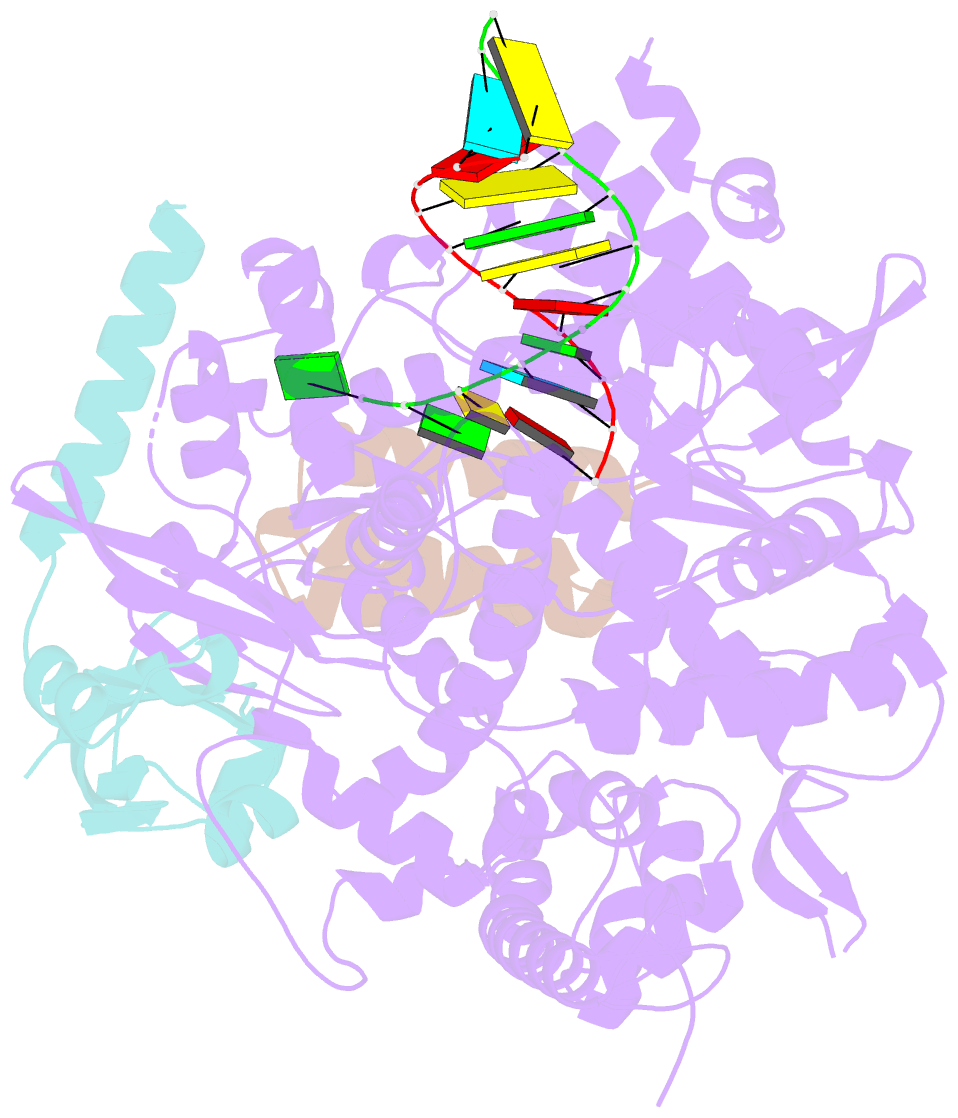
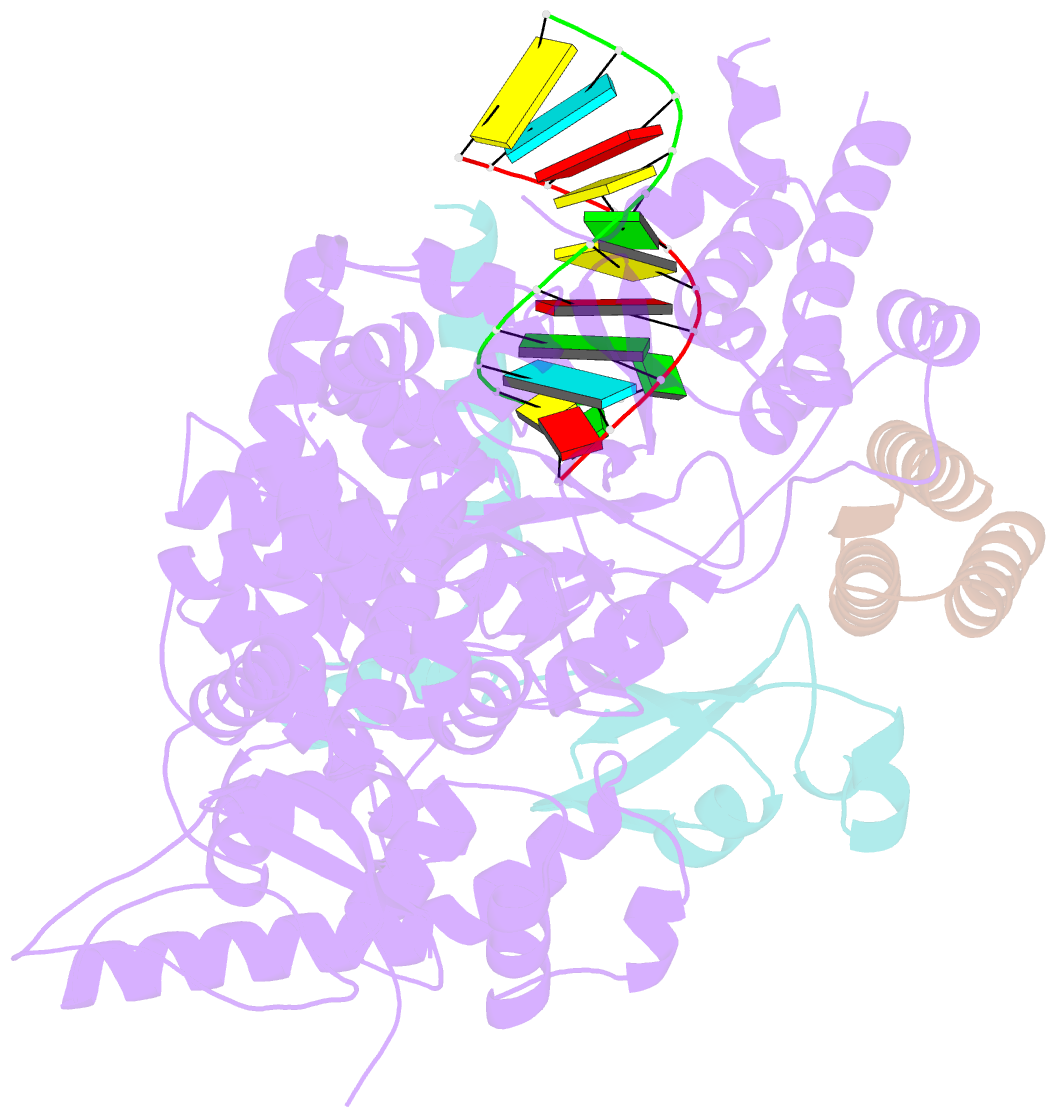
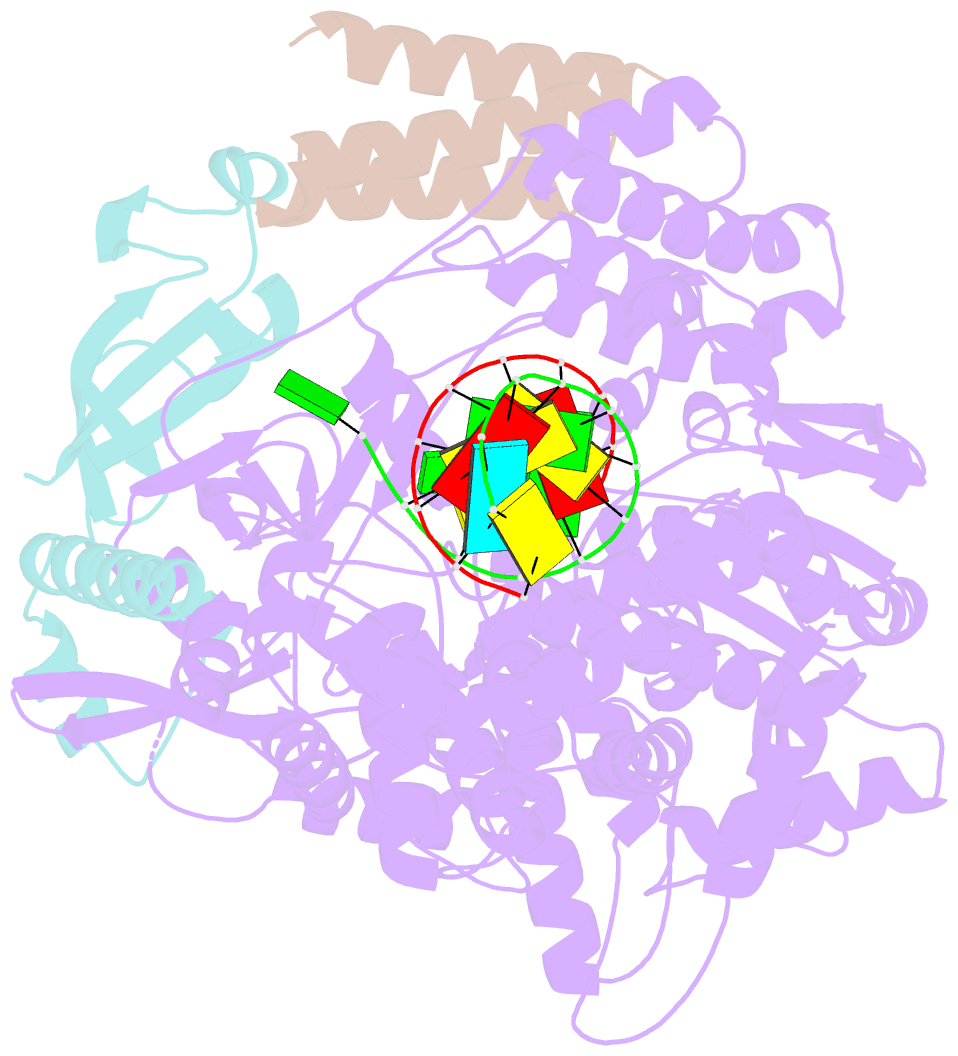
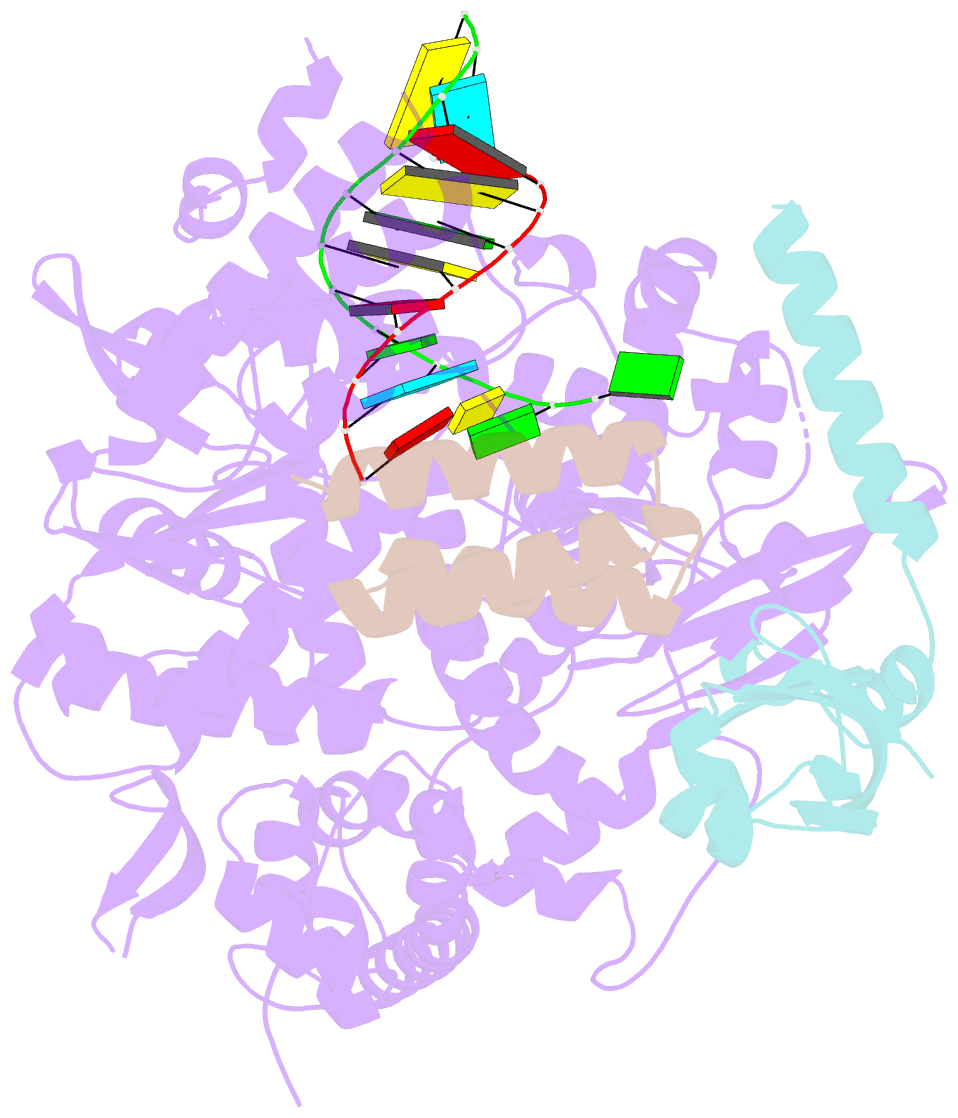
- Sars-cov-2 rdrp with molnupiravir- nhc in the template
strand base-paired with a
- Reference
-
Kabinger F, Stiller C, Schmitzova J, Dienemann C, Kokic
G, Hillen HS, Hobartner C, Cramer P (2021): "Mechanism
of molnupiravir-induced SARS-CoV-2 mutagenesis."
Nat.Struct.Mol.Biol., 28,
740-746. doi: 10.1038/s41594-021-00651-0.
- Abstract
- Molnupiravir is an orally available antiviral drug
candidate currently in phase III trials for the treatment
of patients with COVID-19. Molnupiravir increases the
frequency of viral RNA mutations and impairs SARS-CoV-2
replication in animal models and in humans. Here, we
establish the molecular mechanisms underlying
molnupiravir-induced RNA mutagenesis by the viral
RNA-dependent RNA polymerase (RdRp). Biochemical assays
show that the RdRp uses the active form of molnupiravir,
β-D-N<sub>4</sub>-hydroxycytidine (NHC)
triphosphate, as a substrate instead of cytidine
triphosphate or uridine triphosphate. When the RdRp uses
the resulting RNA as a template, NHC directs incorporation
of either G or A, leading to mutated RNA products.
Structural analysis of RdRp-RNA complexes that contain
mutagenesis products shows that NHC can form stable base
pairs with either G or A in the RdRp active center,
explaining how the polymerase escapes proofreading and
synthesizes mutated RNA. This two-step mutagenesis
mechanism probably applies to various viral polymerases and
can explain the broad-spectrum antiviral activity of
molnupiravir.