Summary information and primary citation
- PDB-id
-
7kx9;
DSSR-derived features in text and
JSON formats; DNAproDB
- Class
- hydrolase,RNA binding protein-RNA
- Method
- cryo-EM (3.5 Å)
- Summary
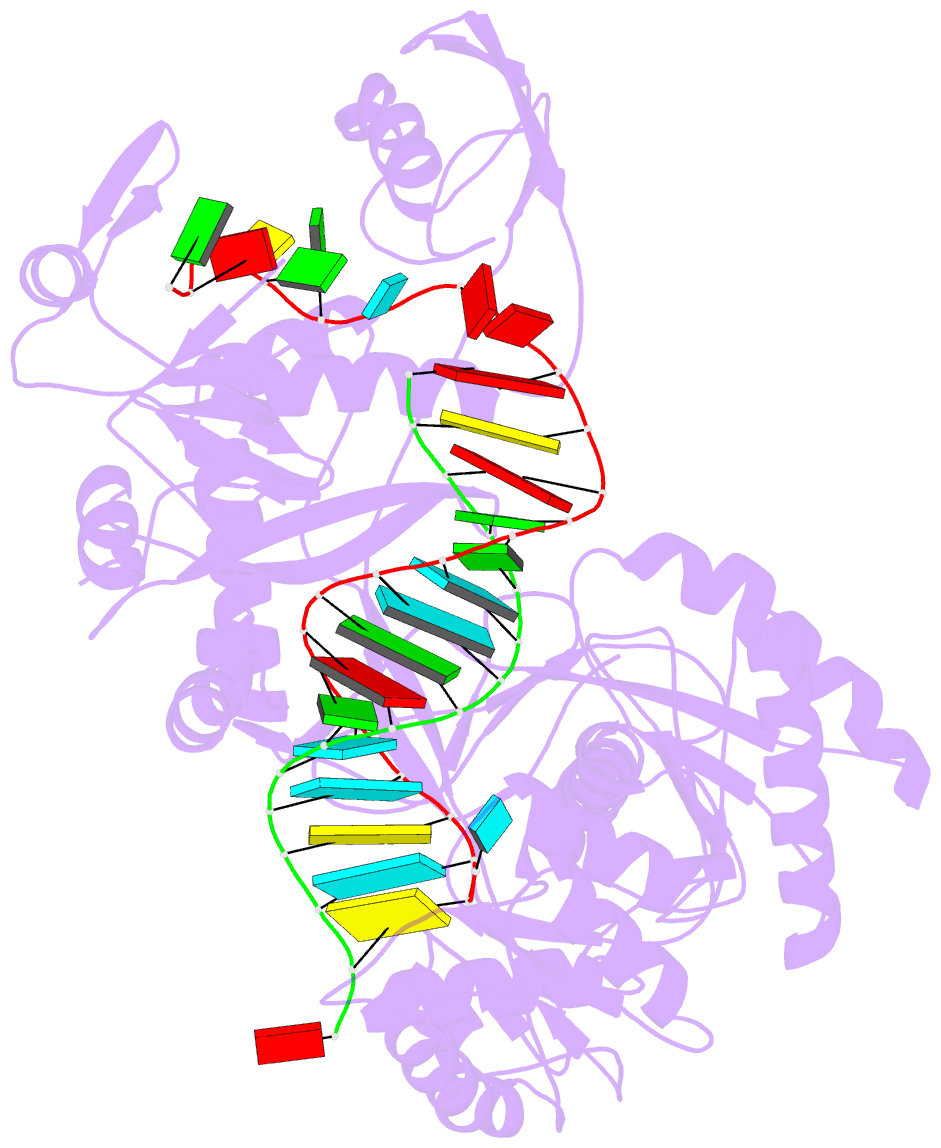
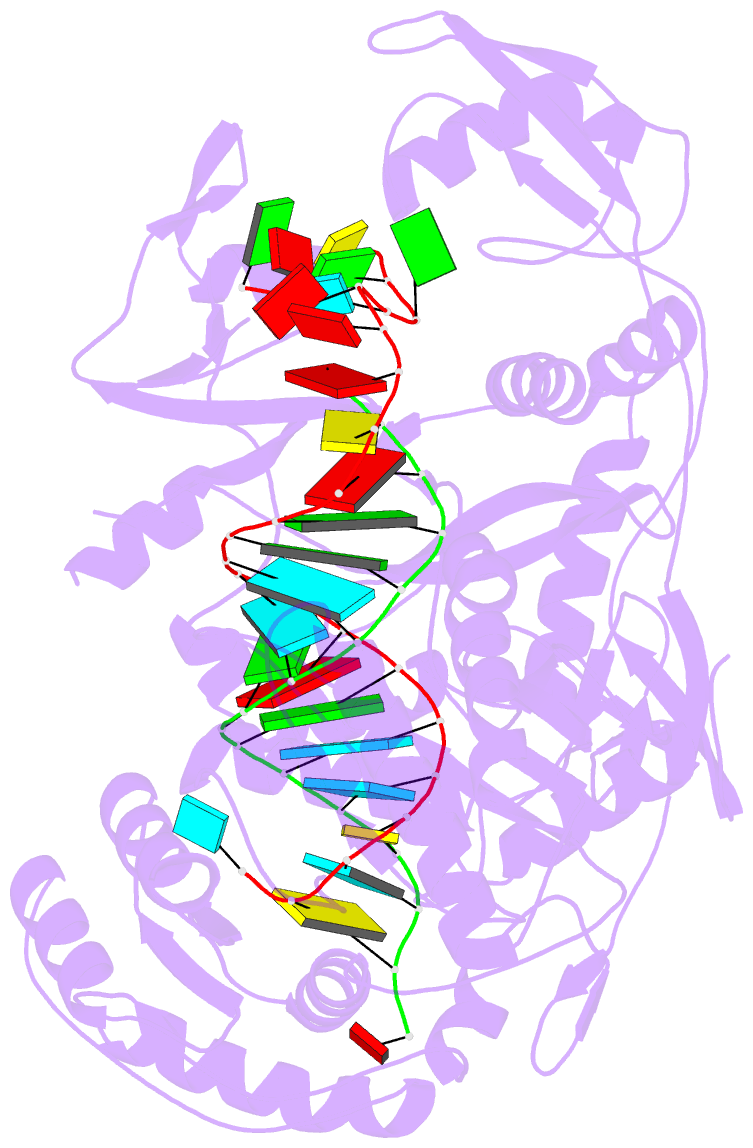
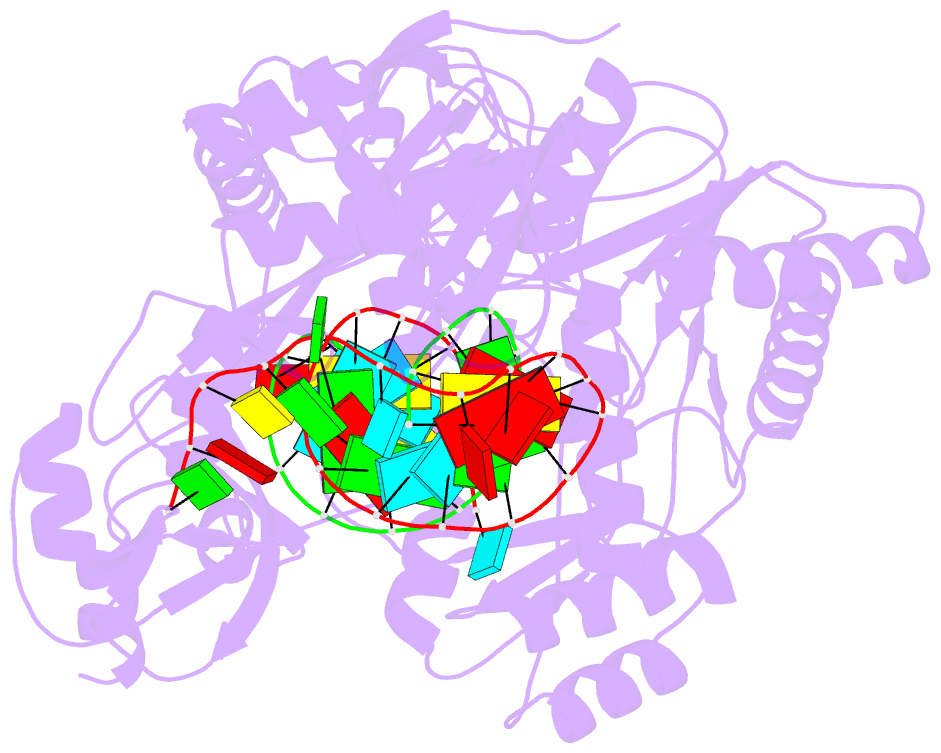
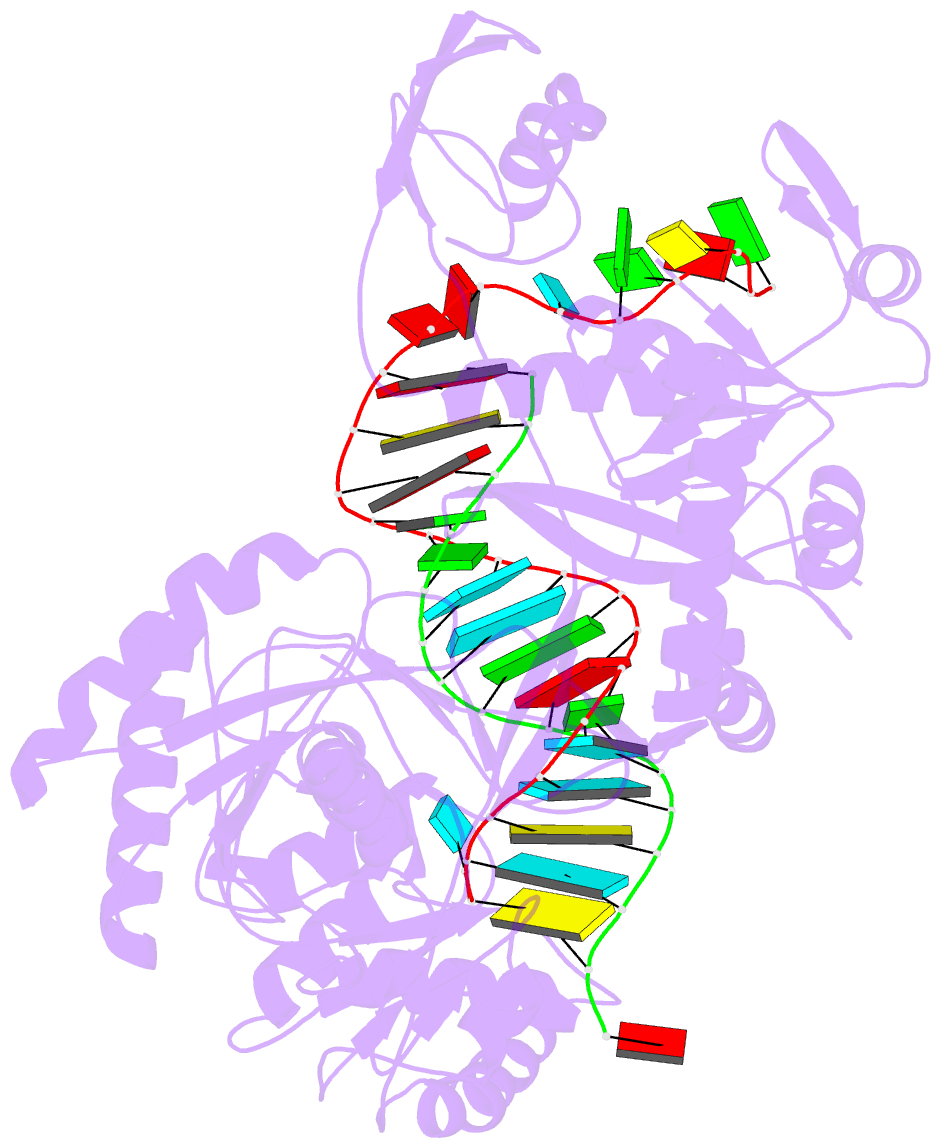
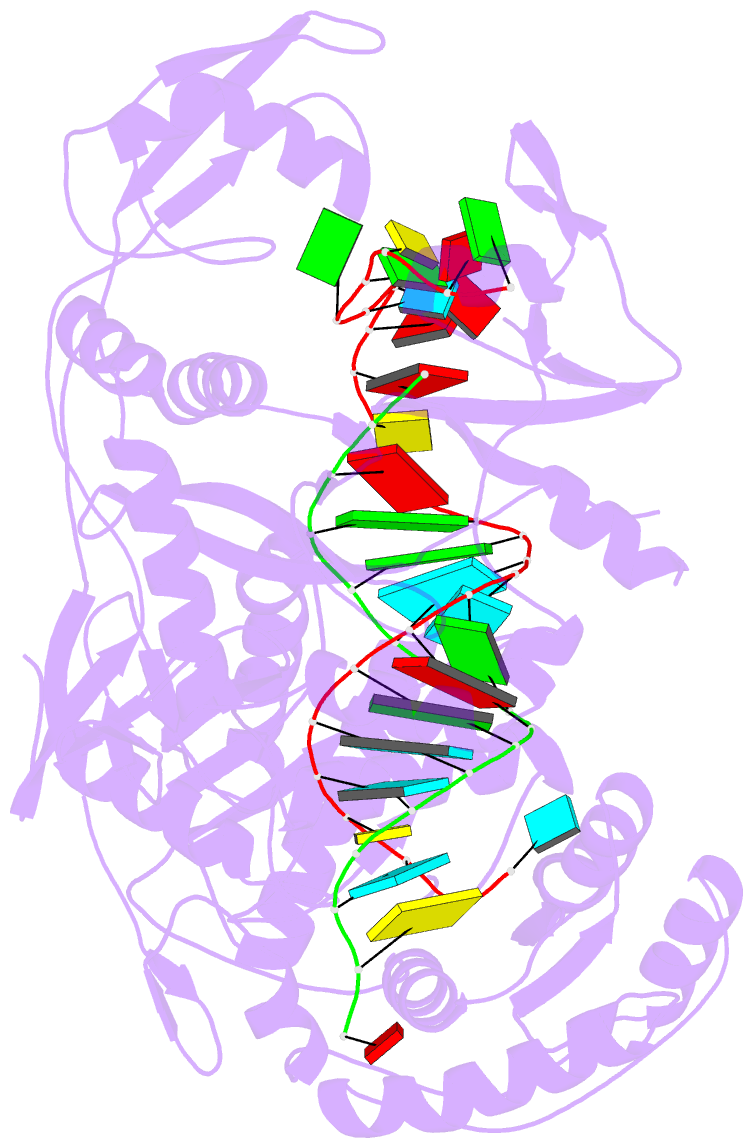
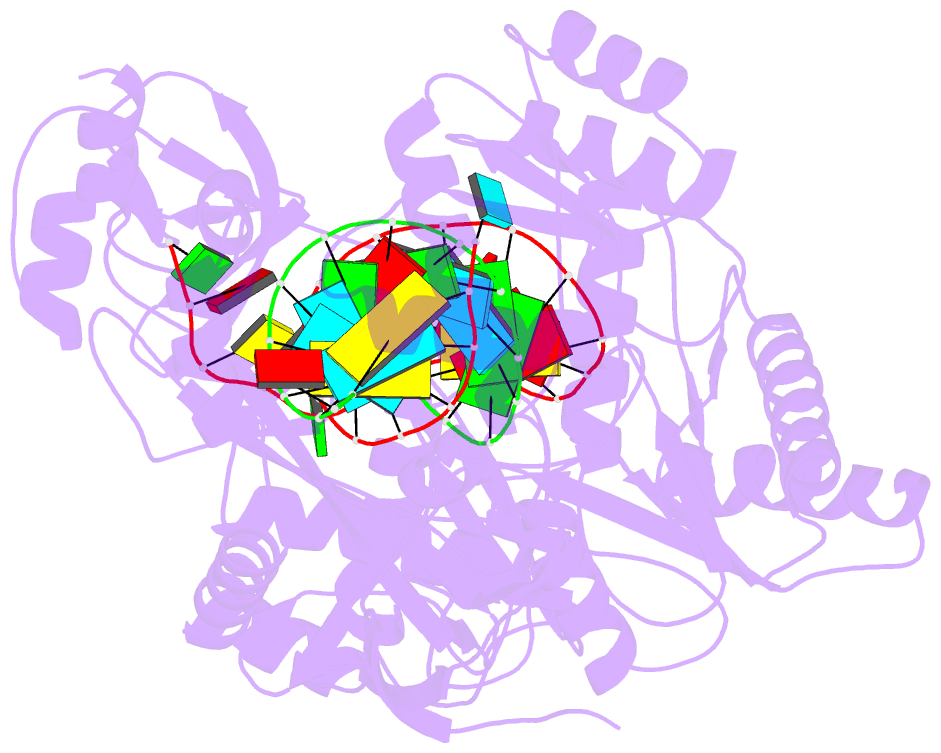
- cryo-EM structure of ephydatia fluviatilis
piwia-pirna-target complex
- Reference
-
Anzelon TA, Chowdhury S, Hughes SM, Xiao Y, Lander GC,
MacRae IJ (2021): "Structural
basis for piRNA targeting." Nature,
597, 285-289. doi: 10.1038/s41586-021-03856-x.
- Abstract
- PIWI proteins use PIWI-interacting RNAs (piRNAs) to
identify and silence transposable elements and thereby
maintain genome integrity between metazoan
generations<sub>1</sub>. The targeting of
transposable elements by PIWI has been compared to mRNA
target recognition by Argonaute
proteins<sub>2,3</sub>, which use microRNA
(miRNA) guides, but the extent to which piRNAs resemble
miRNAs is not known. Here we present cryo-electron
microscopy structures of a PIWI-piRNA complex from the
sponge Ephydatia fluviatilis with and without target RNAs,
and a biochemical analysis of target recognition. Mirroring
Argonaute, PIWI identifies targets using the piRNA seed
region. However, PIWI creates a much weaker seed so that
stable target association requires further piRNA-target
pairing, making piRNAs less promiscuous than miRNAs. Beyond
the seed, the structure of PIWI facilitates piRNA-target
pairing in a manner that is tolerant of mismatches, leading
to long-lived PIWI-piRNA-target interactions that may
accumulate on transposable-element transcripts. PIWI
ensures targeting fidelity by physically blocking the
propagation of piRNA-target interactions in the absence of
faithful seed pairing, and by requiring an extended
piRNA-target duplex to reach an endonucleolytically active
conformation. PIWI proteins thereby minimize off-targeting
cellular mRNAs while defending against evolving genomic
threats.