Summary information and primary citation
- PDB-id
-
7kt0;
DSSR-derived features in text and
JSON formats; DNAproDB
- Class
- replication-DNA
- Method
- X-ray (1.36 Å)
- Summary
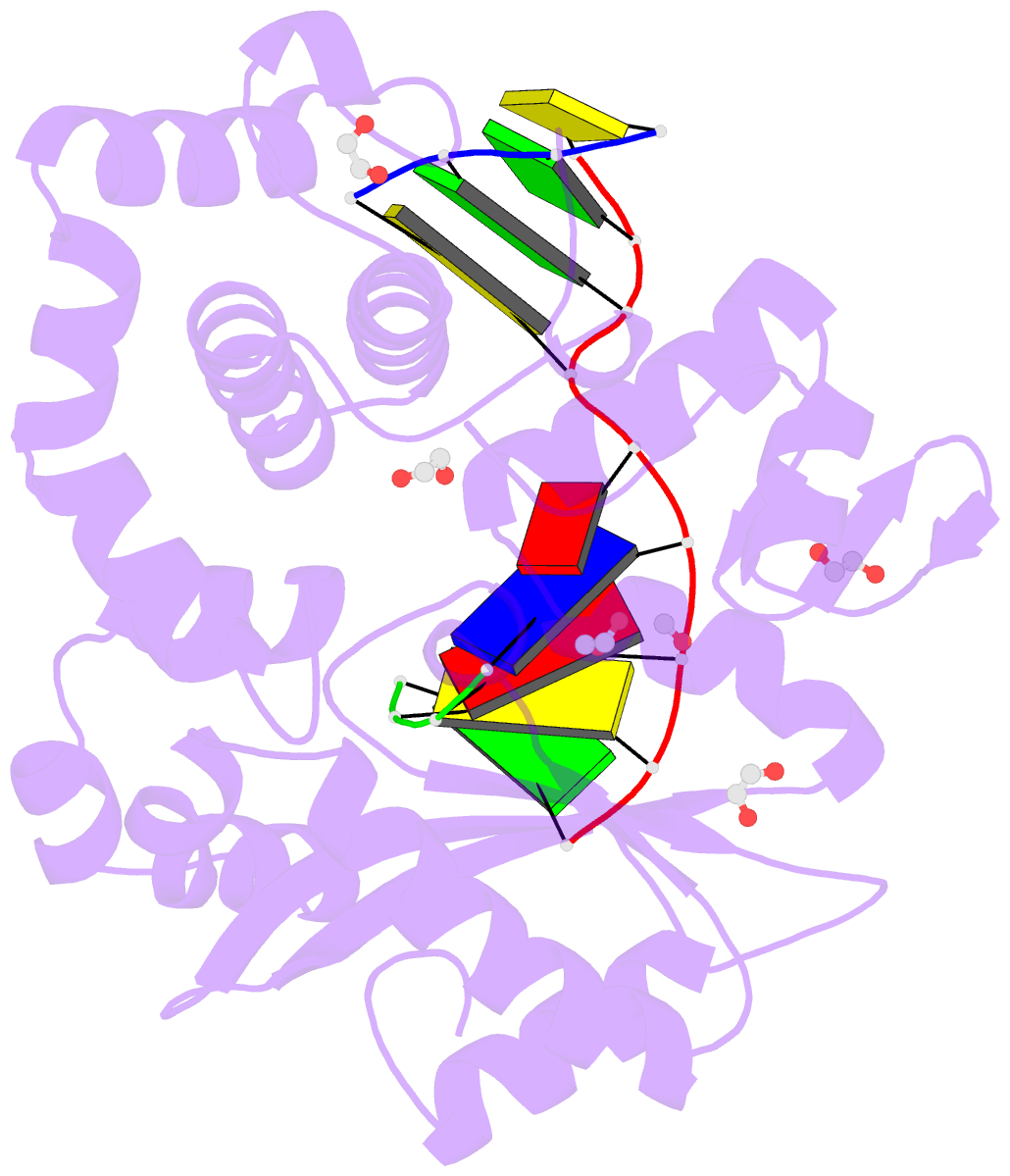
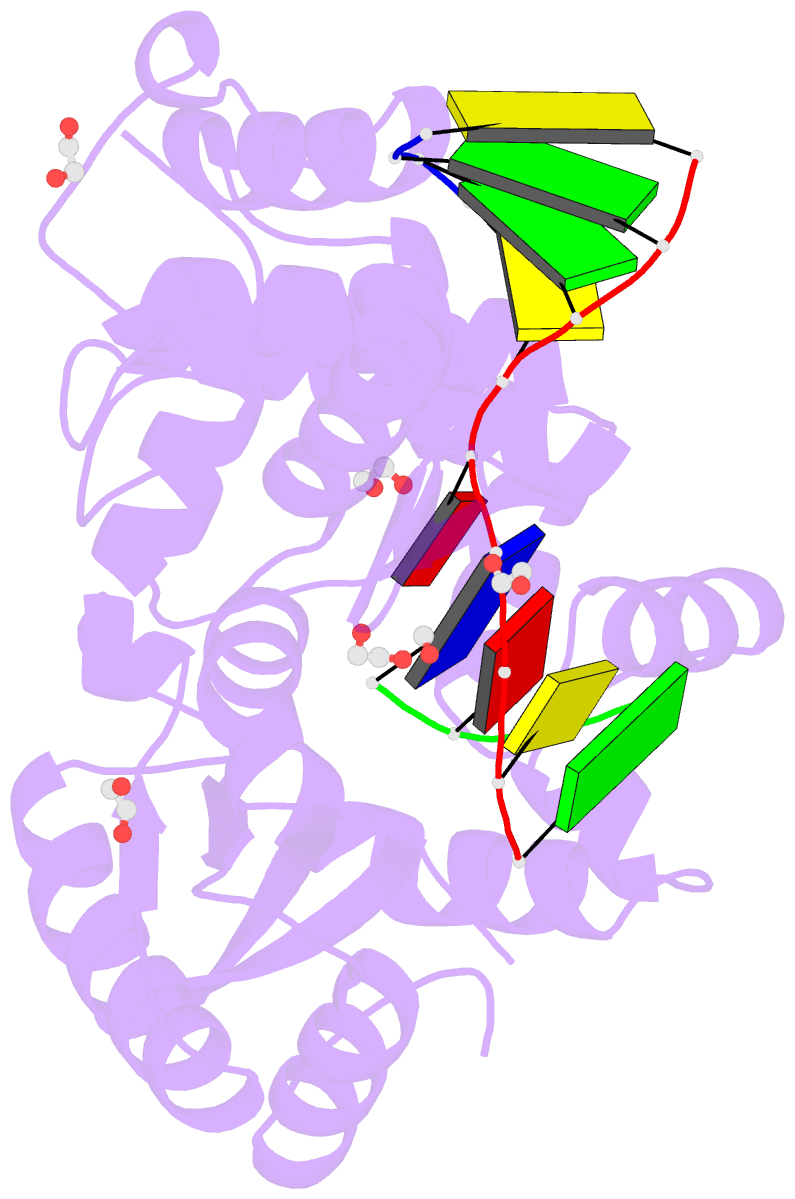
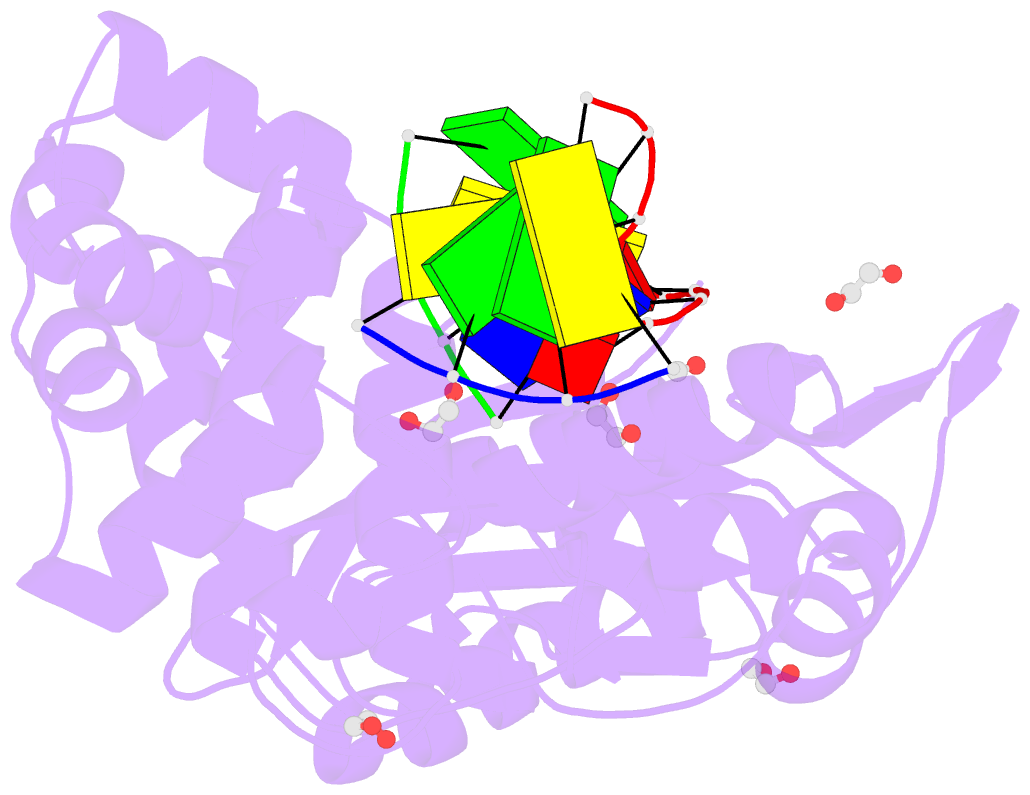
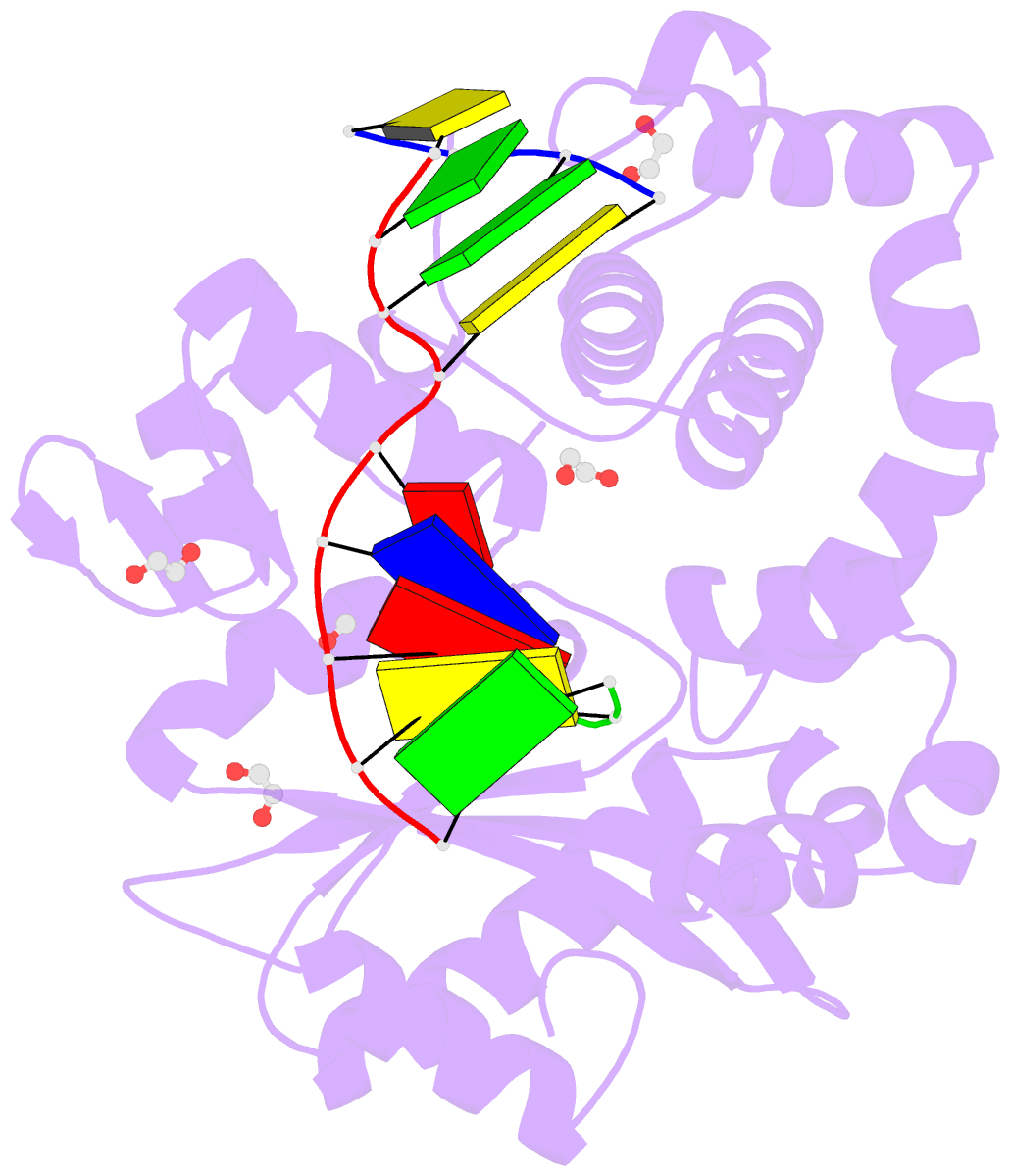
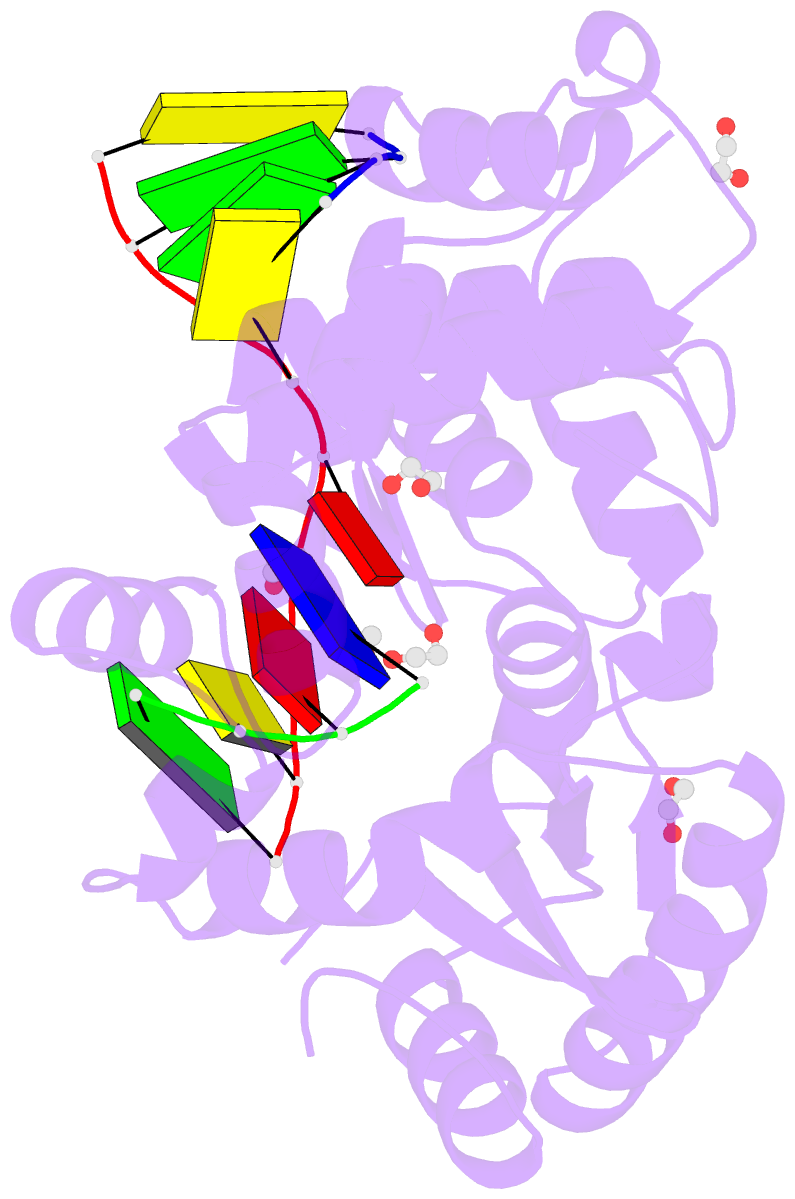
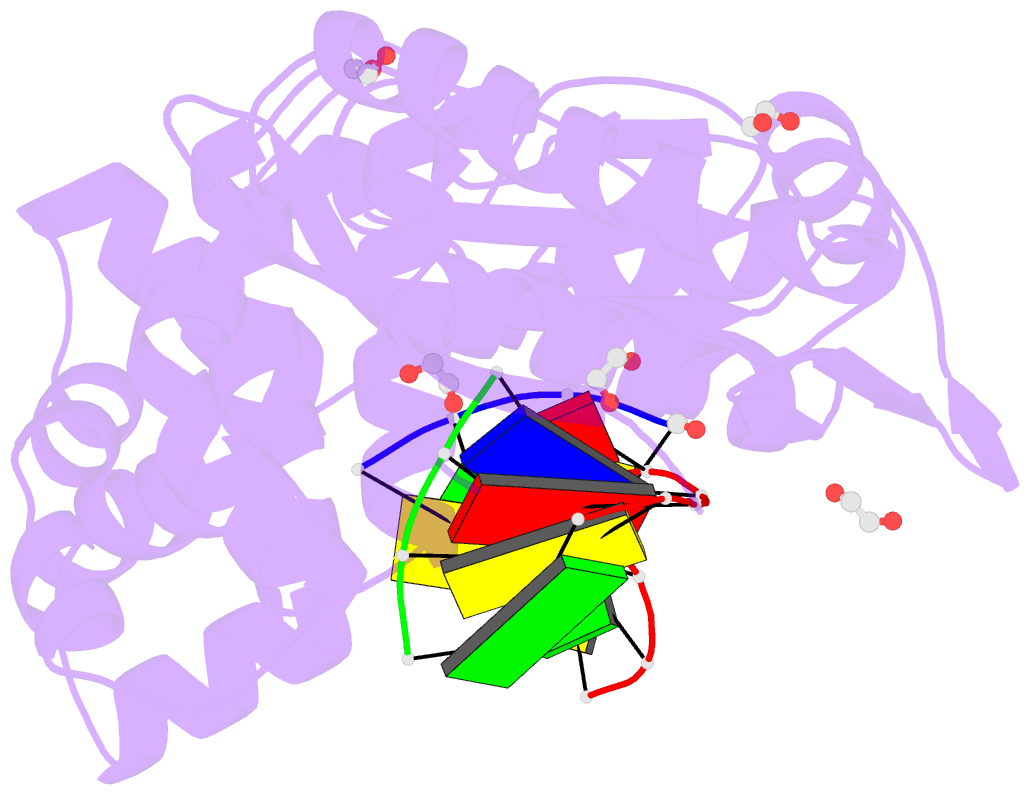
- DNA polymerase mu, dgtp:at ground state ternary
complex, 50 mm mg2+ (60min)
- Reference
-
Jamsen JA, Sassa A, Shock DD, Beard WA, Wilson SH (2021):
"Watching a
double strand break repair polymerase insert a
pro-mutagenic oxidized nucleotide." Nat
Commun, 12, 2059. doi: 10.1038/s41467-021-21354-6.
- Abstract
- Oxidized dGTP (8-oxo-7,8-dihydro-2´-deoxyguanosine
triphosphate, 8-oxodGTP) insertion by DNA polymerases
strongly promotes cancer and human disease. How DNA
polymerases discriminate against oxidized and undamaged
nucleotides, especially in error-prone double strand break
(DSB) repair, is poorly understood. High-resolution
time-lapse X-ray crystallography snapshots of DSB repair
polymerase μ undergoing DNA synthesis reveal that a third
active site metal promotes insertion of oxidized and
undamaged dGTP in the canonical anti-conformation opposite
template cytosine. The product metal bridged O8 with
product oxygens, and was not observed in the
syn-conformation opposite template adenine
(A<sub>t</sub>). Rotation of
A<sub>t</sub> into the syn-conformation enabled
undamaged dGTP misinsertion. Exploiting metal and substrate
dynamics in a rigid active site allows 8-oxodGTP to
circumvent polymerase fidelity safeguards to promote
pro-mutagenic double strand break repair.