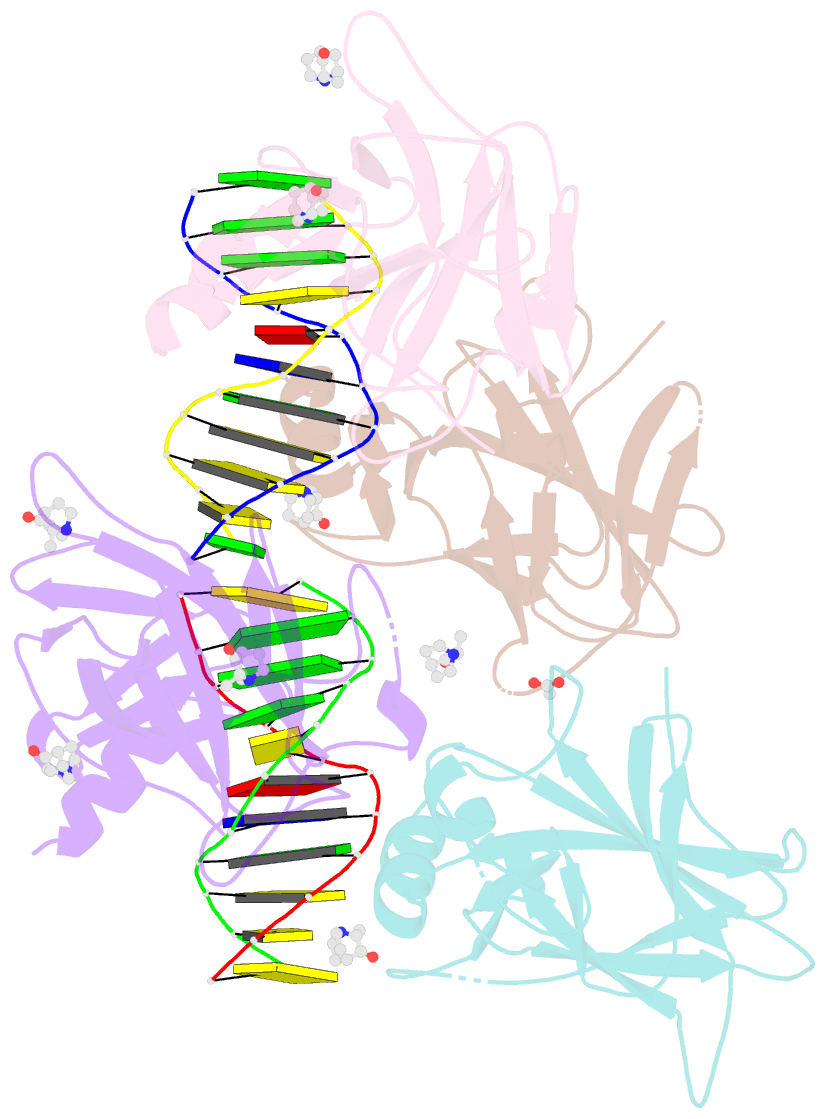
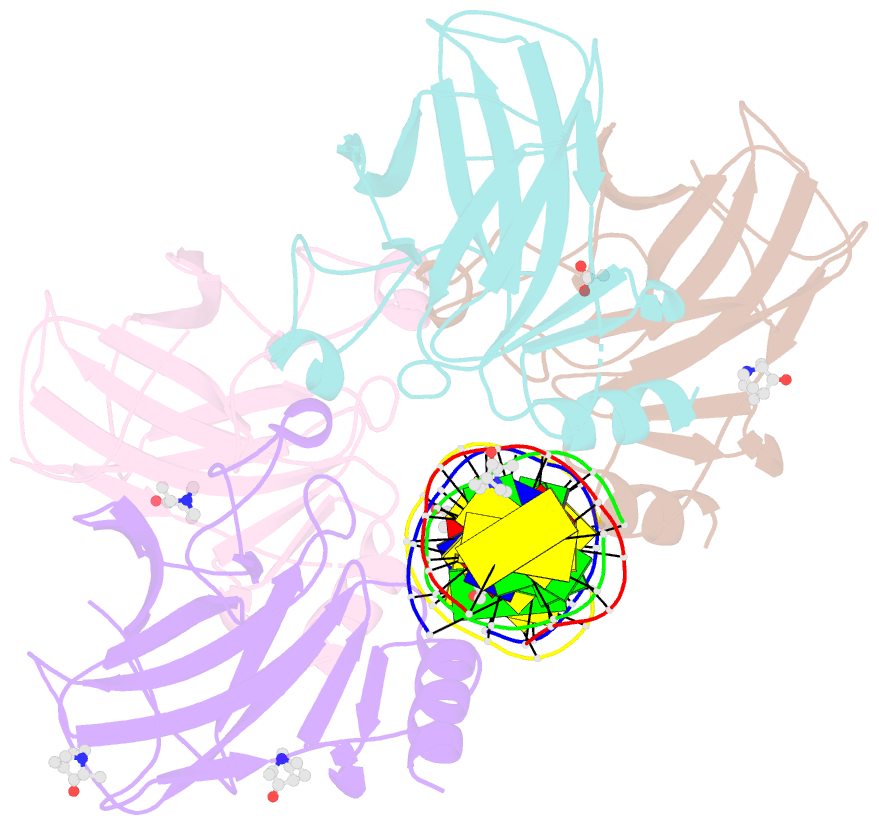
Summary information and primary citation
- PDB-id
-
7b46;
DSSR-derived features in text and
JSON formats; DNAproDB
- Class
- transcription
- Method
- X-ray (2.02 Å)
- Summary
- Structural basis of reactivation of oncogenic p53
mutants by a small molecule: methylene quinuclidinone (mq).
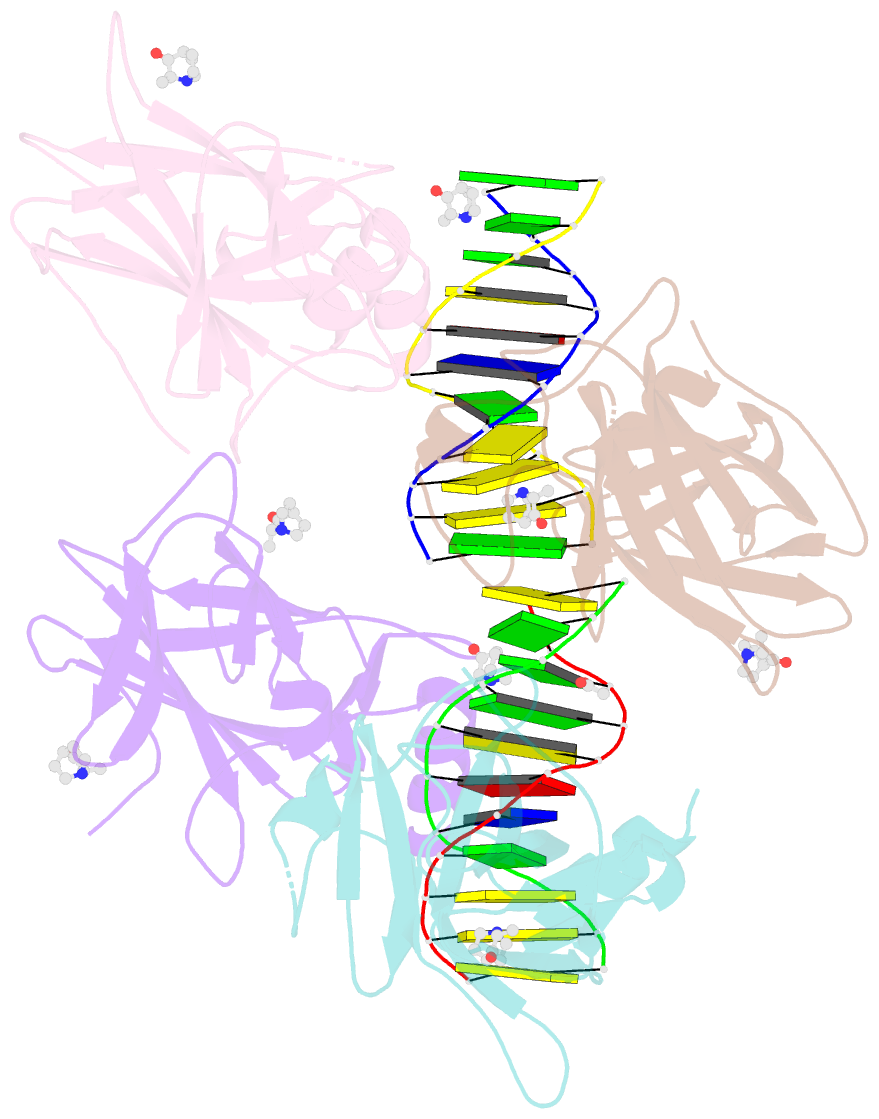
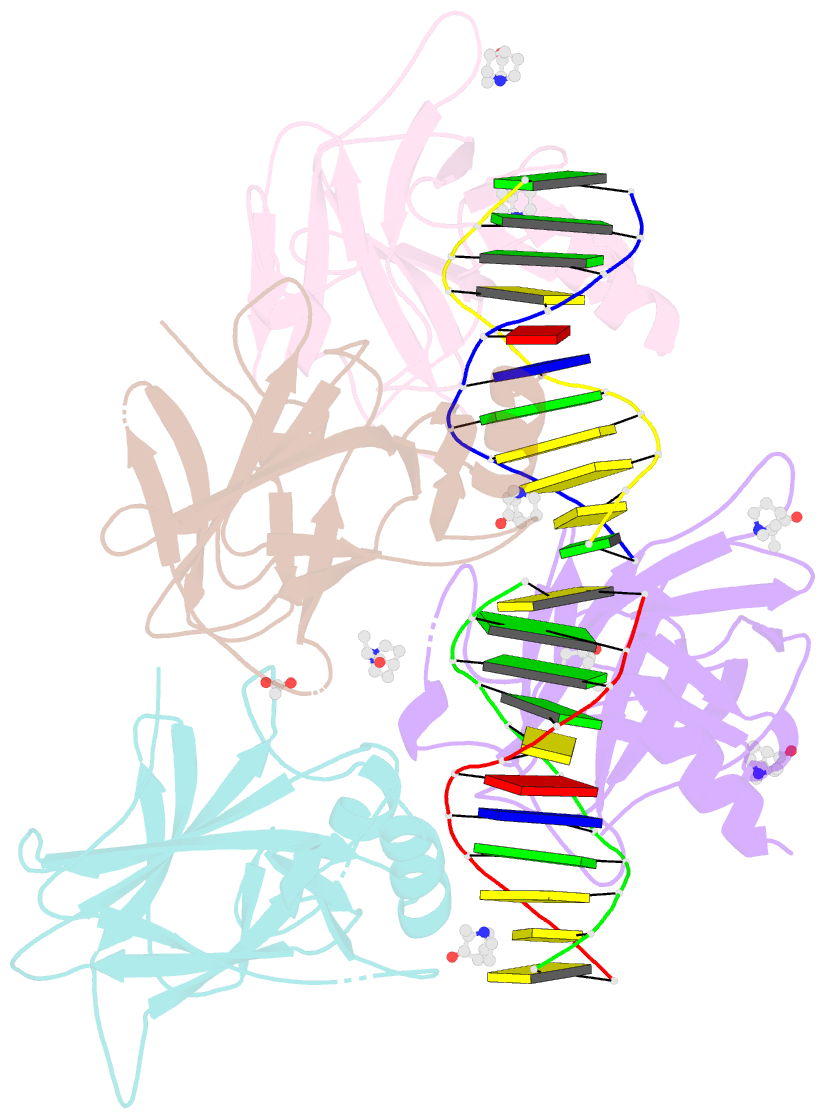
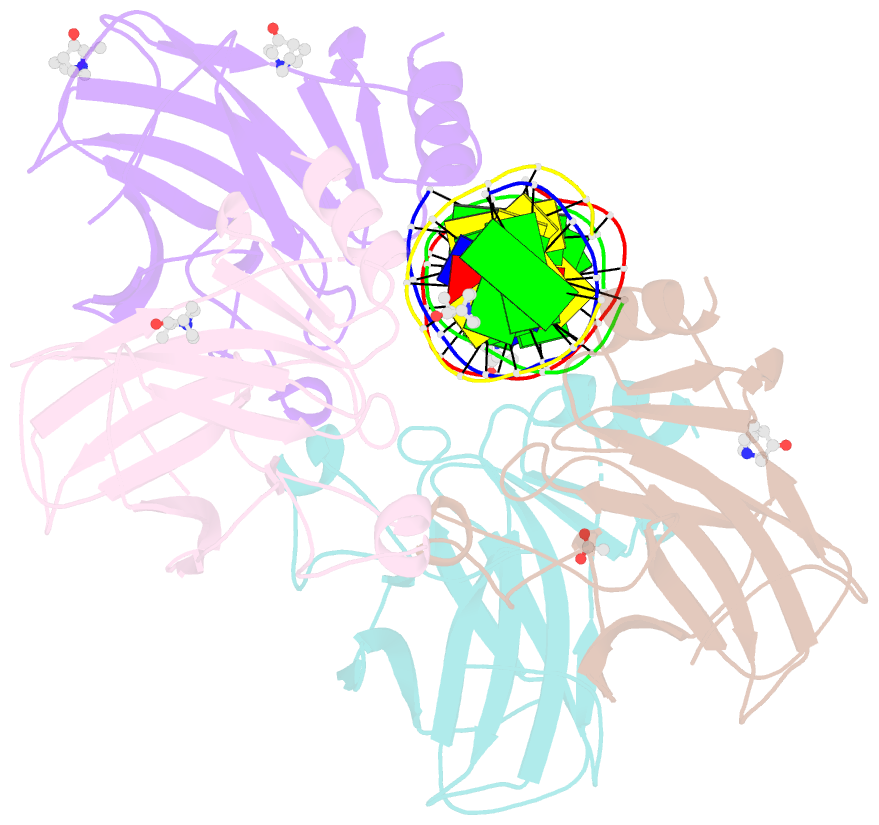
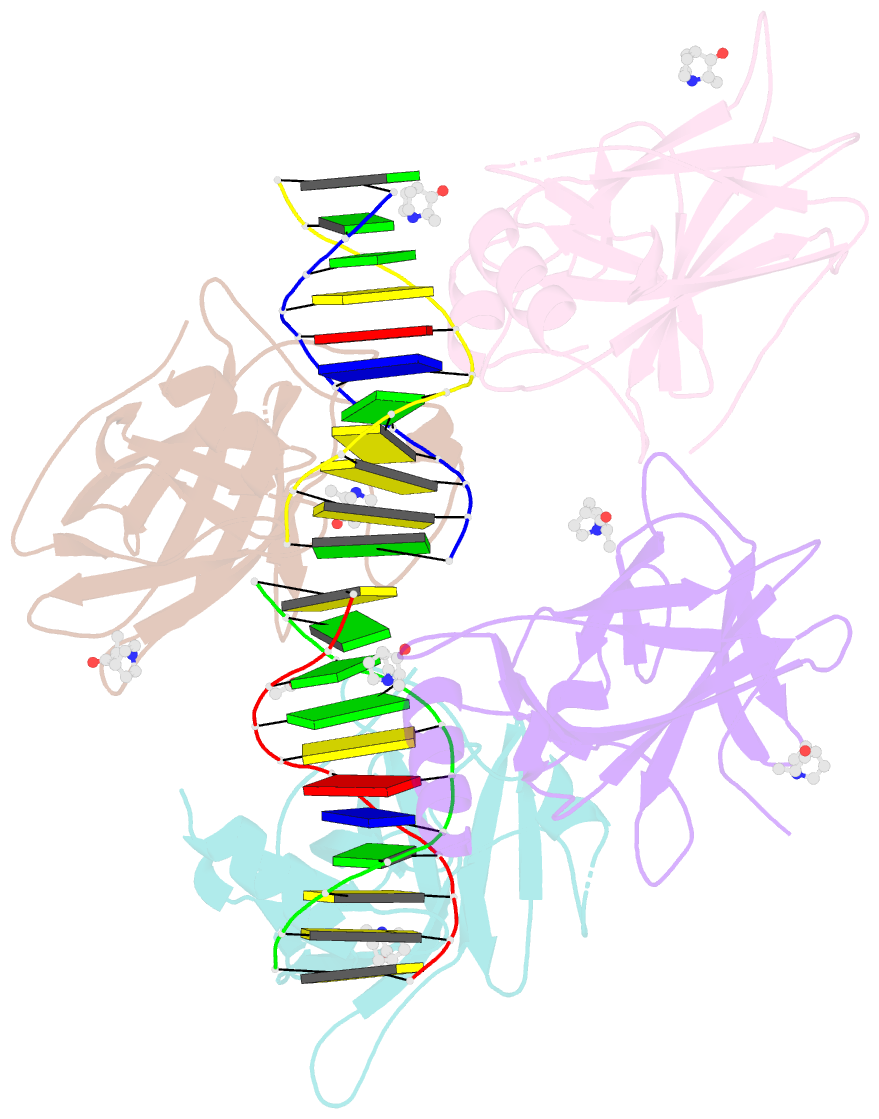
human wild-type p53dbd bound to DNA and mq: wt-DNA-mq
(p1)
- Reference
-
Degtjarik O, Golovenko D, Diskin-Posner Y, Abrahmsen L,
Rozenberg H, Shakked Z (2021): "Structural
basis of reactivation of oncogenic p53 mutants by a small
molecule: methylene quinuclidinone (MQ)." Nat
Commun, 12, 7057. doi: 10.1038/s41467-021-27142-6.
- Abstract
- In response to genotoxic stress, the tumor suppressor
p53 acts as a transcription factor by regulating the
expression of genes critical for cancer prevention.
Mutations in the gene encoding p53 are associated with
cancer development. PRIMA-1 and eprenetapopt
(APR-246/PRIMA-1<sub>MET</sub>) are small
molecules that are converted into the biologically active
compound, methylene quinuclidinone (MQ), shown to
reactivate mutant p53 by binding covalently to cysteine
residues. Here, we investigate the structural basis of
mutant p53 reactivation by MQ based on a series of
high-resolution crystal structures of cancer-related and
wild-type p53 core domains bound to MQ in their free state
and in complexes with their DNA response elements. Our data
demonstrate that MQ binds to several cysteine residues
located at the surface of the core domain. The structures
reveal a large diversity in MQ interaction modes that
stabilize p53 and its complexes with DNA, leading to a
common global effect that is pertinent to the restoration
of non-functional p53 proteins.