Summary information and primary citation
- PDB-id
-
7asm;
DSSR-derived features in text and
JSON formats; DNAproDB
- Class
- ribosome
- Method
- cryo-EM (2.48 Å)
- Summary
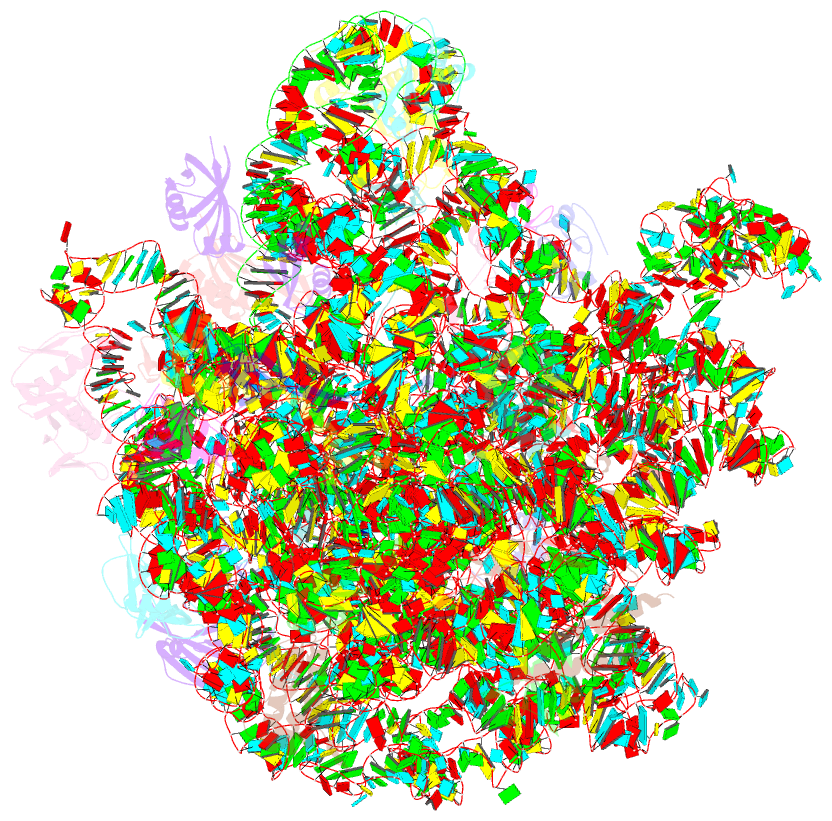
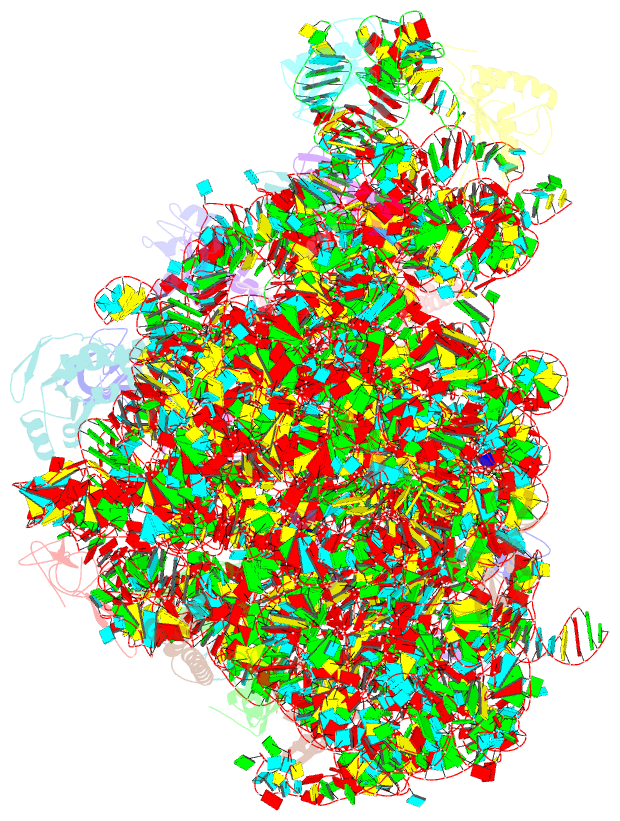
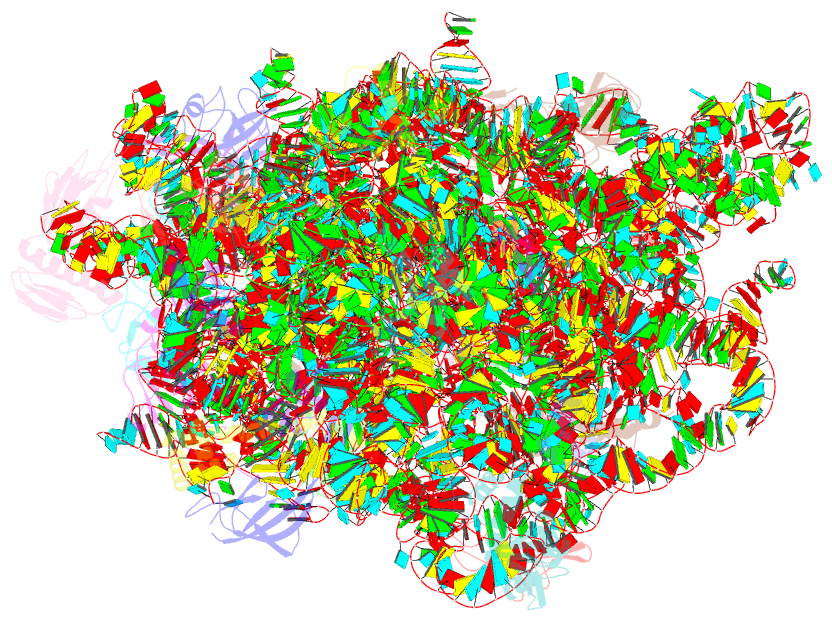
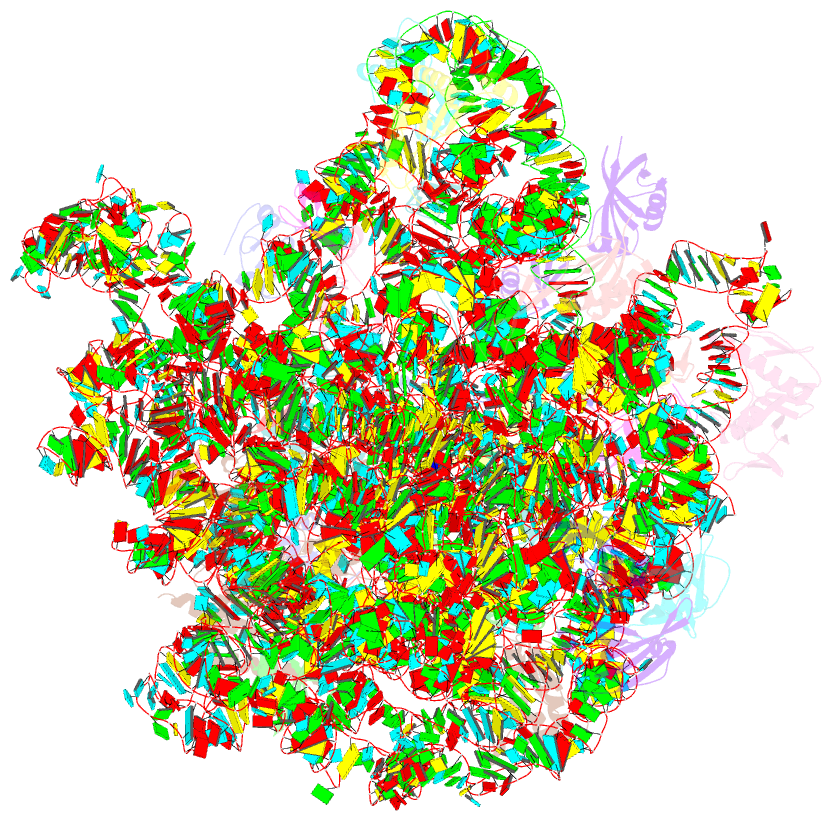
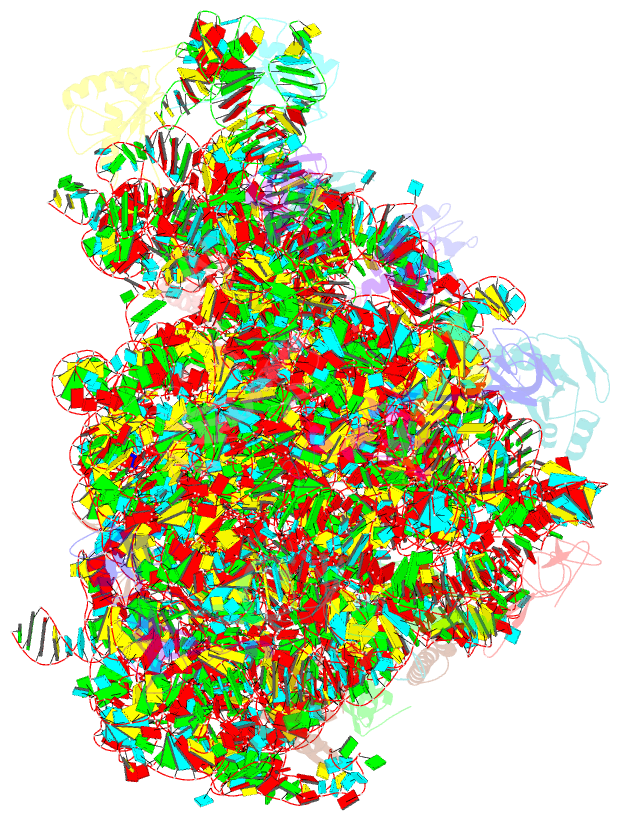
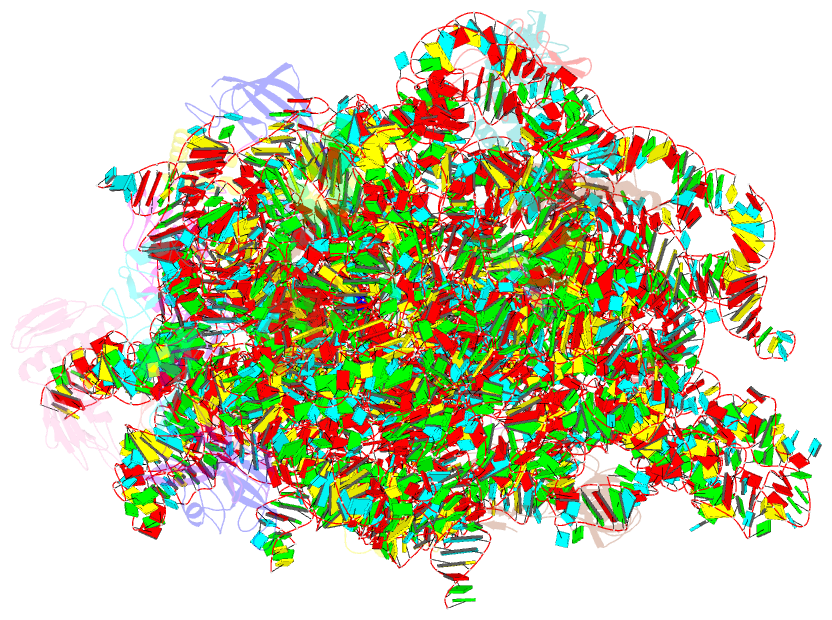
- Staphylococcus aureus 50s after 30 minutes incubation
at 37c
- Reference
-
Cimicata G, Fridkin G, Bose T, Eyal Z, Halfon Y,
Breiner-Goldstein E, Fox T, Zimmerman E, Bashan A, de Val
N, Wlodawer A, Yonath A (2022): "Structural
Studies Reveal the Role of Helix 68 in the Elongation
Step of Protein Biosynthesis." Mbio,
13, e0030622. doi: 10.1128/mbio.00306-22.
- Abstract
- The ribosome, a multicomponent assembly consisting of
RNA and proteins, is a pivotal macromolecular machine that
translates the genetic code into proteins. The large
ribosomal subunit rRNA helix 68 (H68) is a key element in
the protein synthesis process, as it coordinates the
coupled movements of the actors involved in translocation,
including the tRNAs and L1 stalk. Examination of
cryo-electron microscopy (cryo-EM) structures of ribosomes
incubated for various time durations at physiological
temperatures led to the identification of functionally
relevant H68 movements. These movements assist the
transition of the L1 stalk between its open and closed
states. H68 spatial flexibility and its significance to the
protein synthesis process were confirmed through its
effective targeting with antisense PNA oligomers. Our
results suggest that H68 is actively involved in ribosome
movements that are central to the elongation process.