Summary information and primary citation
- PDB-id
-
6wgc;
DSSR-derived features in text and
JSON formats; DNAproDB
- Class
- replication-DNA
- Method
- cryo-EM (4.3 Å)
- Summary
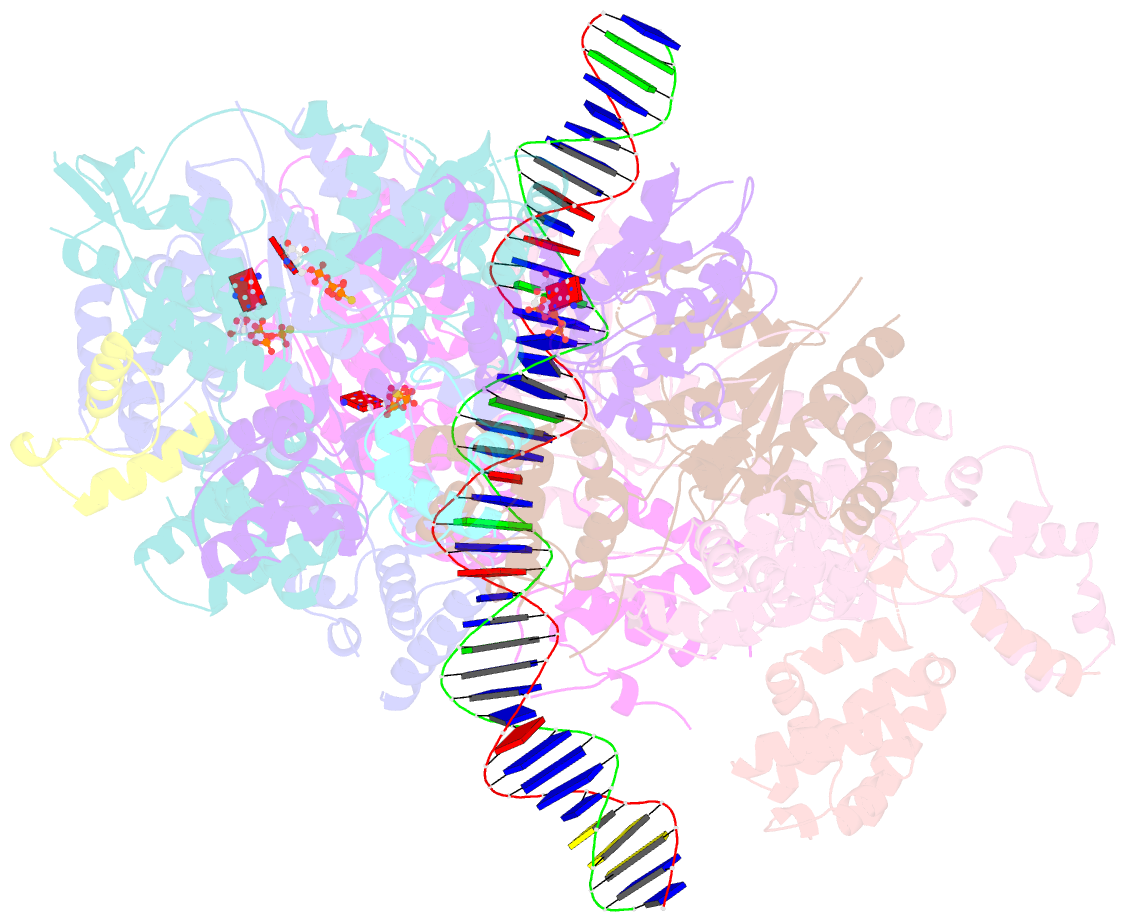
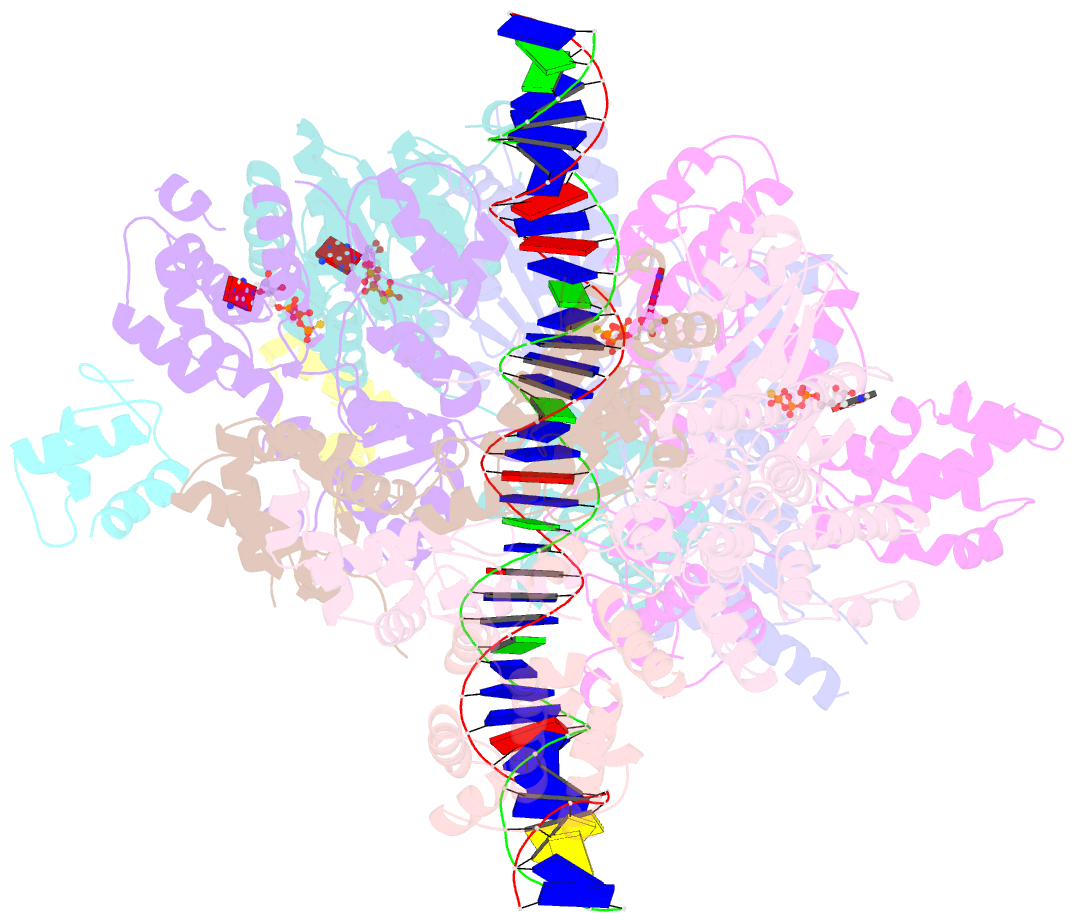
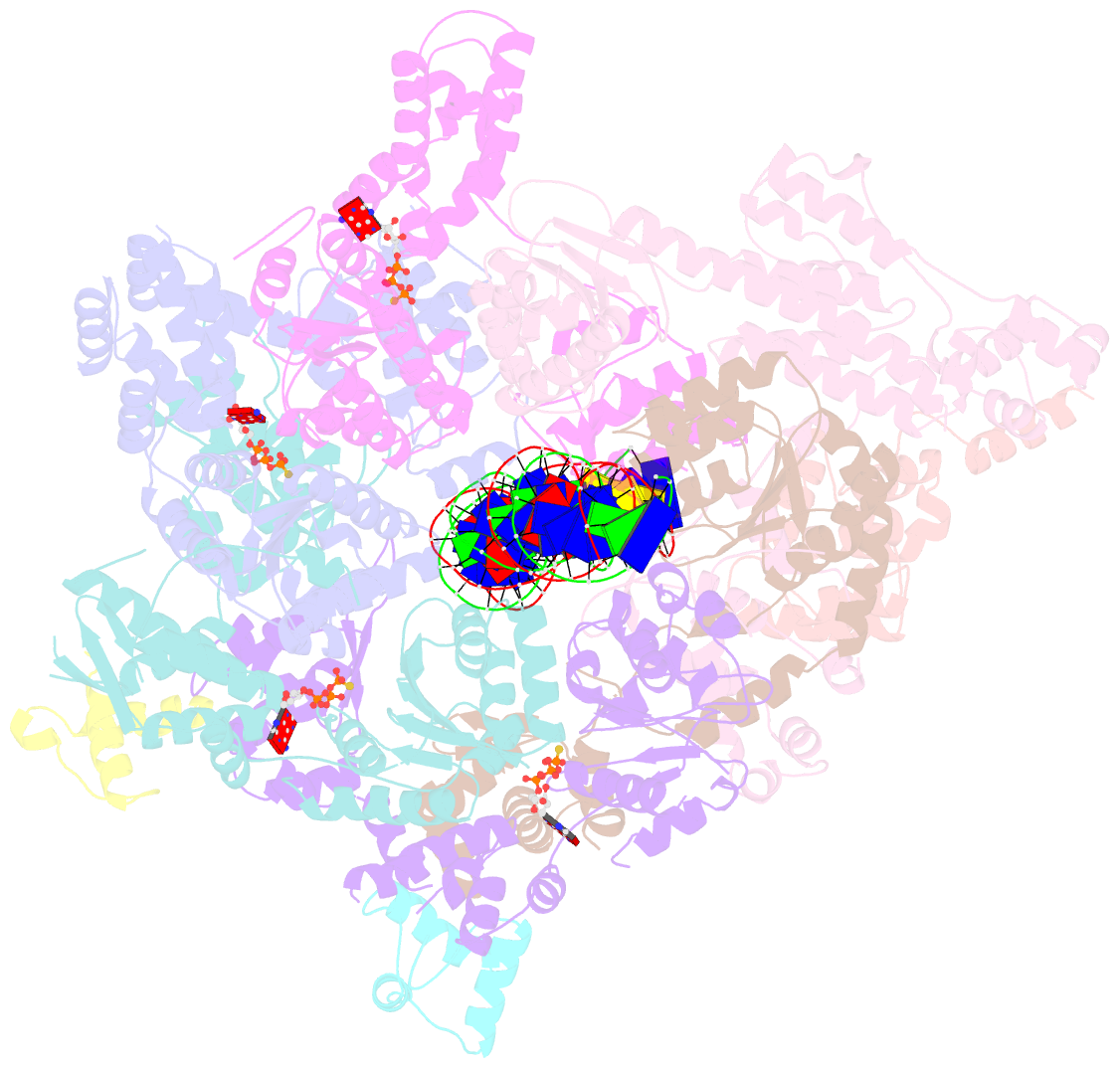
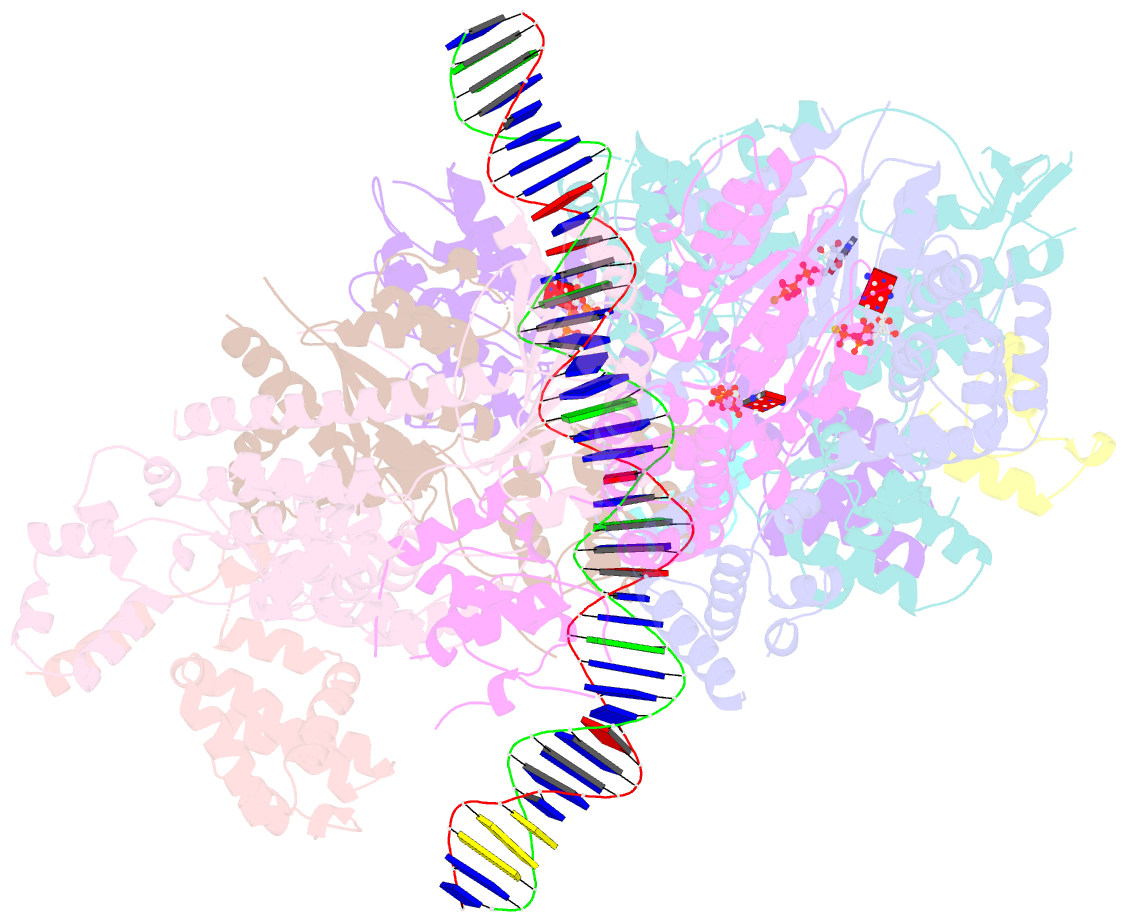
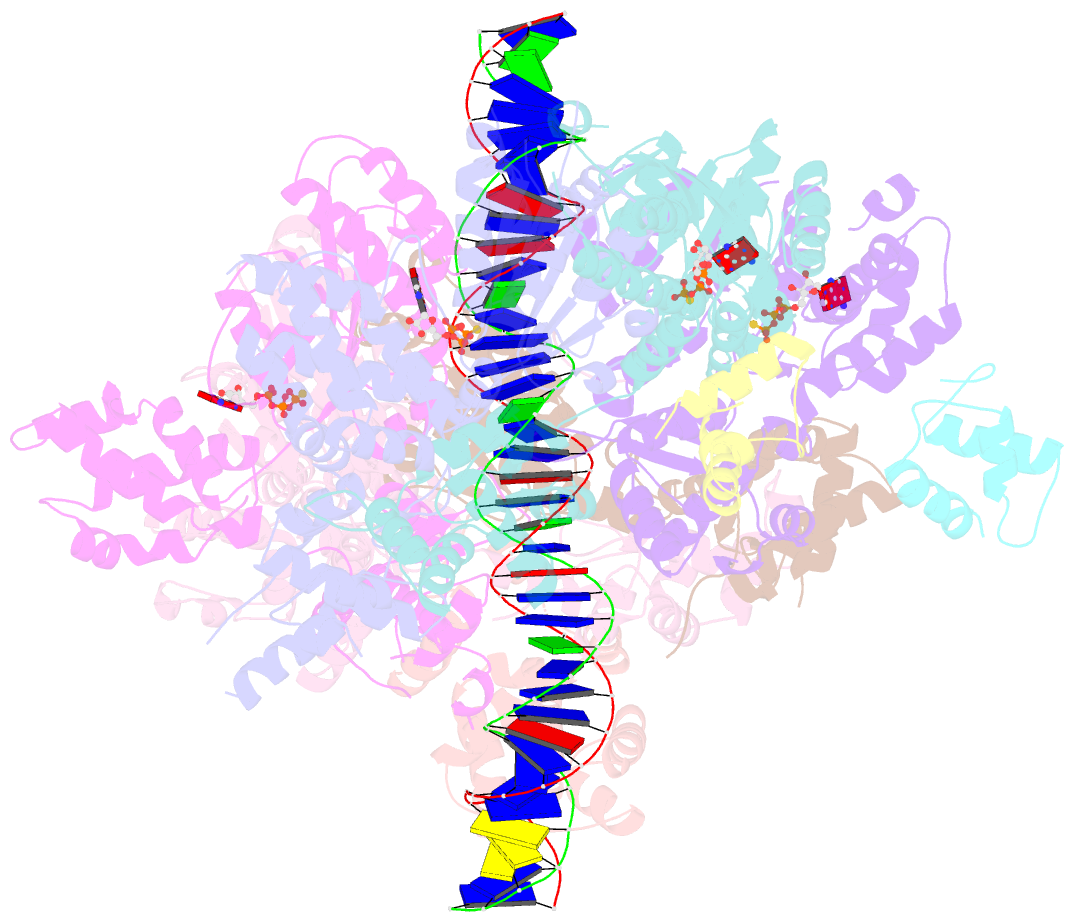
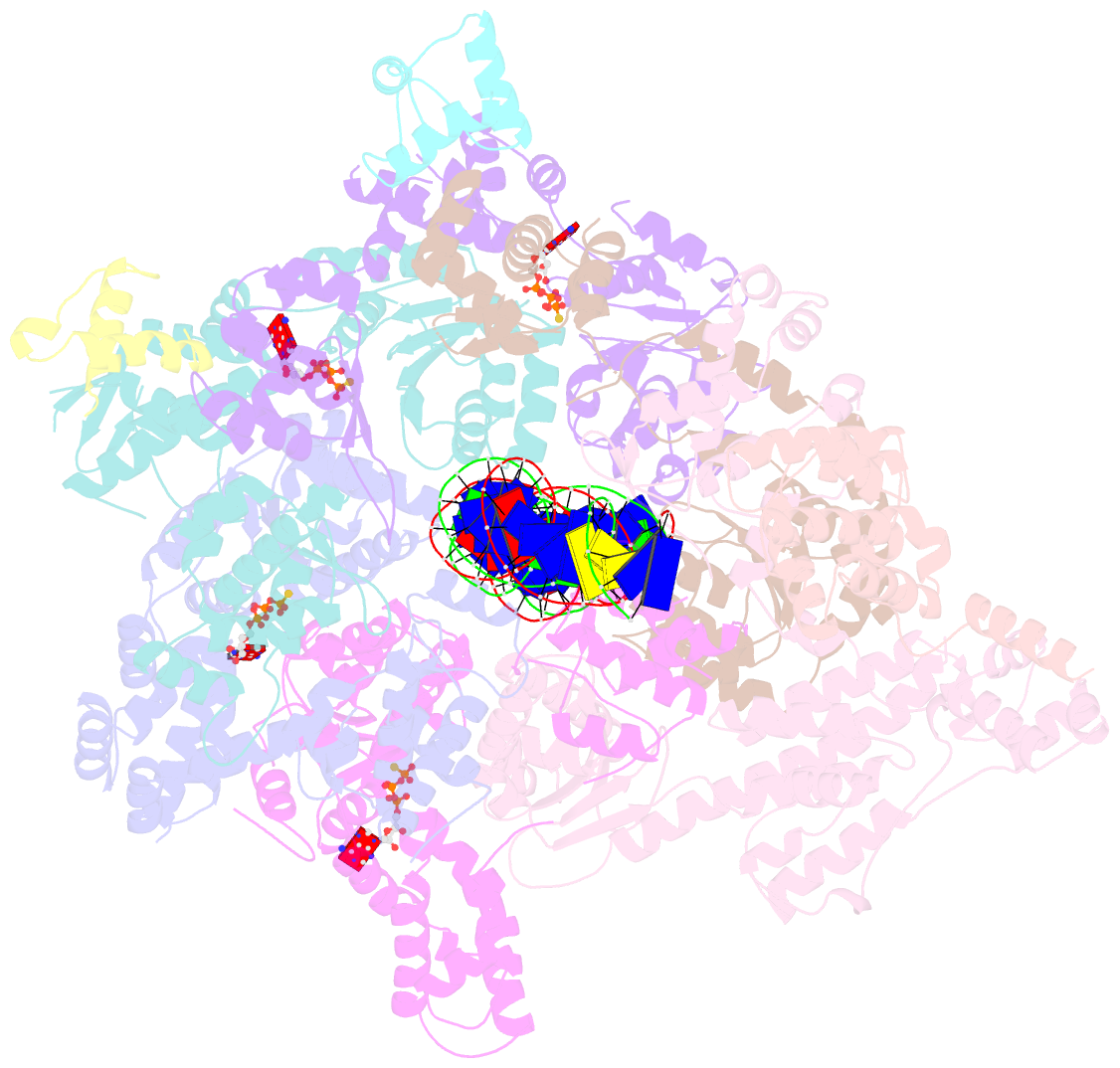
- Atomic model of semi-attached mutant occm-DNA complex
(orc-cdc6-cdt1-mcm2-7 with mcm6 whd truncation)
- Reference
-
Yuan Z, Schneider S, Dodd T, Riera A, Bai L, Yan C,
Magdalou I, Ivanov I, Stillman B, Li H, Speck C (2020):
"Structural
mechanism of helicase loading onto replication origin DNA
by ORC-Cdc6." Proc.Natl.Acad.Sci.USA,
117, 17747-17756. doi: 10.1073/pnas.2006231117.
- Abstract
- DNA replication origins serve as sites of replicative
helicase loading. In all eukaryotes, the six-subunit origin
recognition complex (Orc1-6; ORC) recognizes the
replication origin. During late M-phase of the cell-cycle,
Cdc6 binds to ORC and the ORC-Cdc6 complex loads in a
multistep reaction and, with the help of Cdt1, the core
Mcm2-7 helicase onto DNA. A key intermediate is the
ORC-Cdc6-Cdt1-Mcm2-7 (OCCM) complex in which DNA has been
already inserted into the central channel of Mcm2-7. Until
now, it has been unclear how the origin DNA is guided by
ORC-Cdc6 and inserted into the Mcm2-7 hexamer. Here, we
truncated the C-terminal winged-helix-domain (WHD) of Mcm6
to slow down the loading reaction, thereby capturing two
loading intermediates prior to DNA insertion in budding
yeast. In "semi-attached OCCM," the Mcm3 and Mcm7 WHDs
latch onto ORC-Cdc6 while the main body of the Mcm2-7
hexamer is not connected. In "pre-insertion OCCM," the main
body of Mcm2-7 docks onto ORC-Cdc6, and the origin DNA is
bent and positioned adjacent to the open DNA entry gate,
poised for insertion, at the Mcm2-Mcm5 interface. We used
molecular simulations to reveal the dynamic transition from
preloading conformers to the loaded conformers in which the
loading of Mcm2-7 on DNA is complete and the DNA entry gate
is fully closed. Our work provides multiple molecular
insights into a key event of eukaryotic DNA
replication.