Summary information and primary citation
- PDB-id
-
6gvq;
DSSR-derived features in text and
JSON formats; DNAproDB
- Class
- DNA binding protein
- Method
- NMR
- Summary
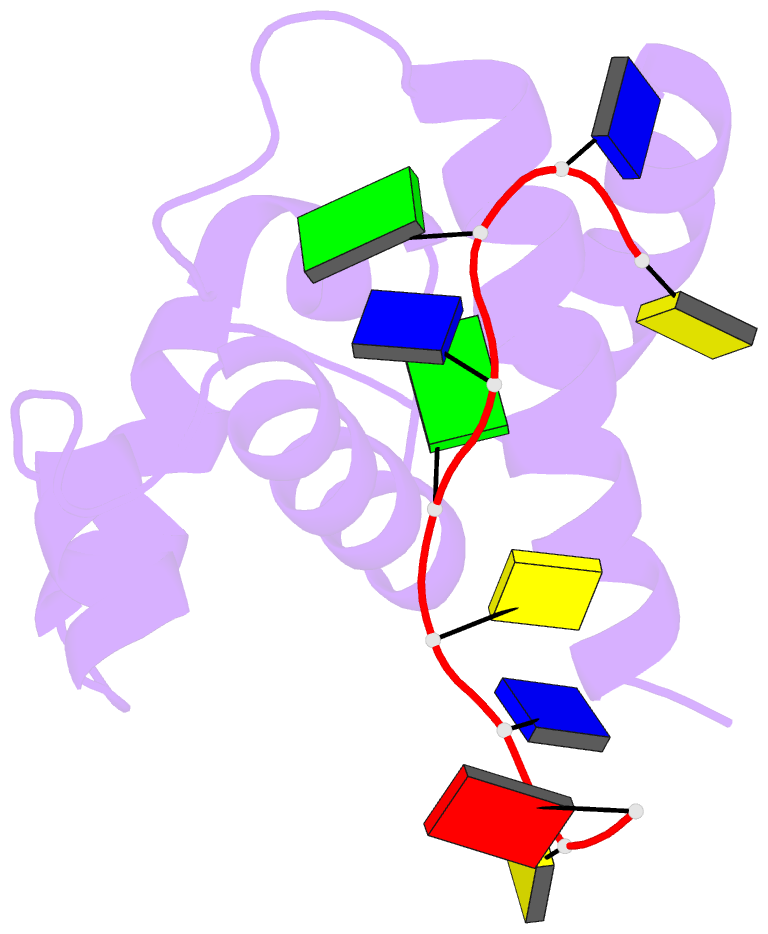
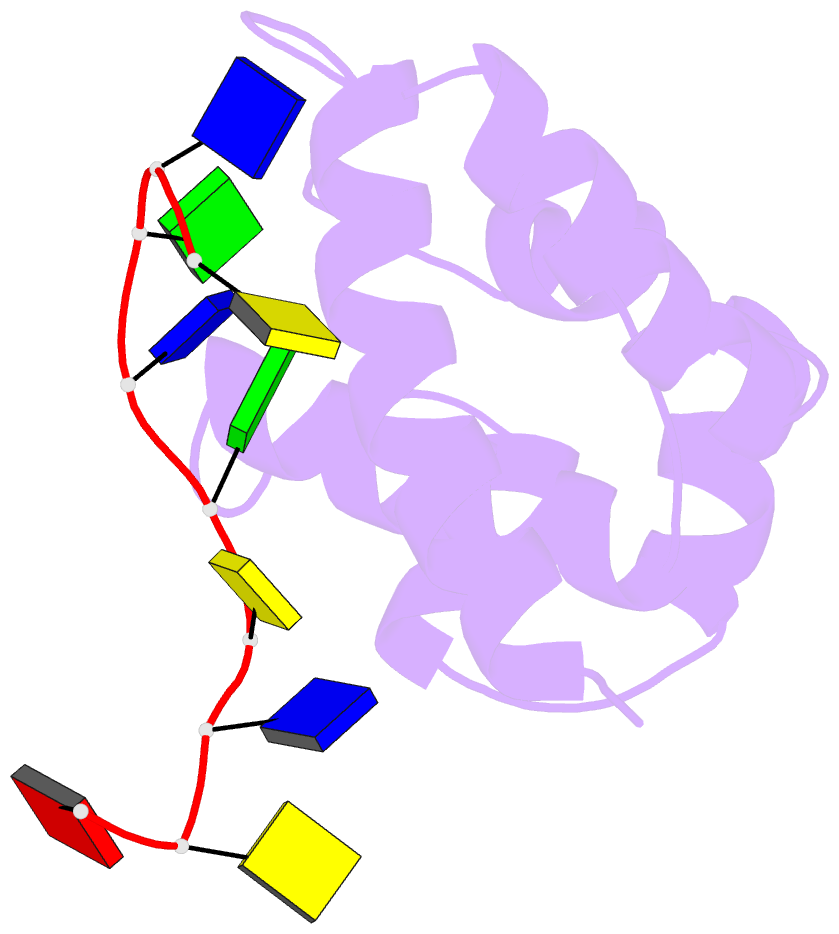
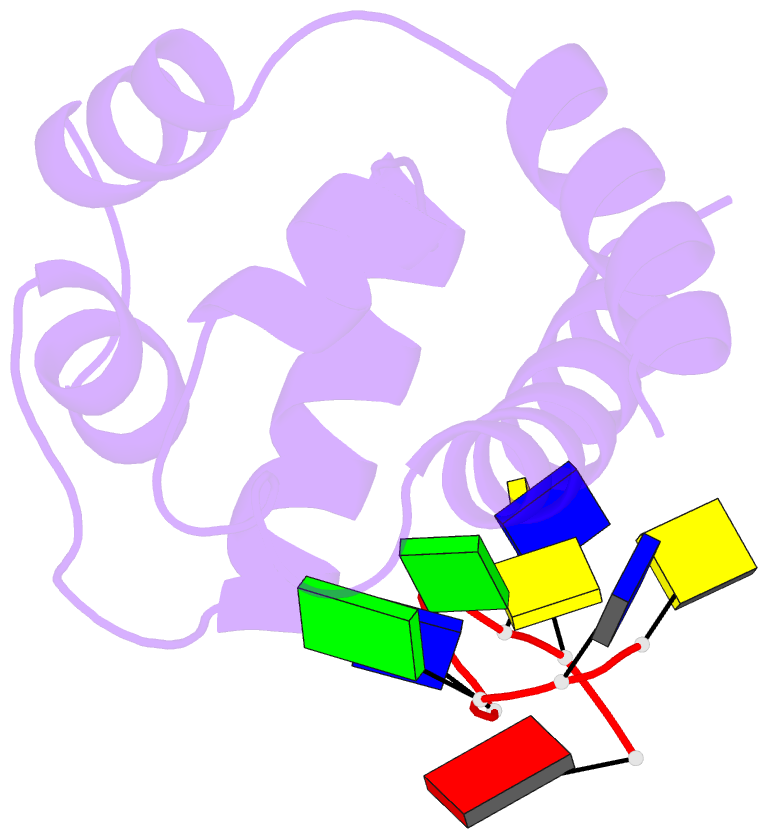
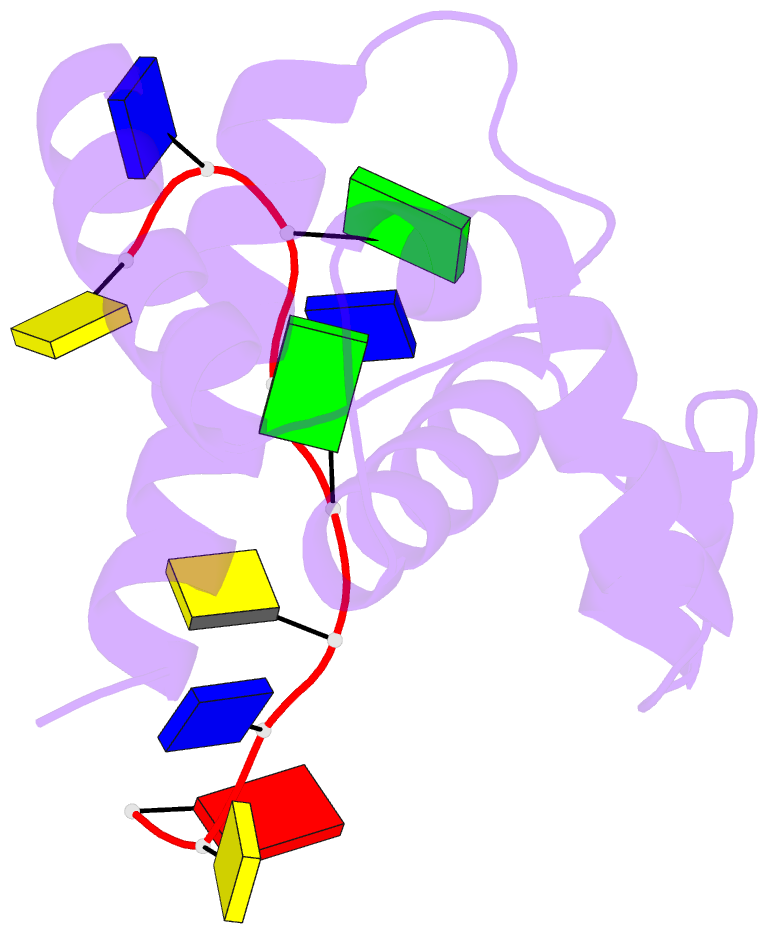
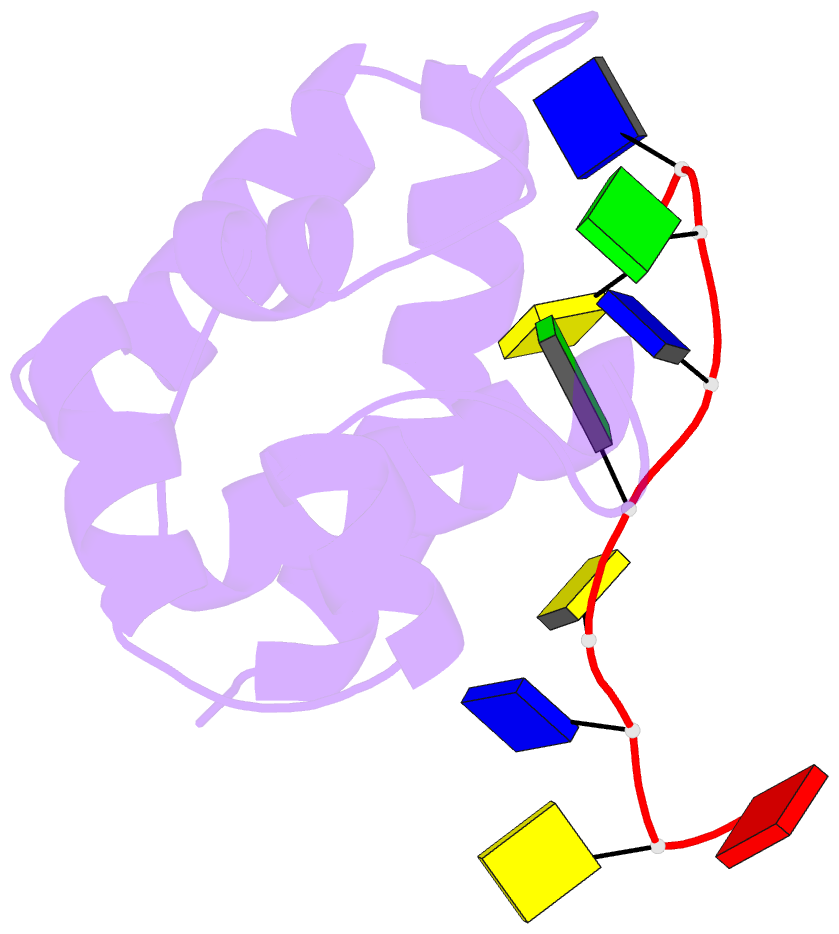
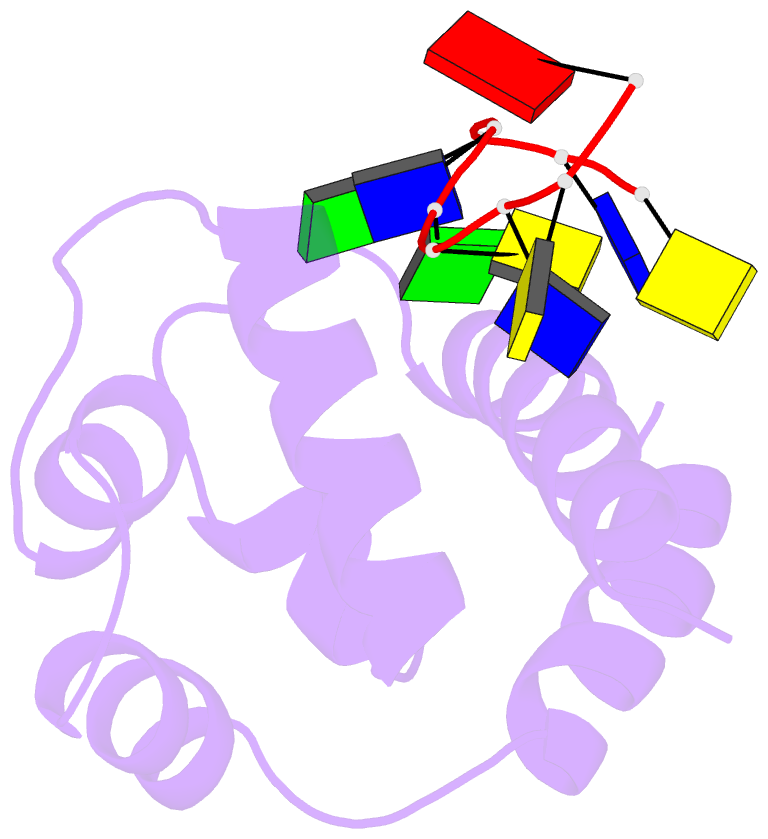
- DNA-bound prn1 helix bundle domain with atp and
magnesium in the interaction buffer
- Reference
-
Boudet J, Devillier JC, Wiegand T, Salmon L, Meier BH,
Lipps G, Allain FH (2019): "A Small
Helical Bundle Prepares Primer Synthesis by Binding Two
Nucleotides that Enhance Sequence-Specific Recognition of
the DNA Template." Cell,
176, 154-166.e13. doi: 10.1016/j.cell.2018.11.031.
- Abstract
- Primases have a fundamental role in DNA replication.
They synthesize a primer that is then extended by DNA
polymerases. Archaeoeukaryotic primases require for
synthesis a catalytic and an accessory domain, the exact
contribution of the latter being unresolved. For the pRN1
archaeal primase, this domain is a 115-amino acid helix
bundle domain (HBD). Our structural investigations of this
small HBD by liquid- and solid-state nuclear magnetic
resonance (NMR) revealed that only the HBD binds the
DNA template. DNA binding becomes sequence-specific after a
major allosteric change in the HBD, triggered by the
binding of two nucleotide triphosphates. The spatial
proximity of the two nucleotides and the DNA template in
the quaternary structure of the HBD strongly suggests that
this small domain brings together the substrates to prepare
the first catalytic step of primer synthesis. This
efficient mechanism is likely general for all
archaeoeukaryotic primases.