Summary information and primary citation
- PDB-id
-
5xus;
DSSR-derived features in text and
JSON formats; DNAproDB
- Class
- hydrolase-RNA-DNA
- Method
- X-ray (2.5 Å)
- Summary
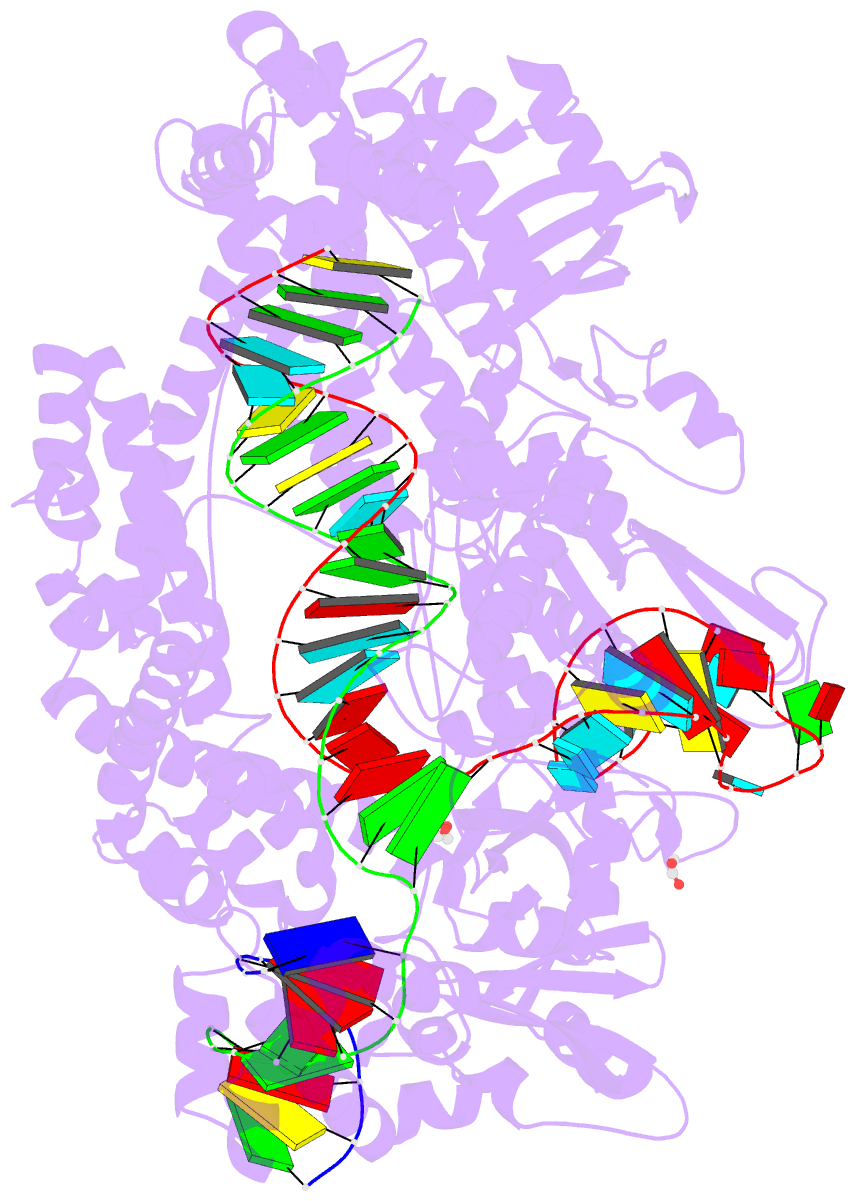
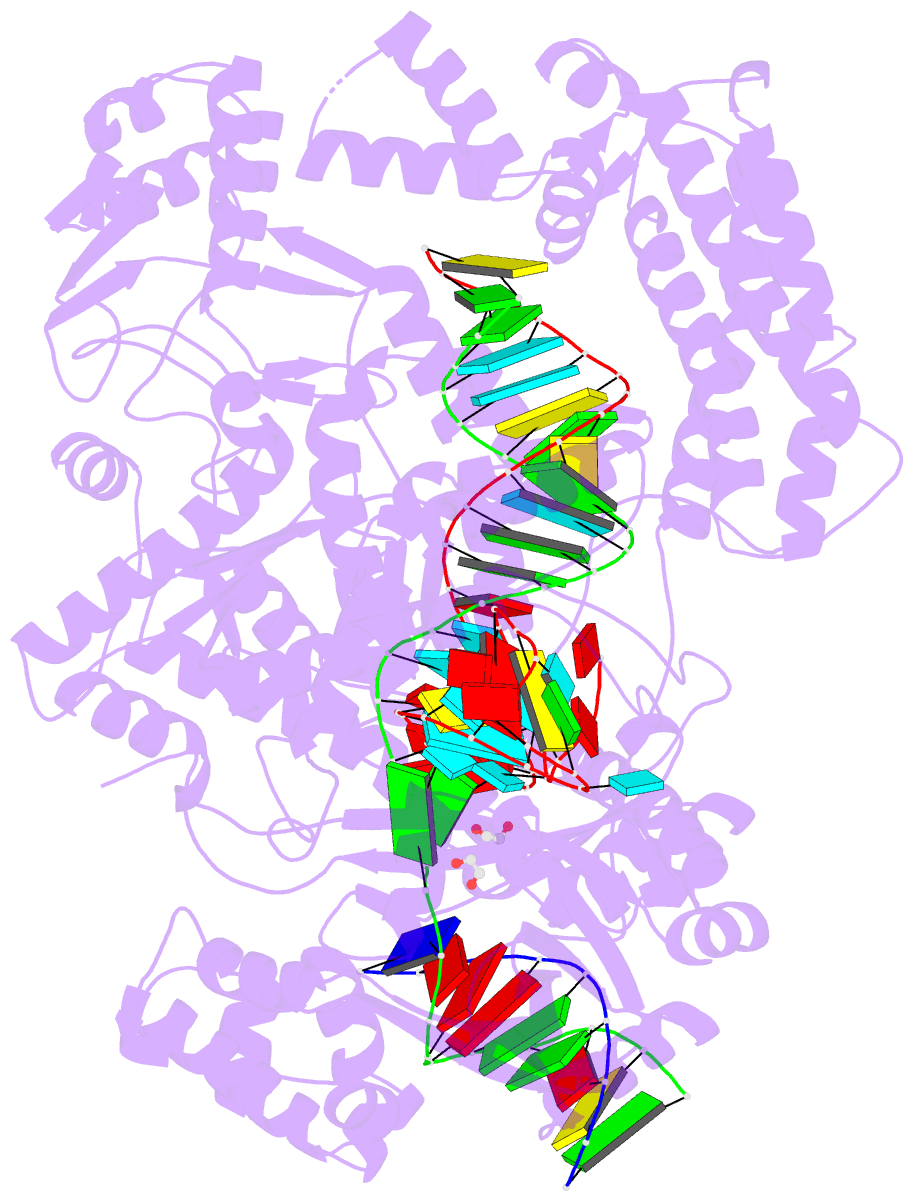
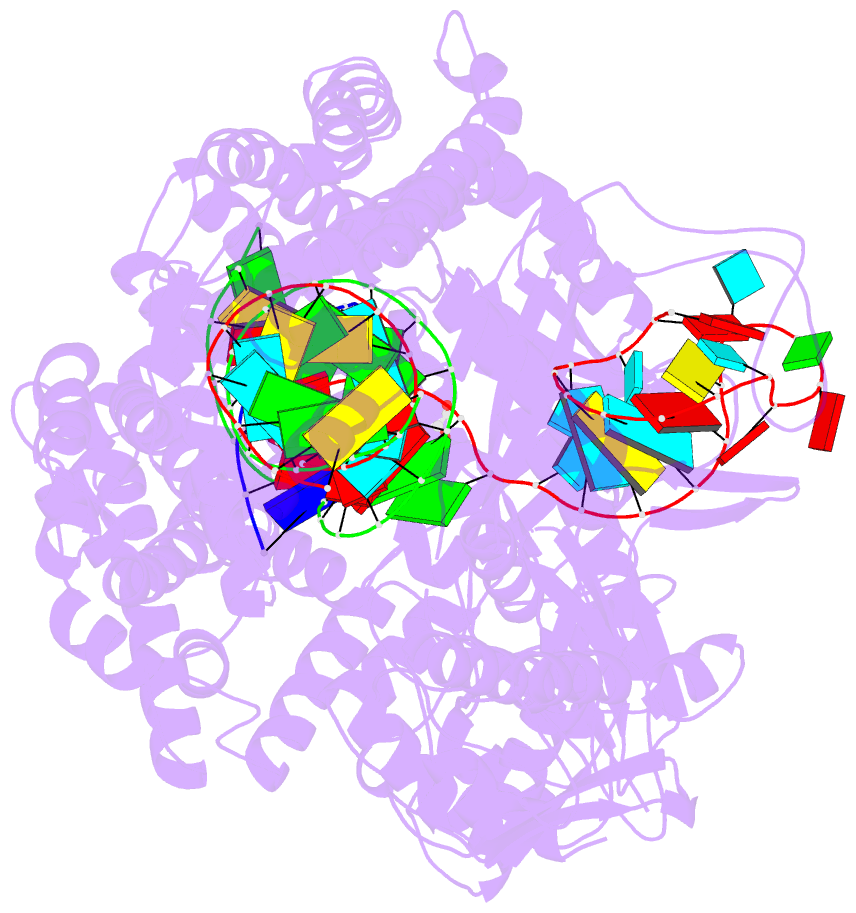
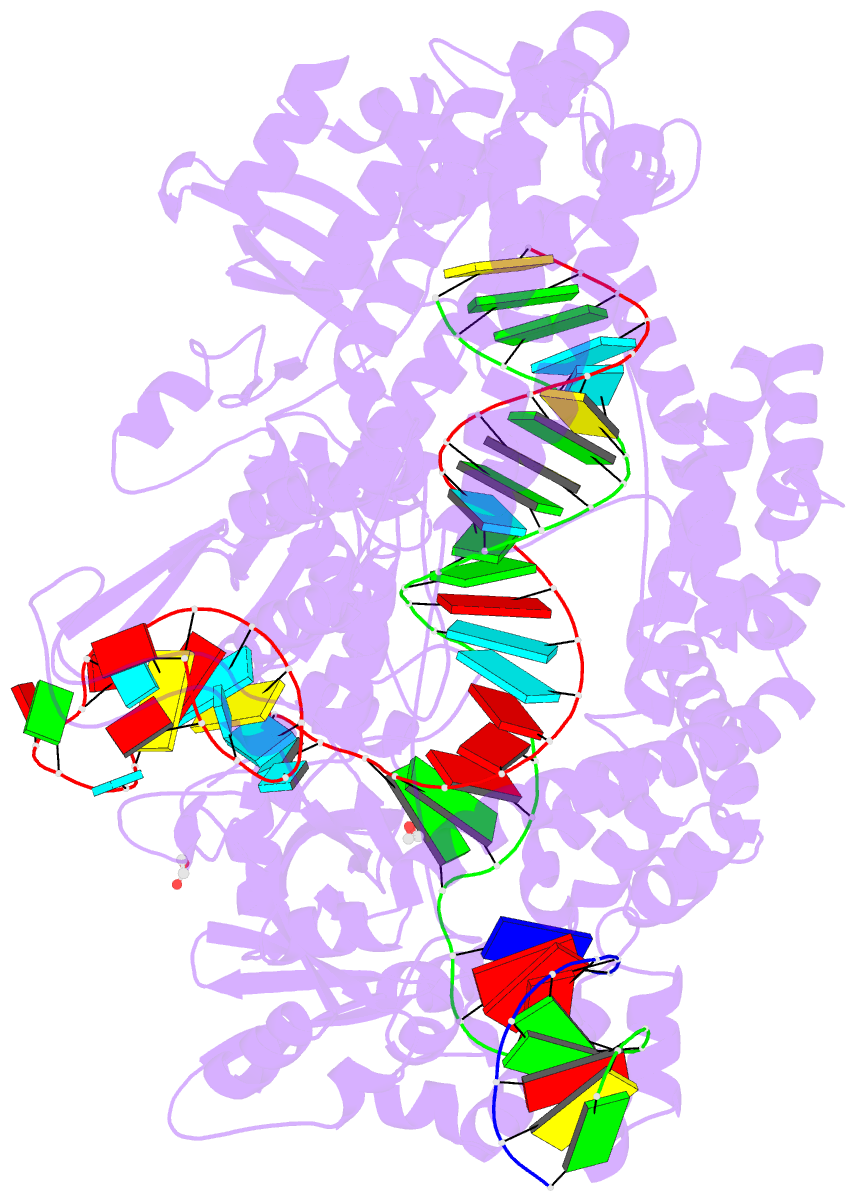
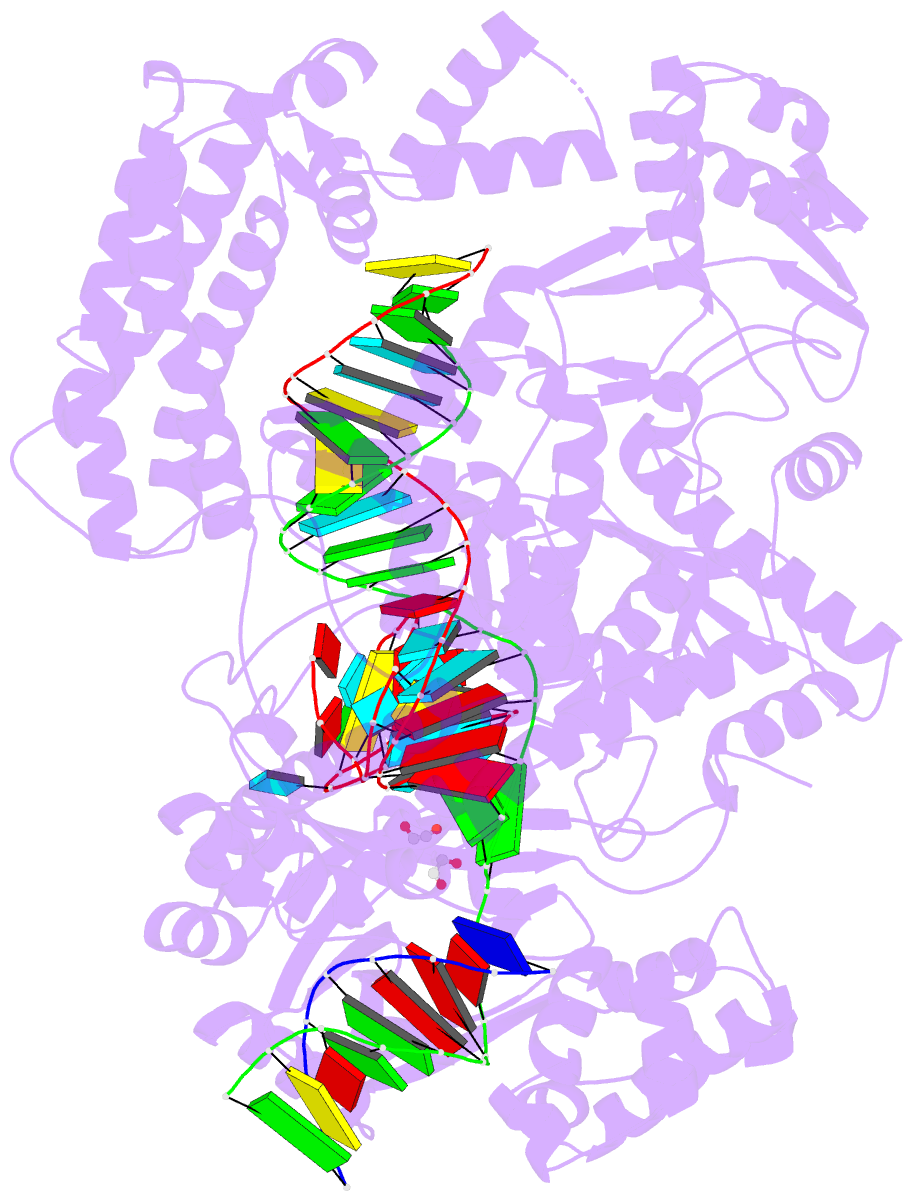
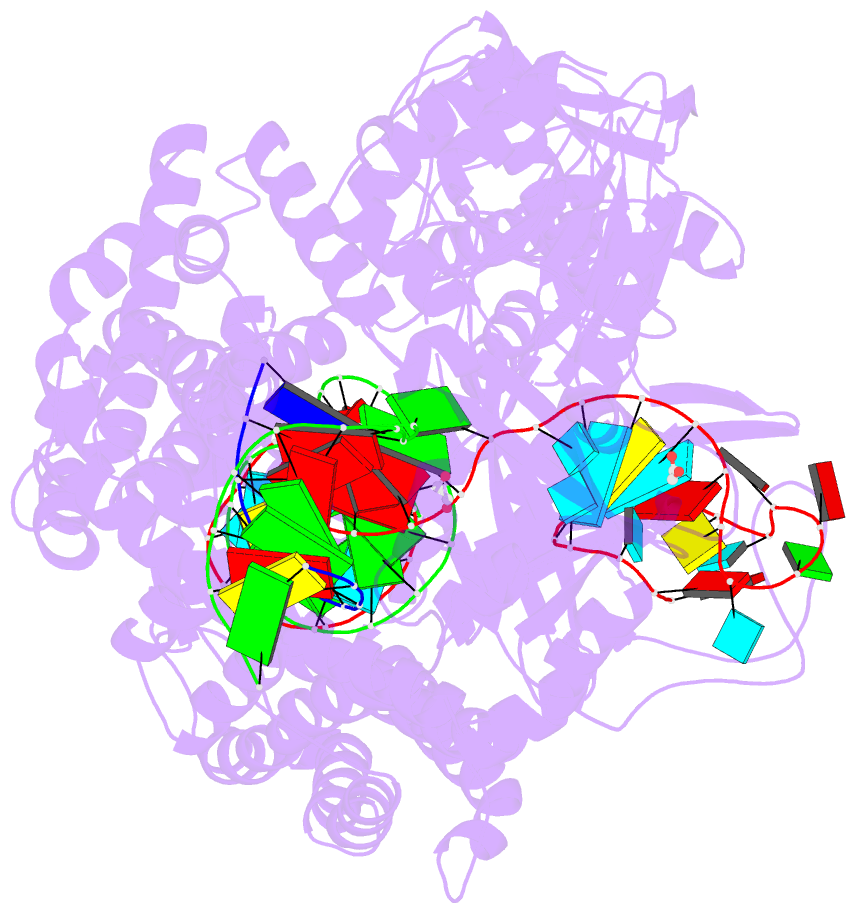
- Crystal structure of lachnospiraceae bacterium nd2006
cpf1 in complex with crrna and target DNA (ttta pam)
- Reference
-
Yamano T, Zetsche B, Ishitani R, Zhang F, Nishimasu H,
Nureki O (2017): "Structural
Basis for the Canonical and Non-canonical PAM Recognition
by CRISPR-Cpf1." Mol. Cell,
67, 633-645.e3. doi: 10.1016/j.molcel.2017.06.035.
- Abstract
- The RNA-guided Cpf1 (also known as Cas12a) nuclease
associates with a CRISPR RNA (crRNA) and cleaves the
double-stranded DNA target complementary to the crRNA
guide. The two Cpf1 orthologs from Acidaminococcus sp.
(AsCpf1) and Lachnospiraceae bacterium (LbCpf1) have been
harnessed for eukaryotic genome editing. Cpf1 requires a
specific nucleotide sequence, called a protospacer adjacent
motif (PAM), for target recognition. Besides the canonical
TTTV PAM, Cpf1 recognizes suboptimal C-containing PAMs.
Here, we report four crystal structures of LbCpf1 in
complex with the crRNA and its target DNA containing either
TTTA, TCTA, TCCA, or CCCA as the PAM. These structures
revealed that, depending on the PAM sequences, LbCpf1
undergoes conformational changes to form altered
interactions with the PAM-containing DNA duplexes, thereby
achieving the relaxed PAM recognition. Collectively, the
present structures advance our mechanistic understanding of
the PAM-dependent, crRNA-guided DNA cleavage by the Cpf1
family nucleases.