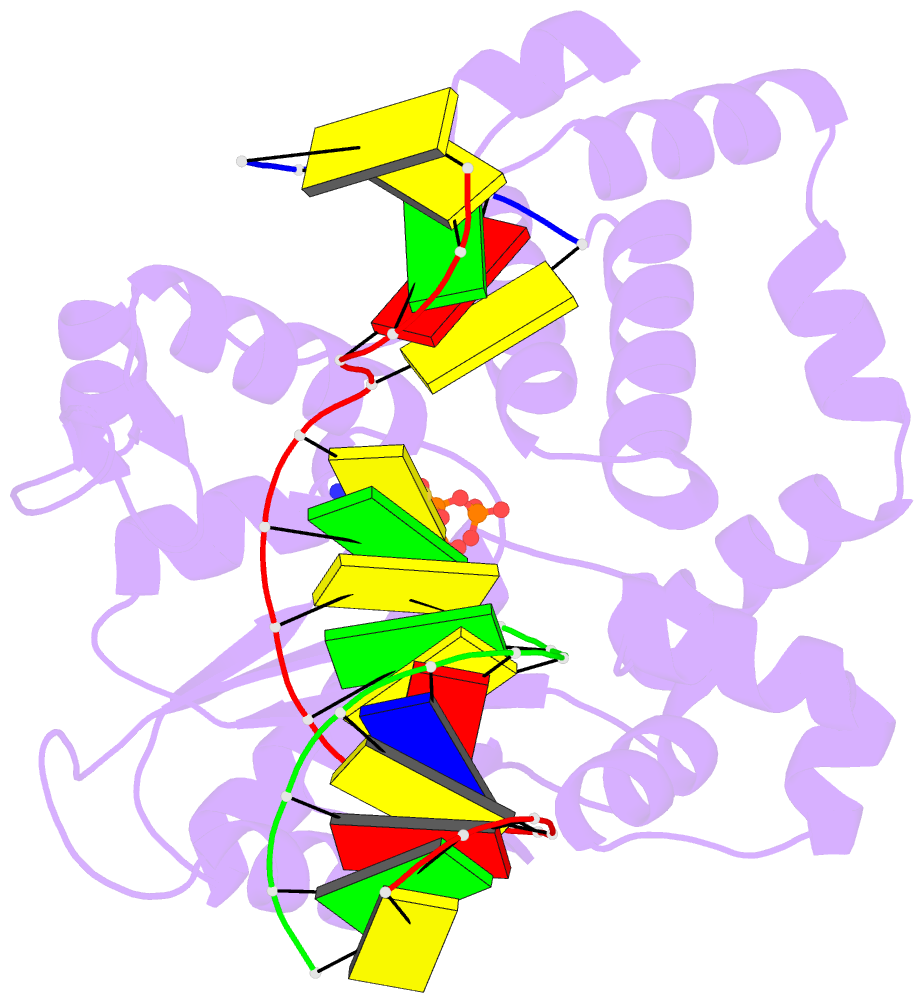
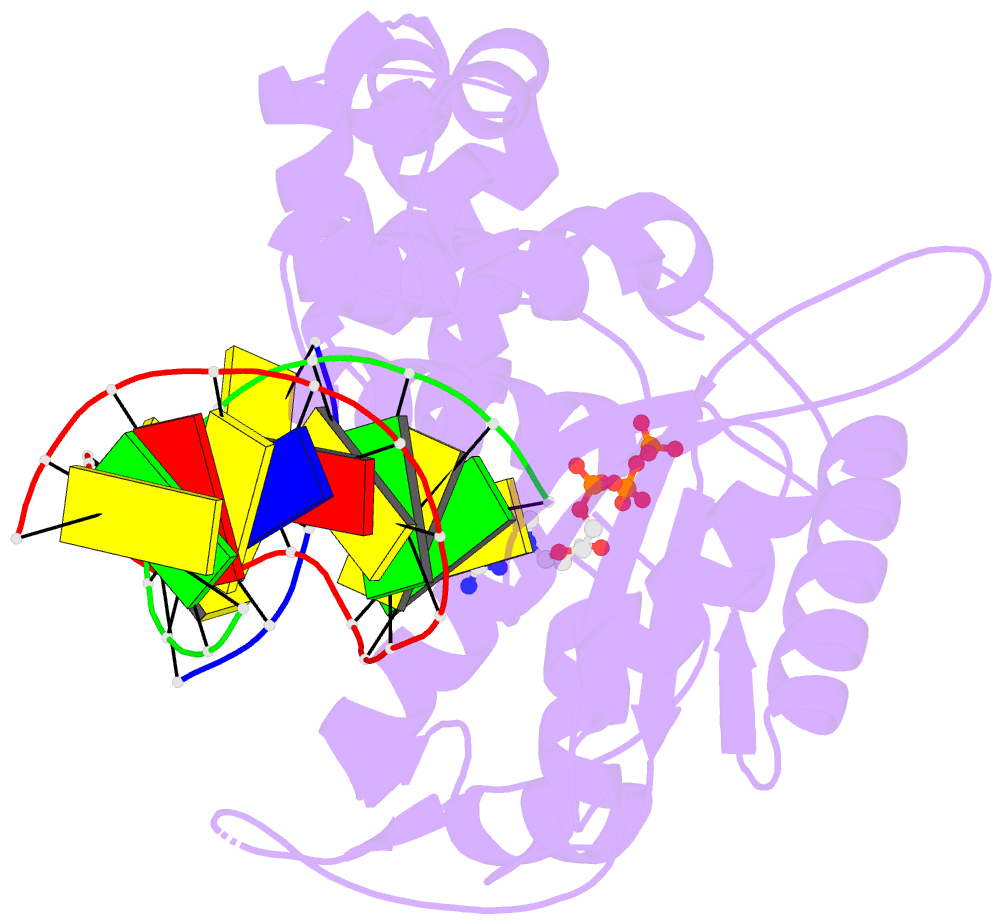
Summary information and primary citation
- PDB-id
-
5wnx;
DSSR-derived features in text and
JSON formats; DNAproDB
- Class
- DNA ligase-DNA, transferase
- Method
- X-ray (2.55 Å)
- Summary
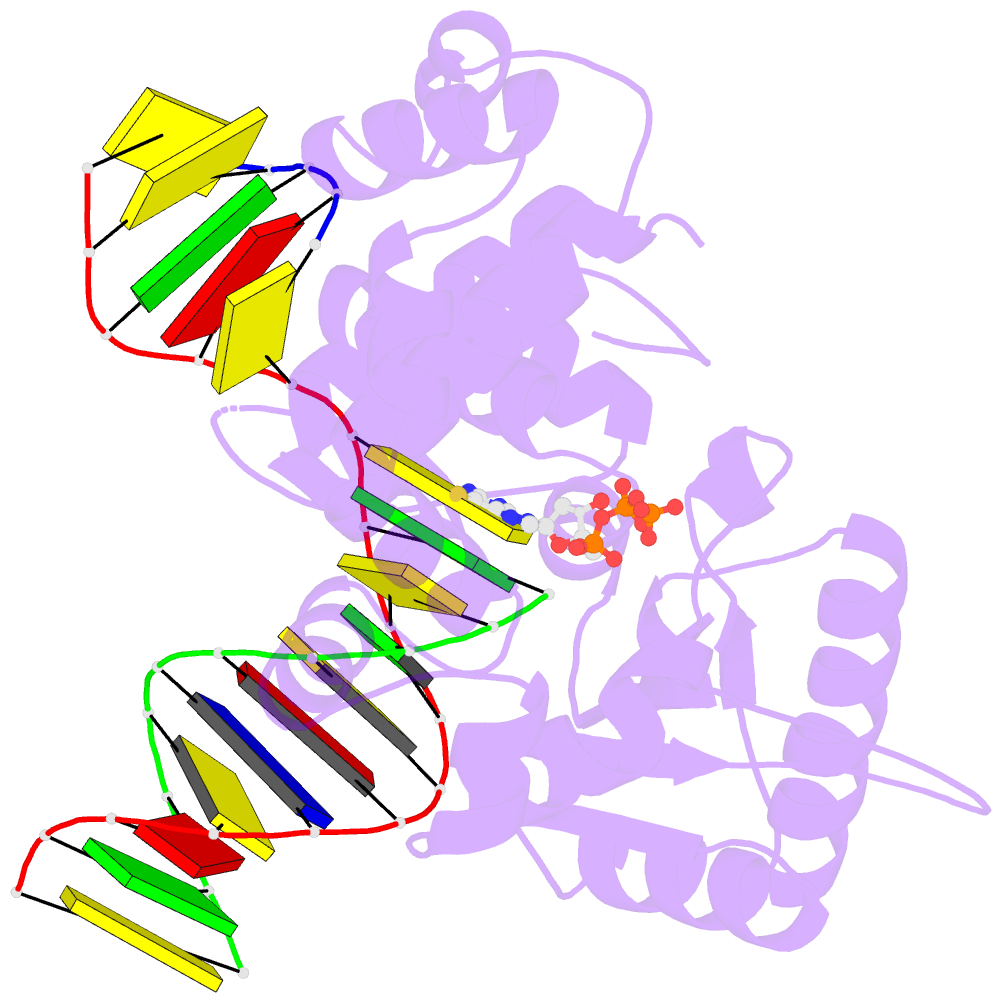
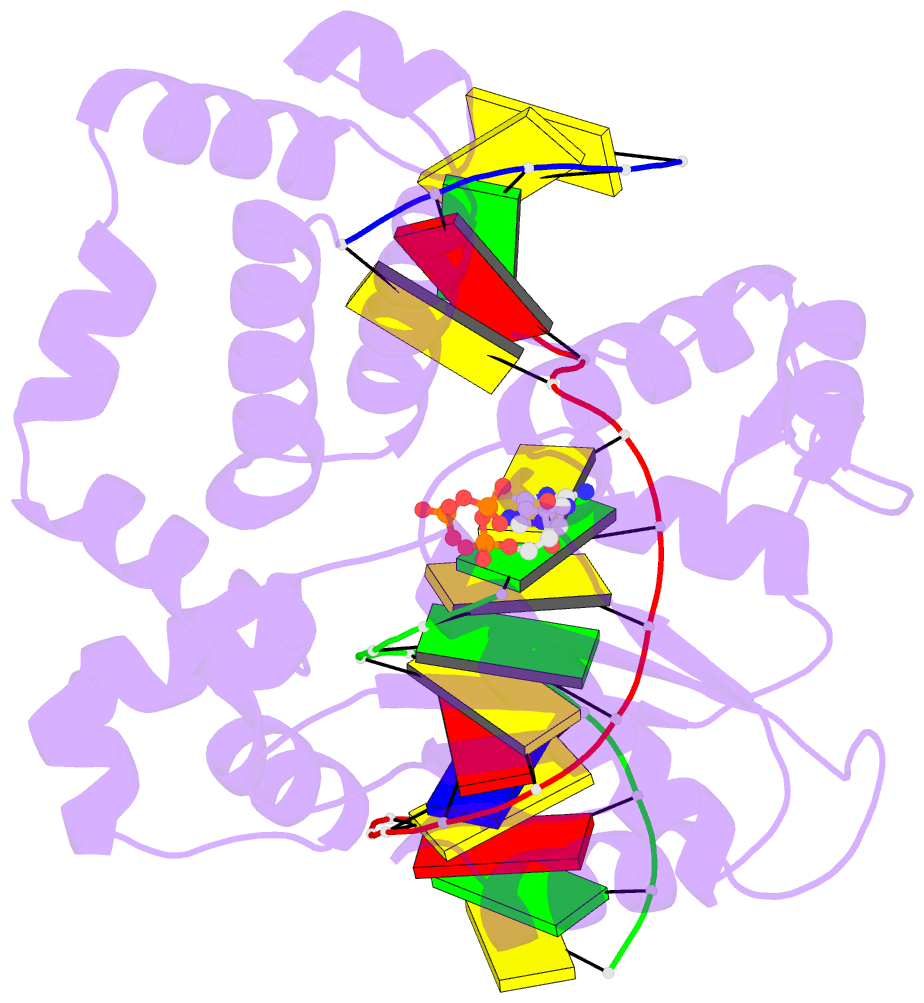
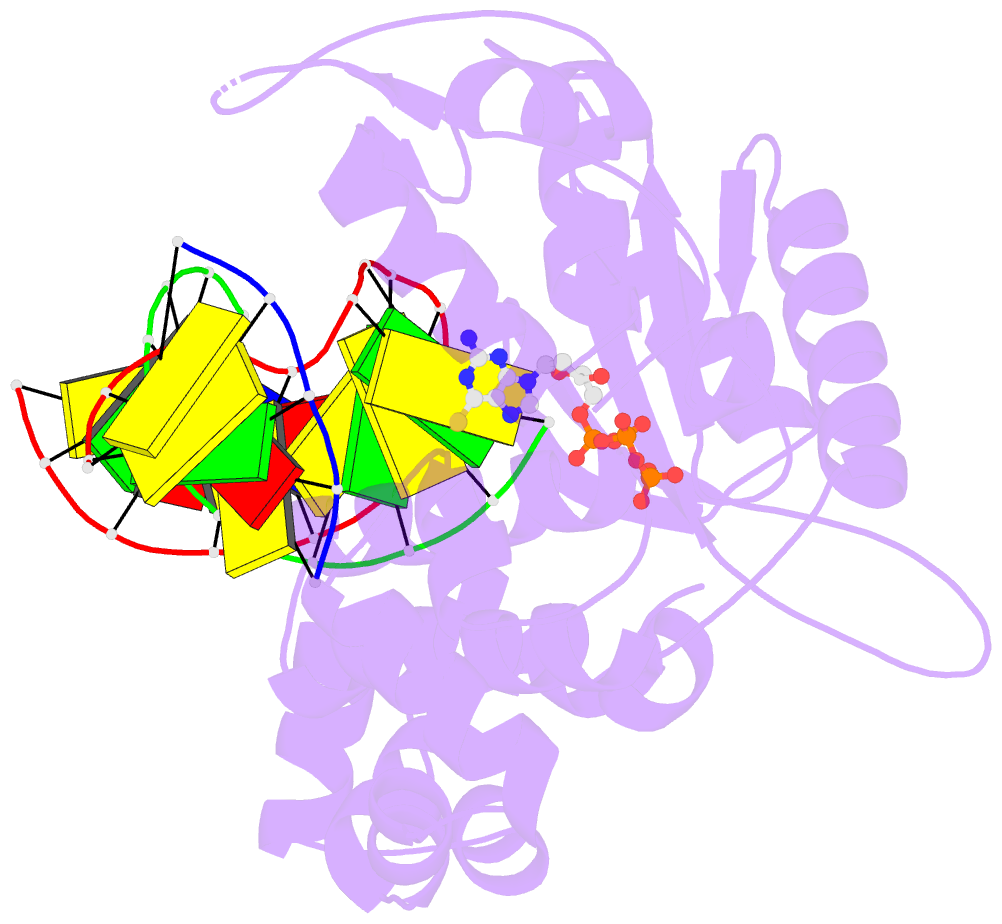
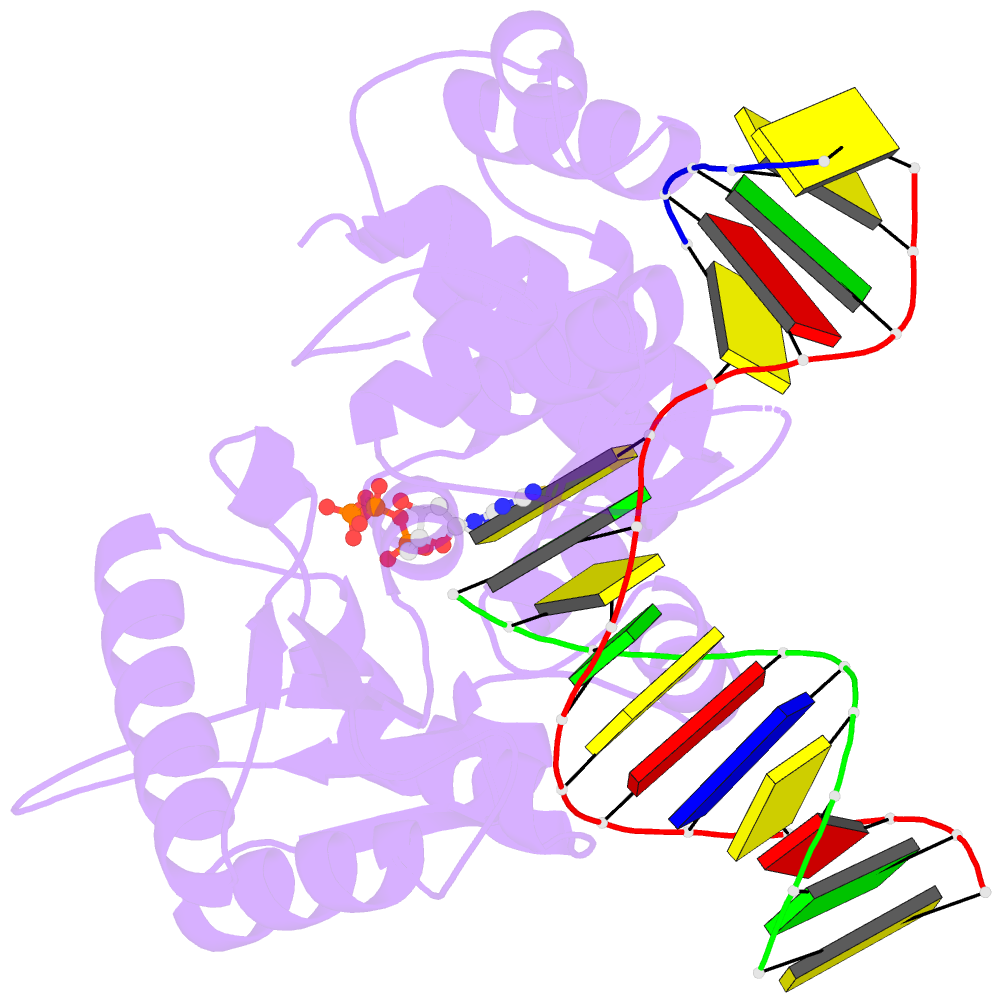
- DNA polymerase beta substrate complex with incoming
6-tdgtp
- Reference
-
Schaich MA, Smith MR, Cloud AS, Holloran SM, Freudenthal
BD (2017): "Structures
of a DNA Polymerase Inserting Therapeutic Nucleotide
Analogues." Chem. Res. Toxicol.,
30, 1993-2001. doi: 10.1021/acs.chemrestox.7b00173.
- Abstract
- Members of the nucleoside analogue class of cancer
therapeutics compete with canonical nucleotides to disrupt
numerous cellular processes, including nucleotide
homeostasis, DNA and RNA synthesis, and nucleotide
metabolism. Nucleoside analogues are triphosphorylated and
subsequently inserted into genomic DNA, contributing to the
efficacy of therapeutic nucleosides in multiple ways. In
some cases, the altered base acts as a mutagen, altering
the DNA sequence to promote cellular death; in others,
insertion of the altered nucleotide triggers DNA repair
pathways, which produce lethal levels of cytotoxic
intermediates such as single and double stranded DNA
breaks. As a prerequisite to many of these biological
outcomes, the modified nucleotide must be accommodated in
the DNA polymerase active site during nucleotide insertion.
Currently, the molecular contacts that mediate DNA
polymerase insertion of modified nucleotides remain unknown
for multiple therapeutic compounds, despite decades of
clinical use. To determine how modified bases are inserted
into duplex DNA, we used mammalian DNA polymerase β (pol β)
to visualize the structural conformations of four
therapeutically relevant modified nucleotides,
6-thio-2'-deoxyguanosine-5'-triphosphate (6-TdGTP),
5-fluoro-2'-deoxyuridine-5'-triphosphate (5-FdUTP),
5-formyl-deoxycytosine-5'-triphosphate (5-FodCTP), and
5-formyl-deoxyuridine-5'-triphosphate (5-FodUTP). Together,
the structures reveal a pattern in which the modified
nucleotides utilize Watson-Crick base pairing interactions
similar to that of unmodified nucleotides. The nucleotide
modifications were consistently positioned in the major
groove of duplex DNA, accommodated by an open cavity in pol
β. These results provide novel information for the rational
design of new therapeutic nucleoside analogues and a
greater understanding of how modified nucleotides are
tolerated by polymerases.