Summary information and primary citation
- PDB-id
-
5vxn;
DSSR-derived features in text and
JSON formats; DNAproDB
- Class
- DNA binding protein-DNA
- Method
- X-ray (3.375 Å)
- Summary
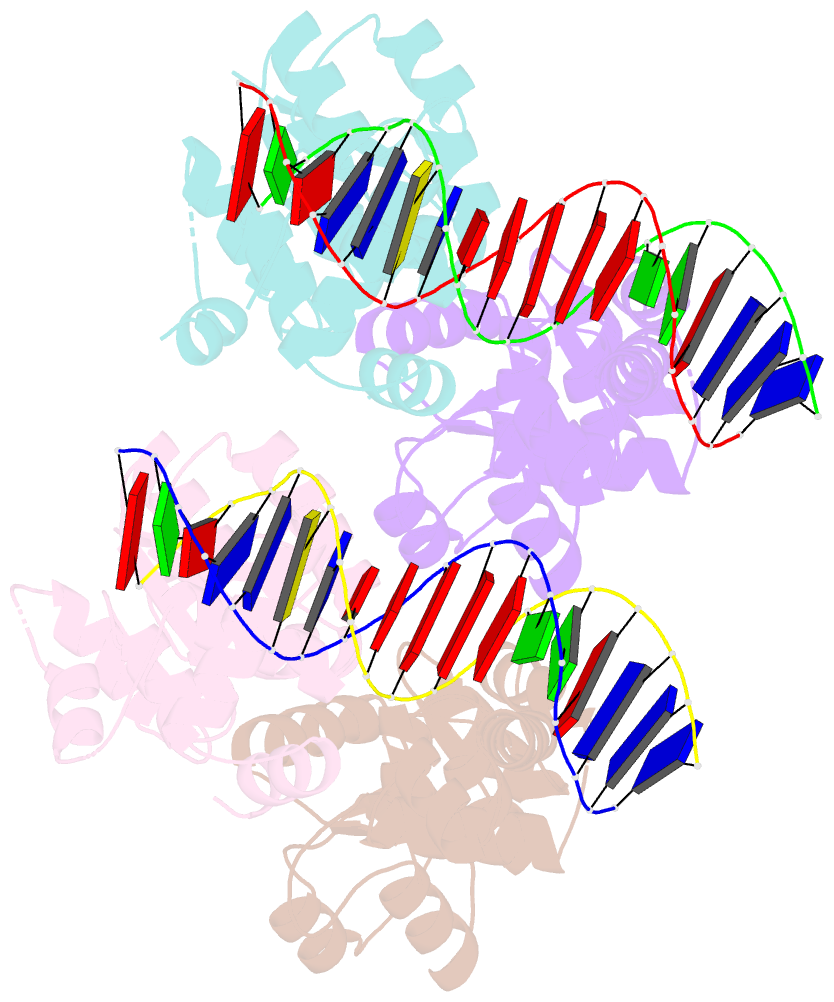
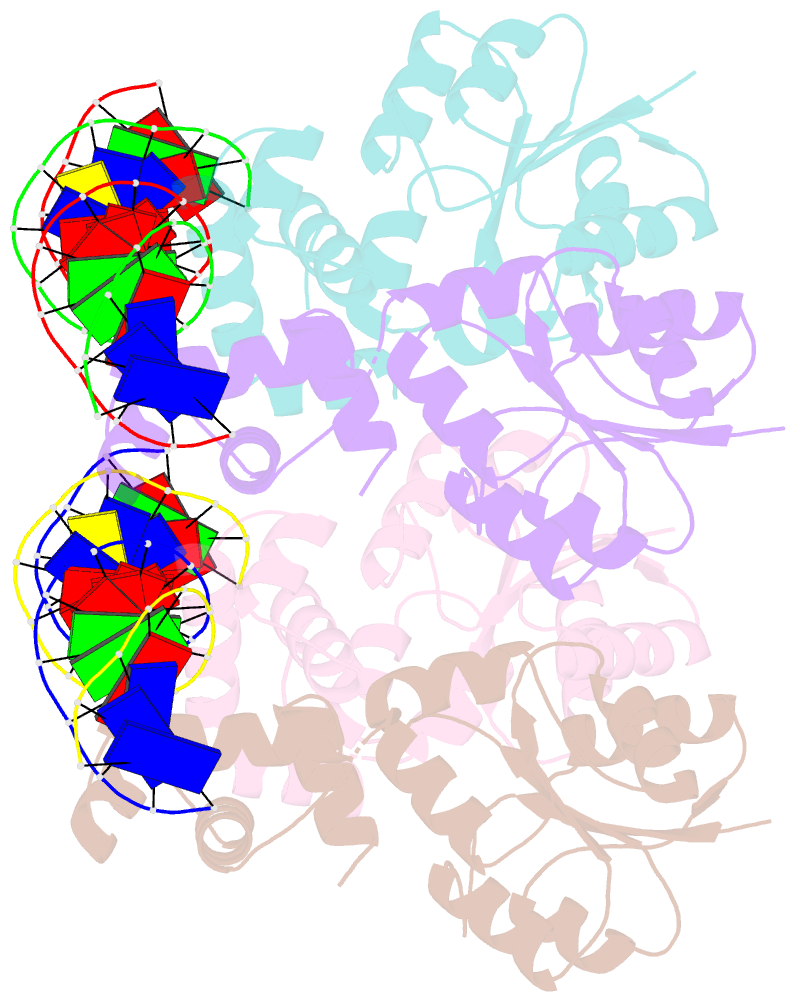
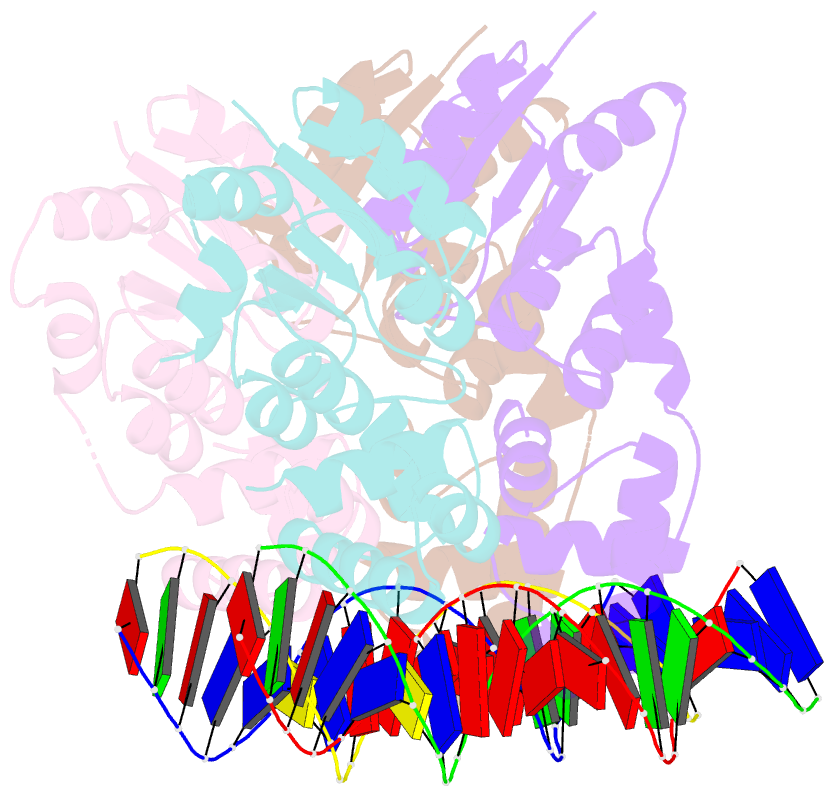
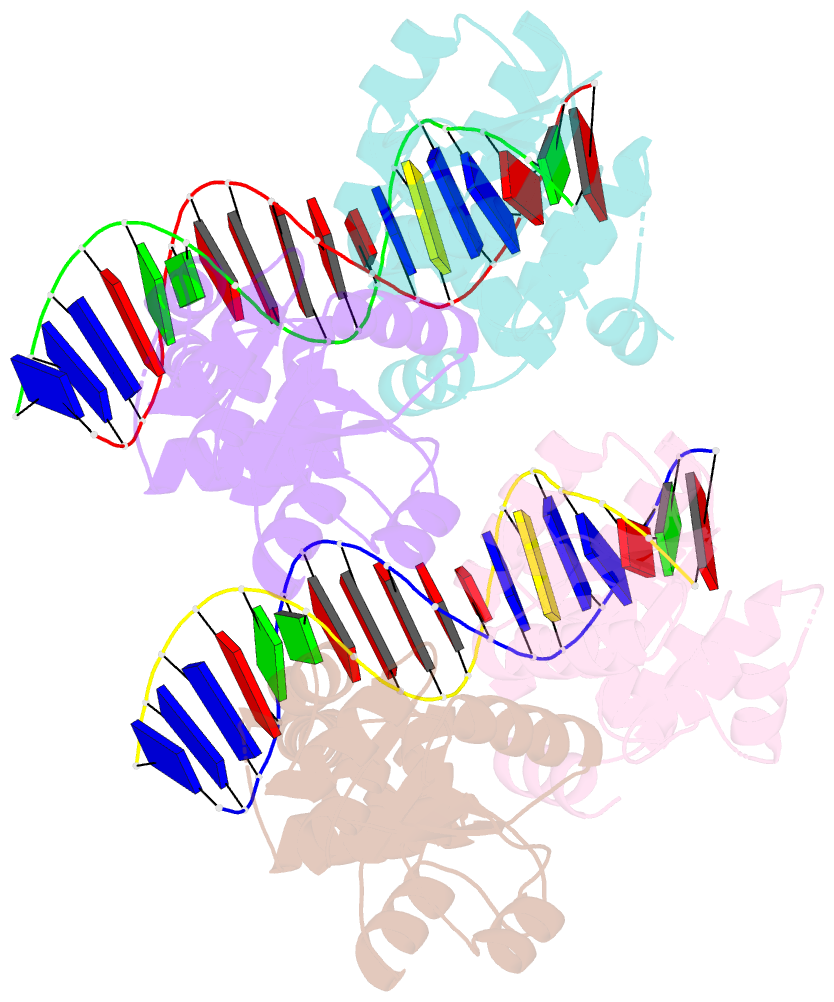
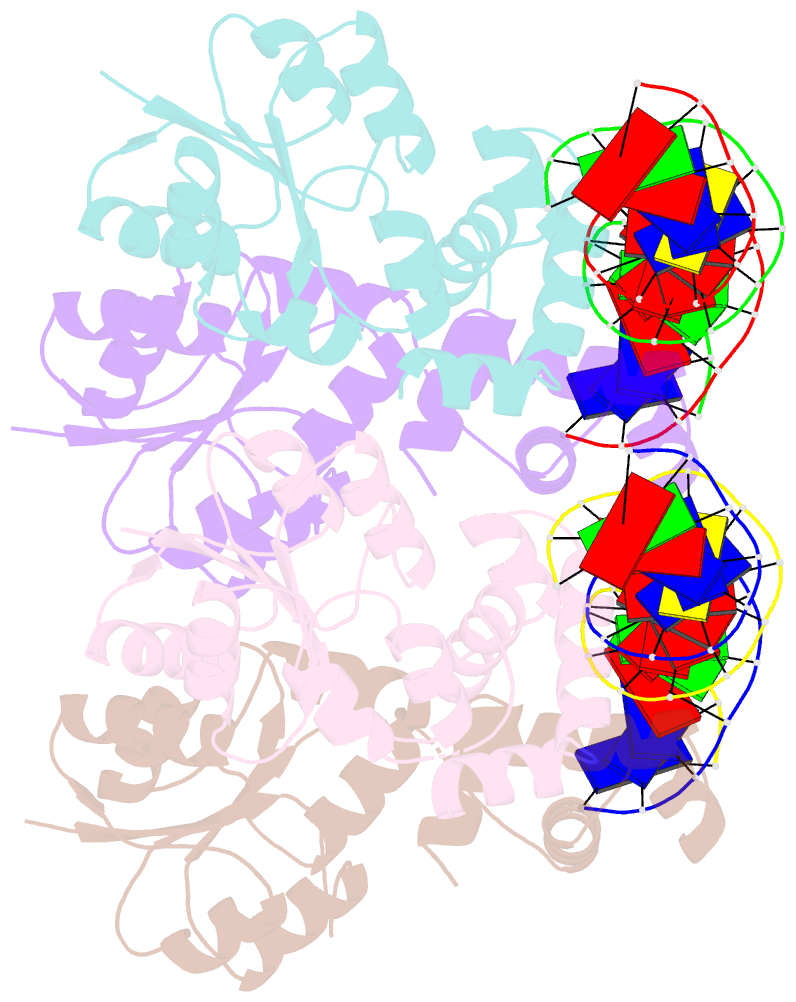
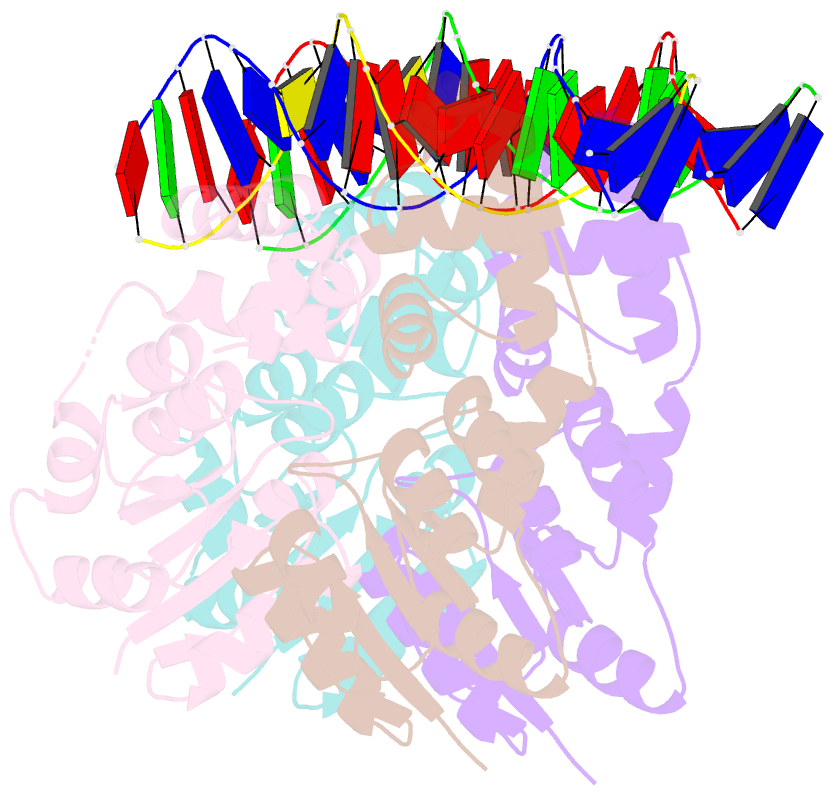
- Structure of two rcsb dimers bound to two parallel
dnas.
- Reference
-
Filippova EV, Zemaitaitis B, Aung T, Wolfe AJ, Anderson
WF (2018): "Structural
Basis for DNA Recognition by the Two-Component Response
Regulator RcsB." MBio, 9.
doi: 10.1128/mBio.01993-17.
- Abstract
- RcsB is a highly conserved transcription regulator of
the Rcs phosphorelay system, a complex two-component signal
transduction system (N. Majdalani and S. Gottesman, Annu
Rev Microbiol 59:379-405, 2005; A. J. Wolfe, Curr Opin
Microbiol 13:204-209, 2010,
https://doi.org/10.1016/j.mib.2010.01.002; D. J. Clarke,
Future Microbiol 5:1173-1184, 2010,
https://doi.org/10.2217/fmb.10.83). RcsB plays an important
role in virulence and pathogenicity in human hosts by
regulating biofilm formation. RcsB can regulate
transcription alone or together with its auxiliary
transcription regulators by forming heterodimers. This
complexity allows RcsB to regulate transcription of more
than 600 bacterial genes in response to different stresses
(D. Wang et al., Mol Plant Microbe Interact 25:6-17, 2012,
https://doi.org/10.1094/MPMI-08-11-0207). Despite
increasing knowledge of RcsB importance, molecular
mechanisms that drive the ability of RcsB to control
transcription of a large number of genes remain unclear.
Here, we present crystal structures of unphosphorylated
RcsB in complex with the consensus DNA-binding sequence of
22-mer (DNA22) and 18-mer (DNA18) of the
<i>flhDC</i> operon from <i>Escherichia
coli</i> determined at 3.15- and 3.37-Å resolution,
respectively. The results of our structural analysis
combined with the results of <i>in vitro</i>
binding assays provide valuable insights to the protein
regulatory mechanism, demonstrate how RcsB recognizes
target DNA sequences, and reveal a unique oligomeric state
that allows RcsB to form homo- and heterodimers. This
information will help us understand the complex mechanisms
of transcriptional regulation by RcsB in bacteria.