Summary information and primary citation
- PDB-id
-
5v1f;
DSSR-derived features in text and
JSON formats; DNAproDB
- Class
- transferase-DNA, ligase-DNA
- Method
- X-ray (2.181 Å)
- Summary
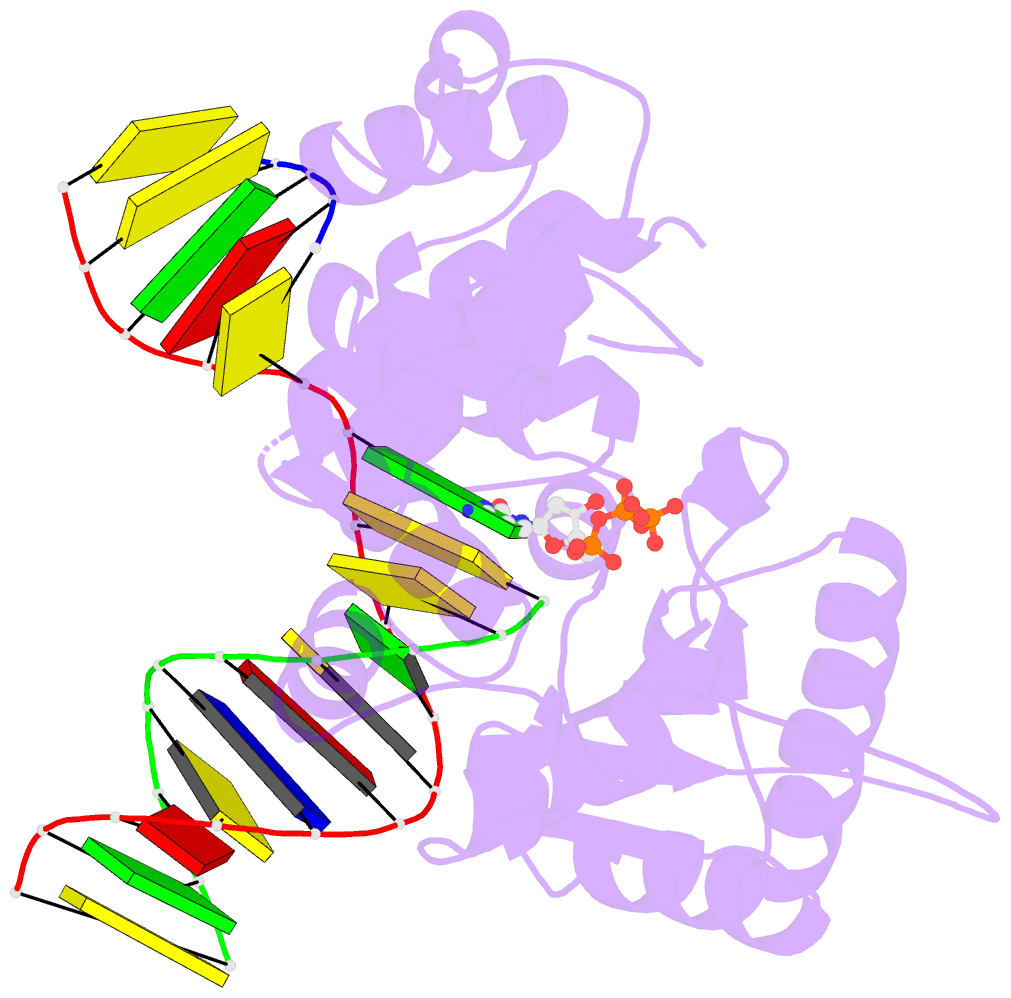
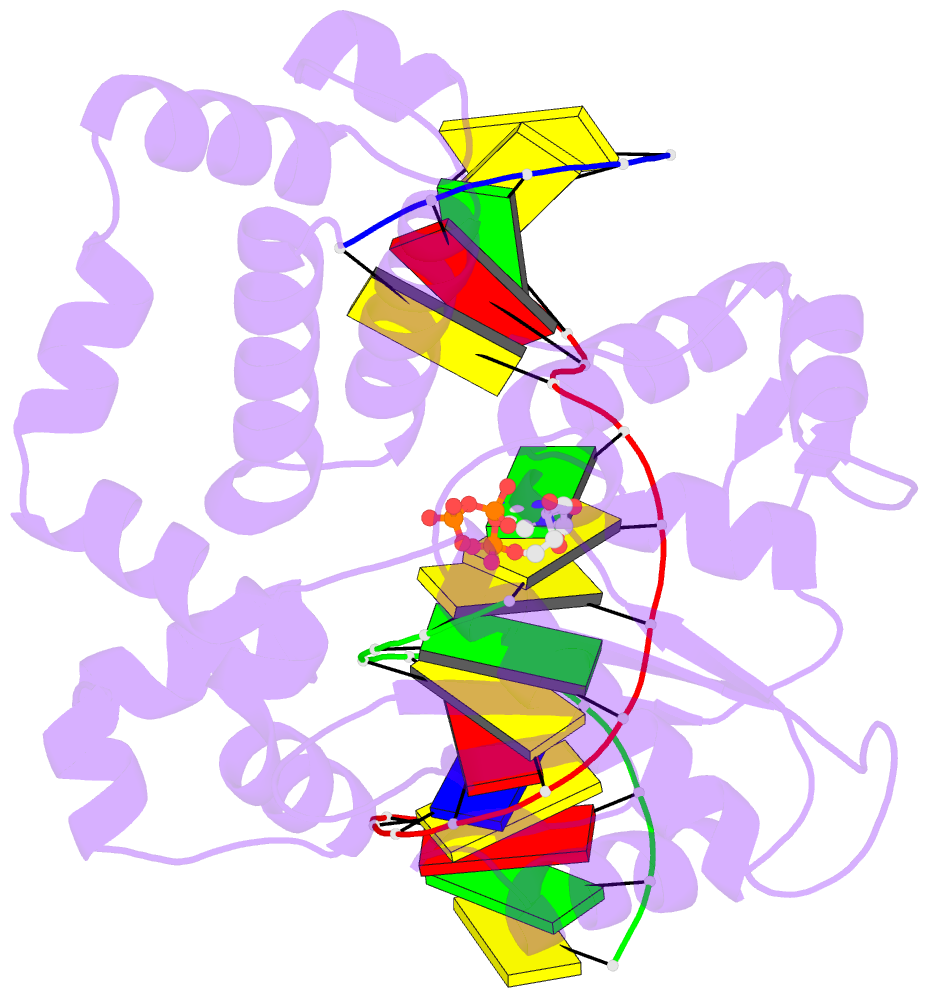
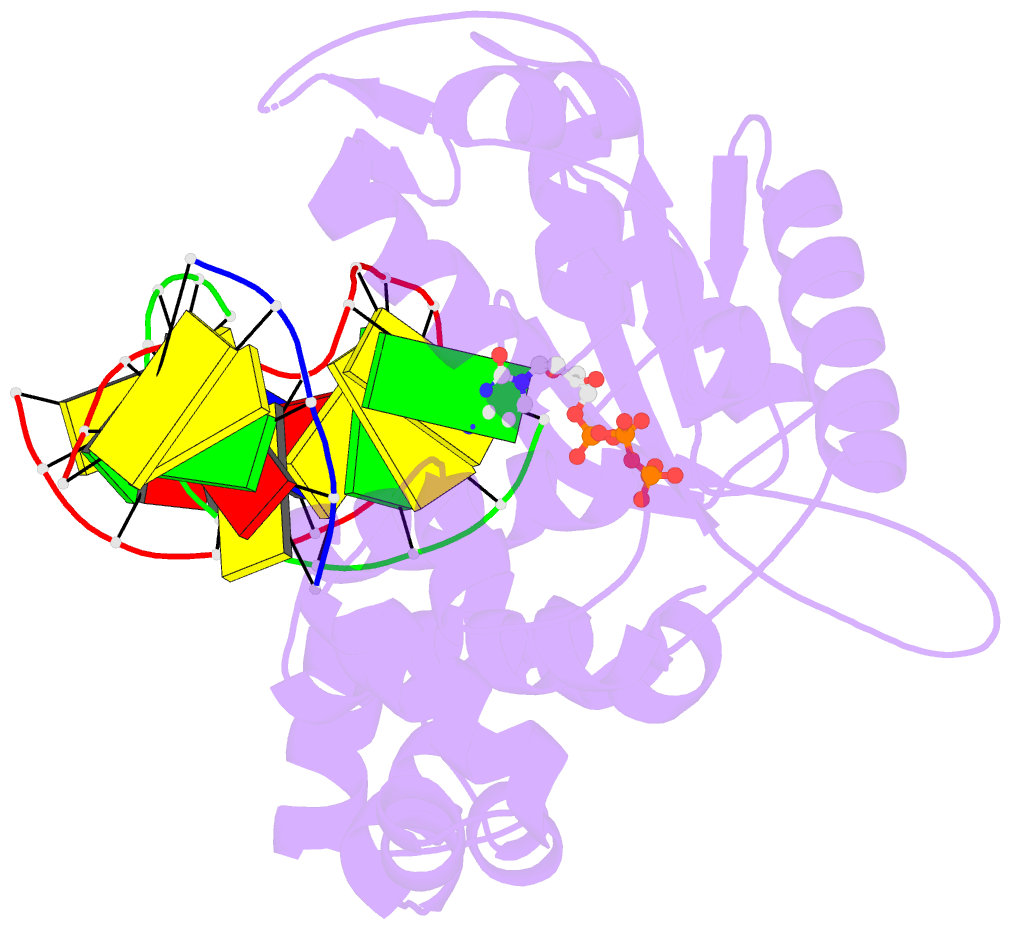
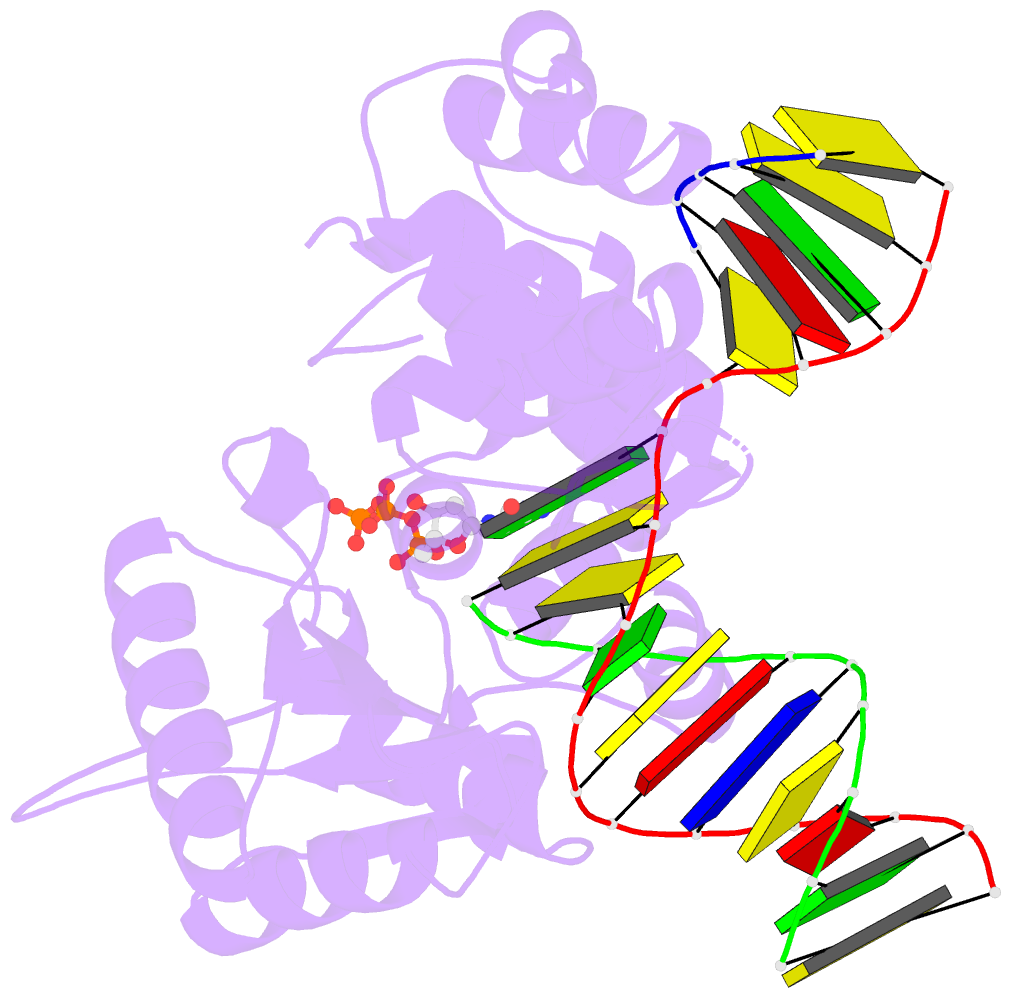
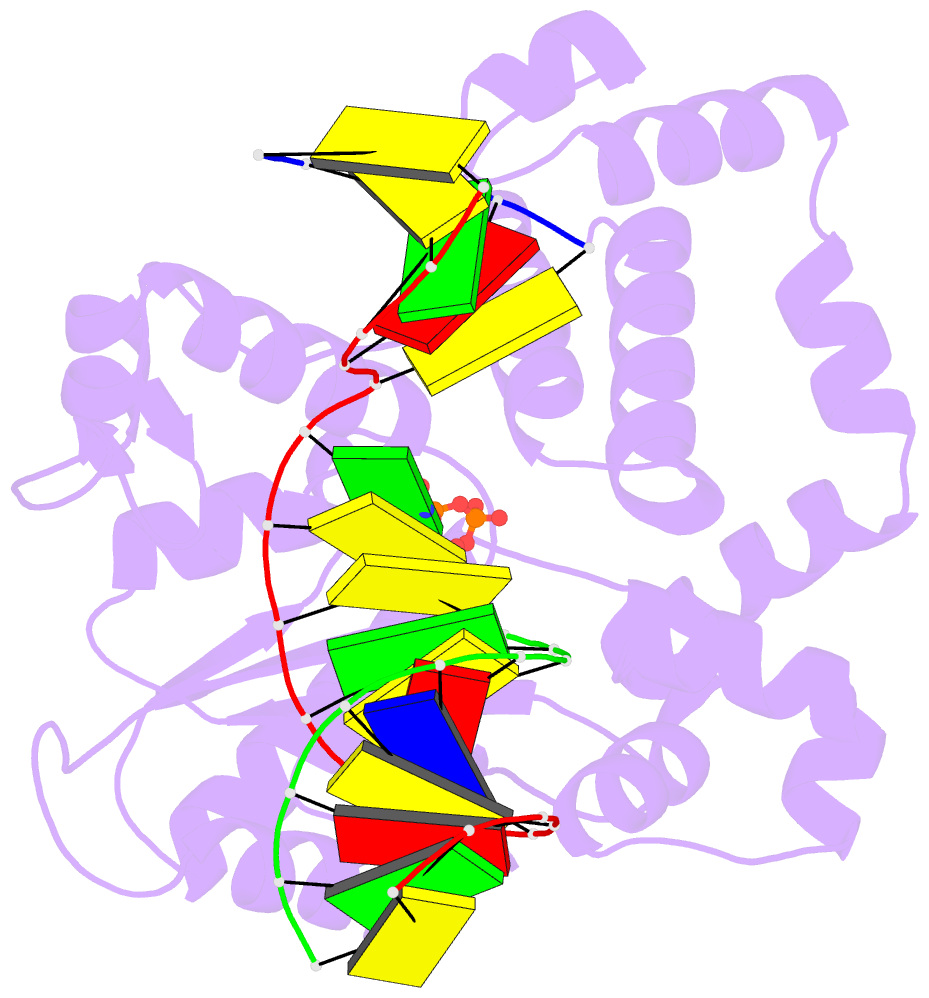
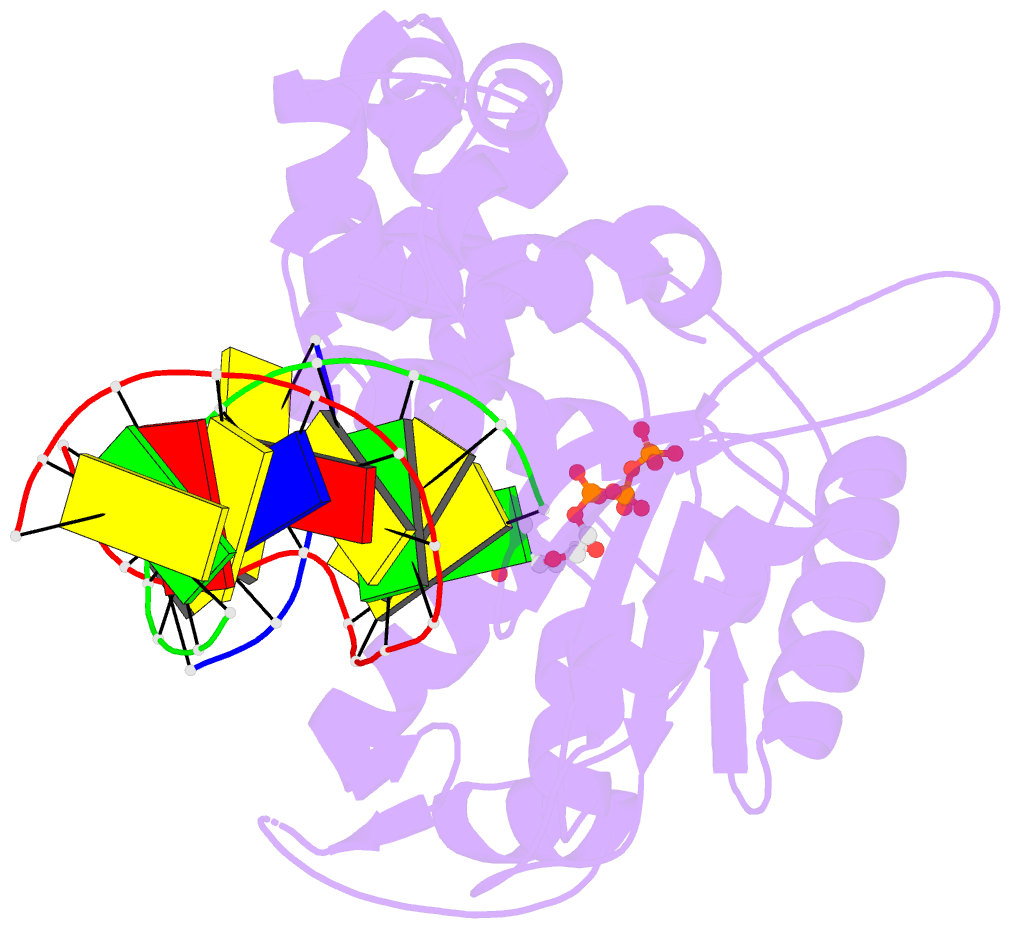
- DNA polymerase beta substrate complex with 8-oxog at
the primer terminus and incoming dctp
- Reference
-
Whitaker AM, Smith MR, Schaich MA, Freudenthal BD (2017):
"Capturing
a mammalian DNA polymerase extending from an oxidized
nucleotide." Nucleic Acids Res.,
45, 6934-6944. doi: 10.1093/nar/gkx293.
- Abstract
- The oxidized nucleotide,
8-oxo-7,8-dihydro-2΄-deoxyguanosine (8-oxoG), is one of the
most abundant DNA lesions. 8-oxoG plays a major role in
tumorigenesis and human disease. Biological consequences of
8-oxoG are mediated in part by its insertion into the
genome, making it essential to understand how DNA
polymerases handle 8-oxoG. Insertion of 8-oxoG is mutagenic
when opposite adenine but not when opposite cytosine.
However, either result leads to DNA damage at the primer
terminus (3΄-end) during the succeeding insertion event.
Extension from DNA damage at primer termini remains poorly
understood. Using kinetics and time-lapse crystallography,
we evaluated how a model DNA polymerase, human polymerase
β, accommodates 8-oxoG at the primer terminus opposite
cytosine and adenine. Notably, extension from the mutagenic
base pair is favored over the non-mutagenic base pair. When
8-oxoG is at the primer terminus opposite cytosine, DNA
centric changes lead to a clash between O8 of 8-oxoG and
the phosphate backbone. Changes in the extension reaction
resulting from the altered active site provide evidence for
a stabilizing interaction between Arg254 and Asp256 that
serves an important role during DNA synthesis reactions.
These results provide novel insights into the impact of
damage at the primer terminus on genomic stability and DNA
synthesis.