Summary information and primary citation
- PDB-id
-
5a0m;
DSSR-derived features in text and
JSON formats; DNAproDB
- Class
- hydrolase-DNA
- Method
- X-ray (2.9 Å)
- Summary
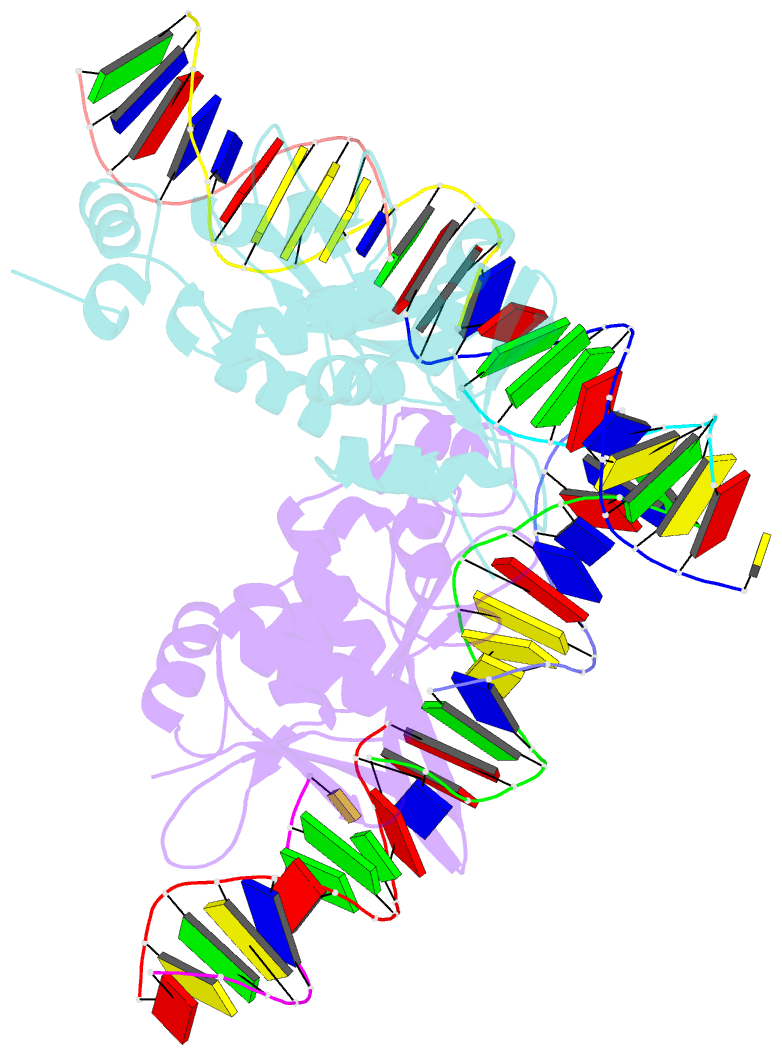
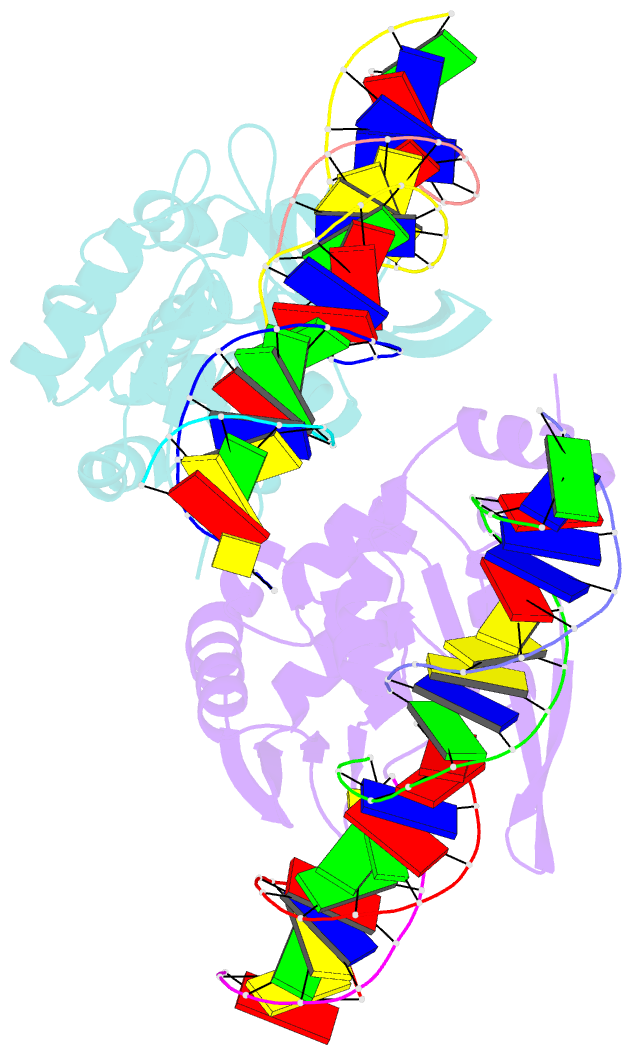
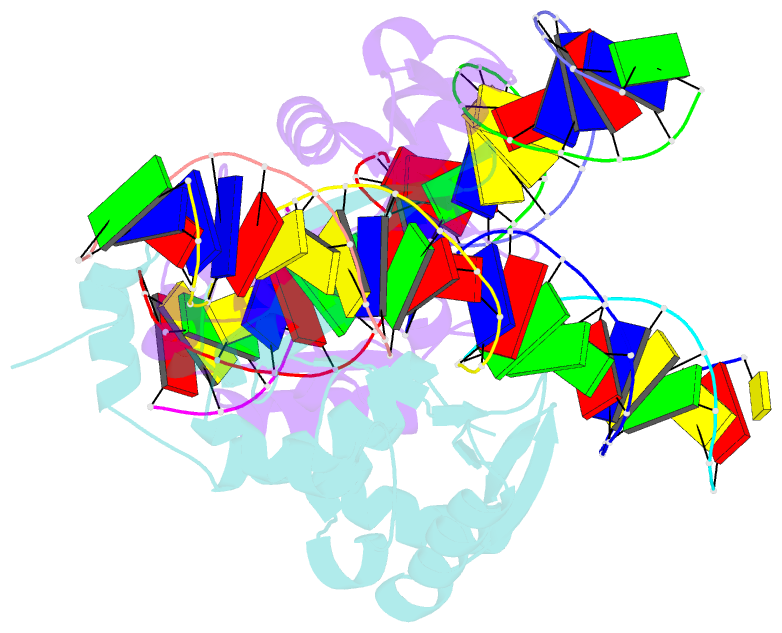
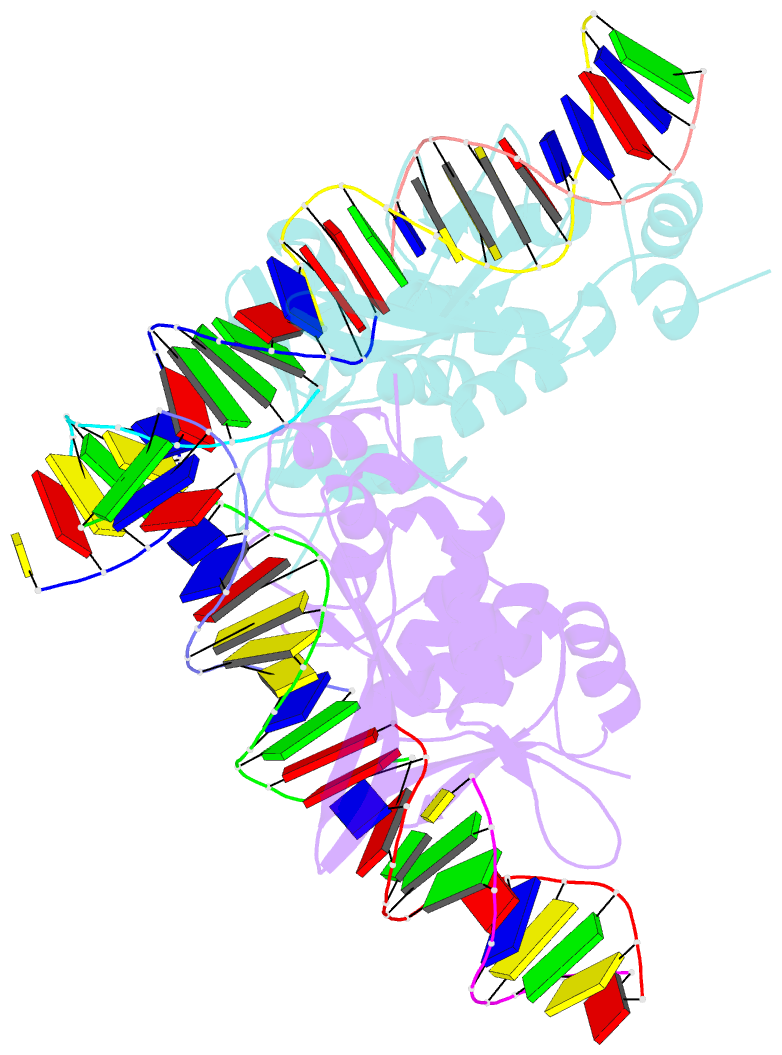
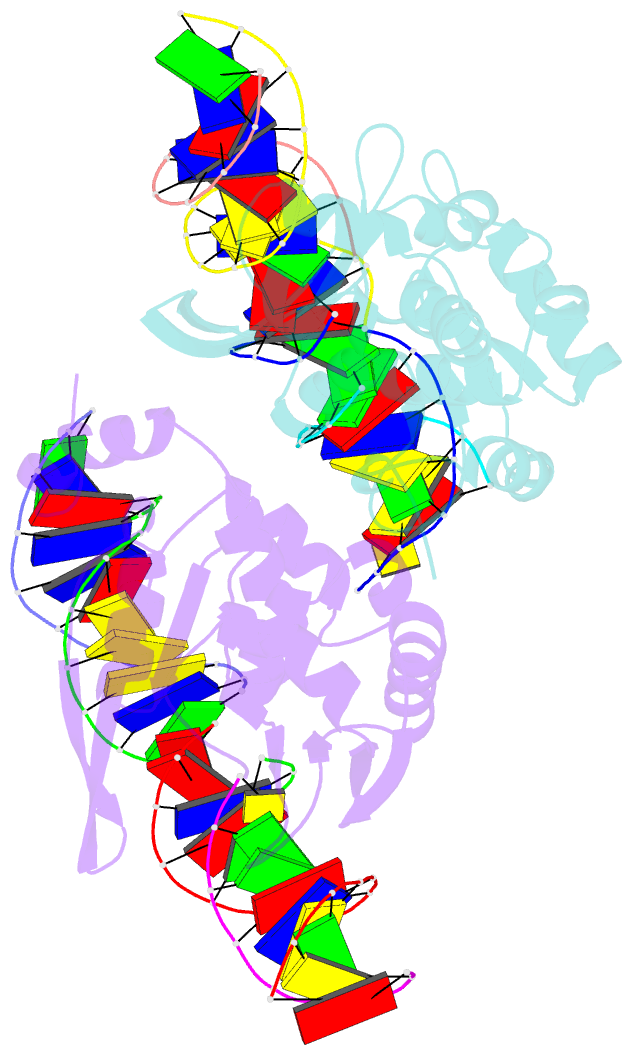
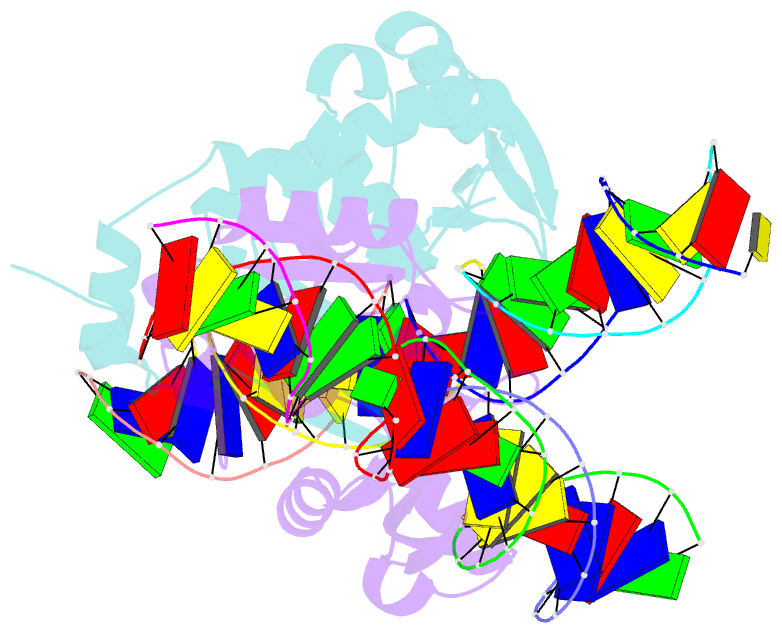
- The crystal structure of i-scei in complex with its
target DNA in the presence of mn
- Reference
-
Prieto J, Redondo P, Merino N, Villate M, Montoya G,
Blanco FJ, Molina R (2016): "Structure
of the I-Scei Nuclease Complexed with its DsDNA Target
and Three Catalytic Metal Ions." Acta
Crystallogr.,Sect.F, 72, 473. doi:
10.1107/S2053230X16007512.
- Abstract
- Homing endonucleases are highly specific DNA-cleaving
enzymes that recognize and cleave long stretches of DNA.
The engineering of these enzymes provides instruments for
genome modification in a wide range of fields, including
gene targeting. The homing endonuclease I-SceI from the
yeast Saccharomyces cerevisiae has been purified after
overexpression in Escherichia coli and its crystal
structure has been determined in complex with its target
DNA. In order to evaluate the number of ions that are
involved in the cleavage process, thus determining the
catalytic mechanism, crystallization experiments were
performed in the presence of Mn(2+), yielding crystals that
were suitable for X-ray diffraction analysis. The crystals
belonged to the orthorhombic space group P212121, with
unit-cell parameters a = 80.11, b = 80.57, c = 130.87 Å, α
= β = γ = 90°. The self-rotation function and the Matthews
coefficient suggested the presence of two protein-DNA
complexes in the asymmetric unit. The crystals diffracted
to a resolution limit of 2.9 Å using synchrotron radiation.
From the anomalous data, it was determined that three
cations are involved in catalysis and it was confirmed that
I-SceI follows a two-metal-ion DNA-strand cleavage
mechanism.