Summary information and primary citation
- PDB-id
-
4c8m;
DSSR-derived features in text and
JSON formats; DNAproDB
- Class
- transferase-DNA
- Method
- X-ray (1.568 Å)
- Summary
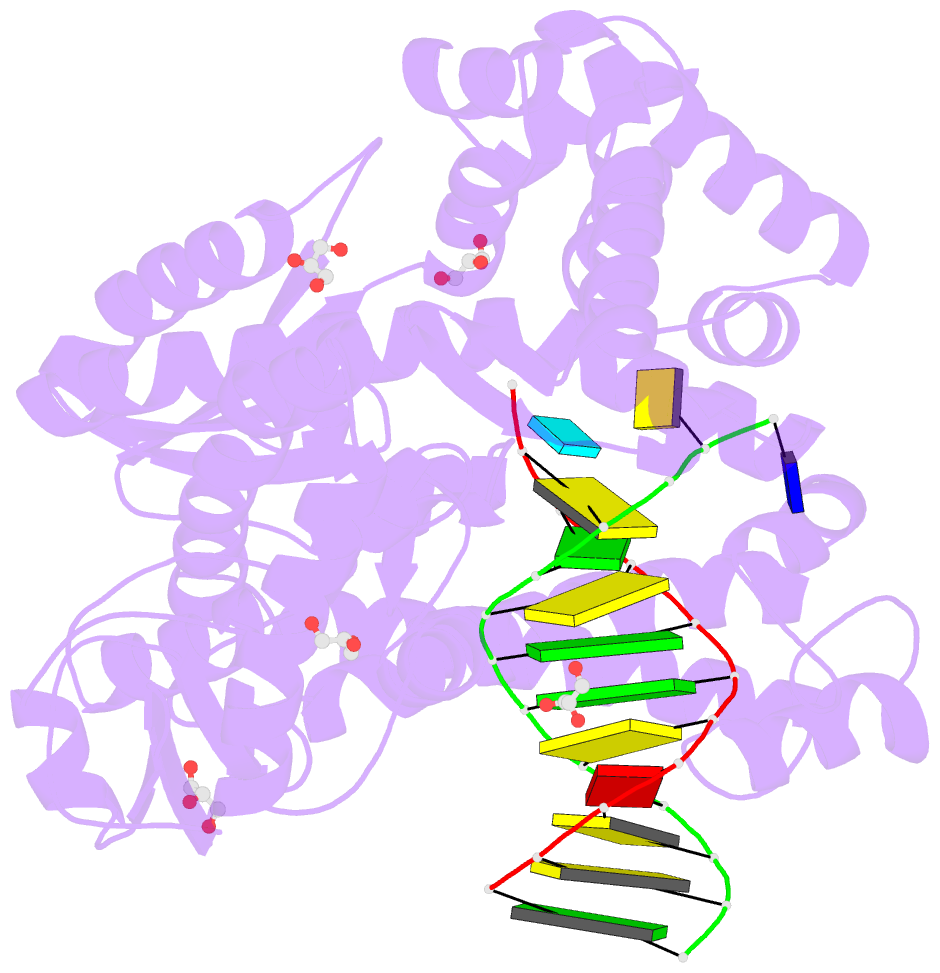
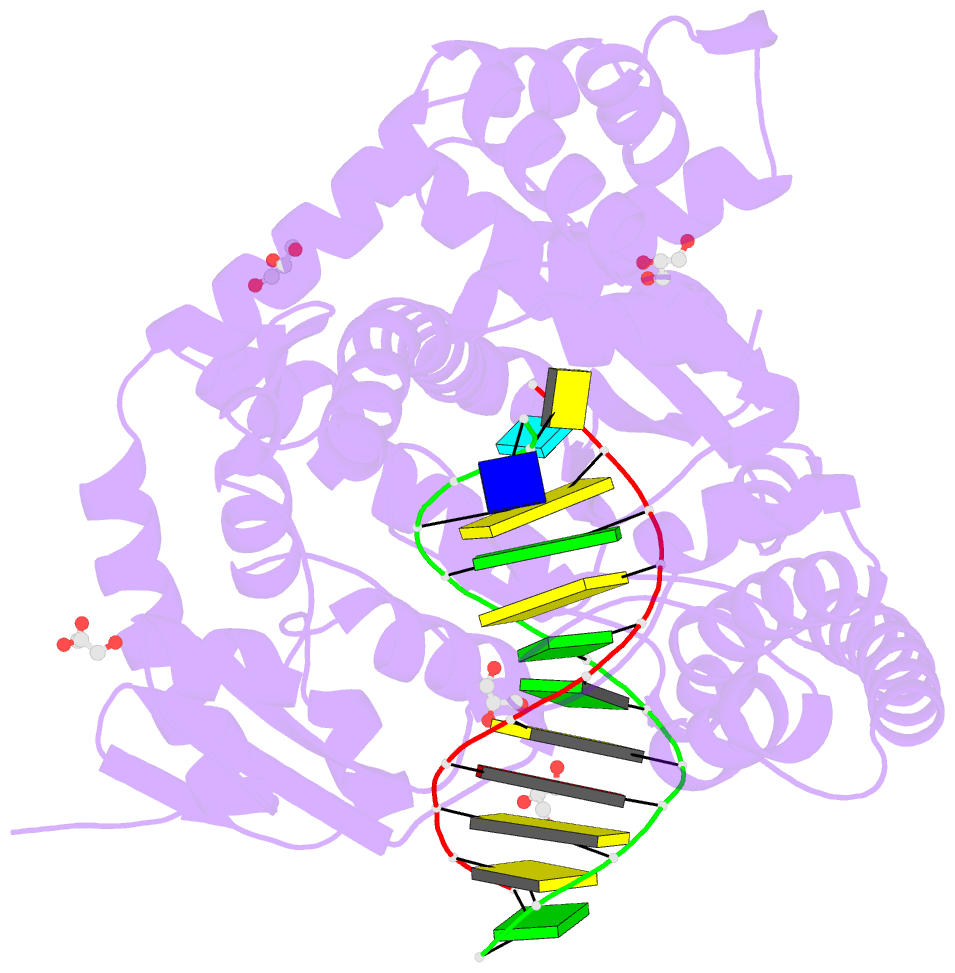
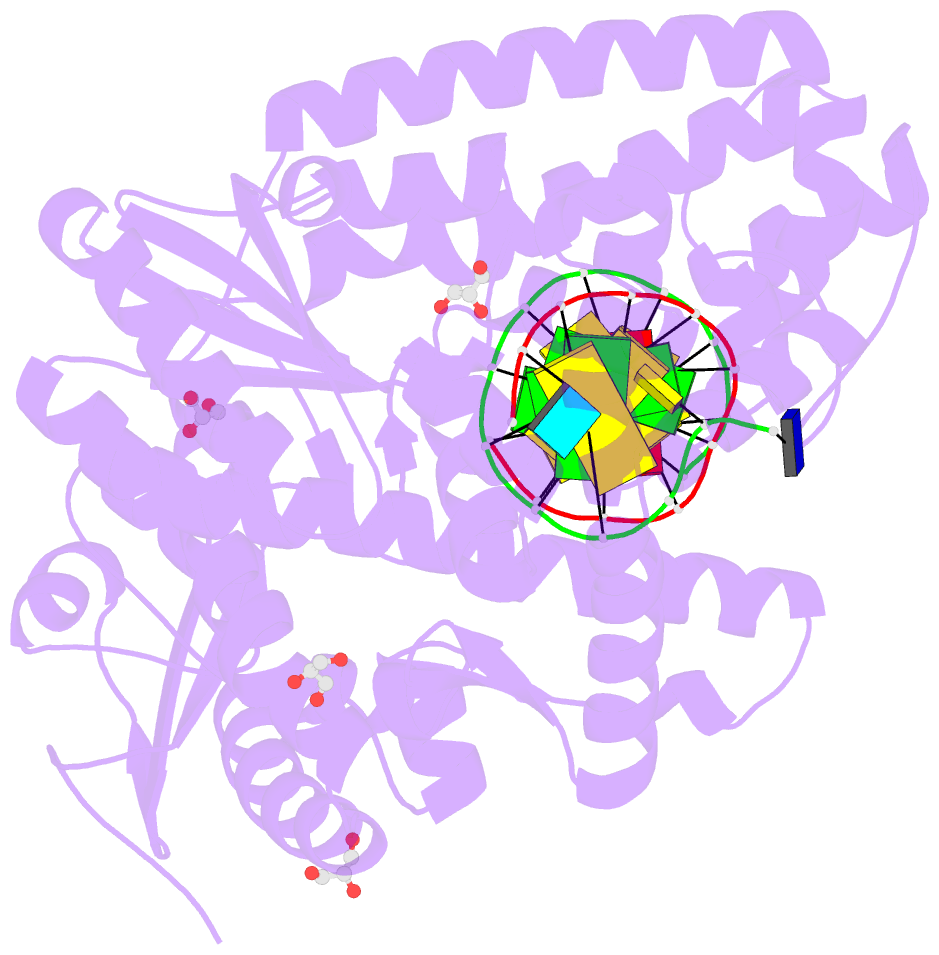
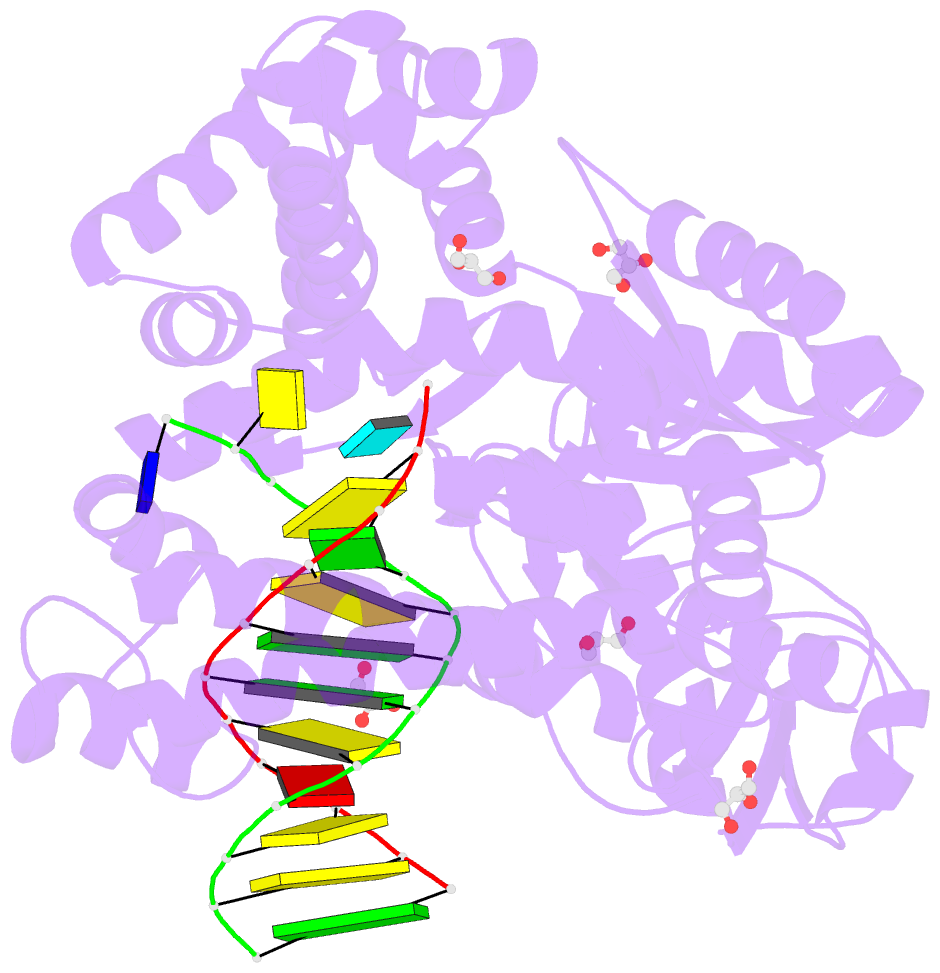
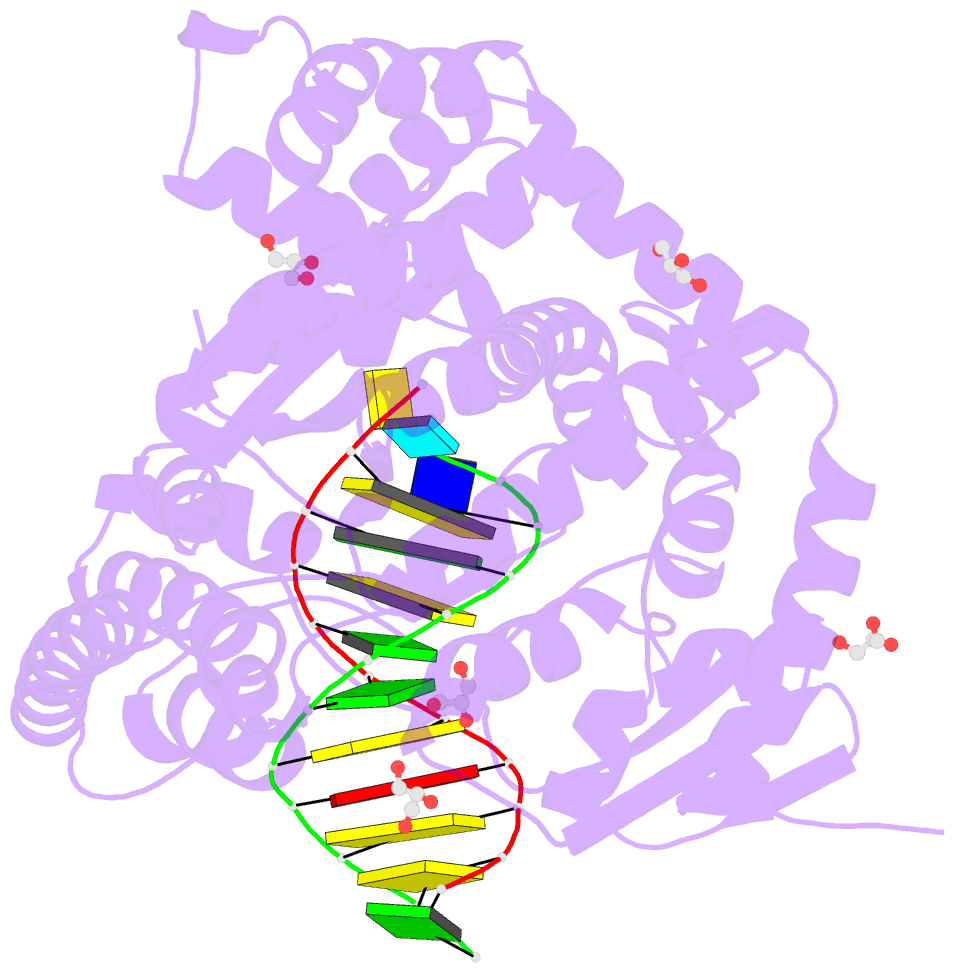
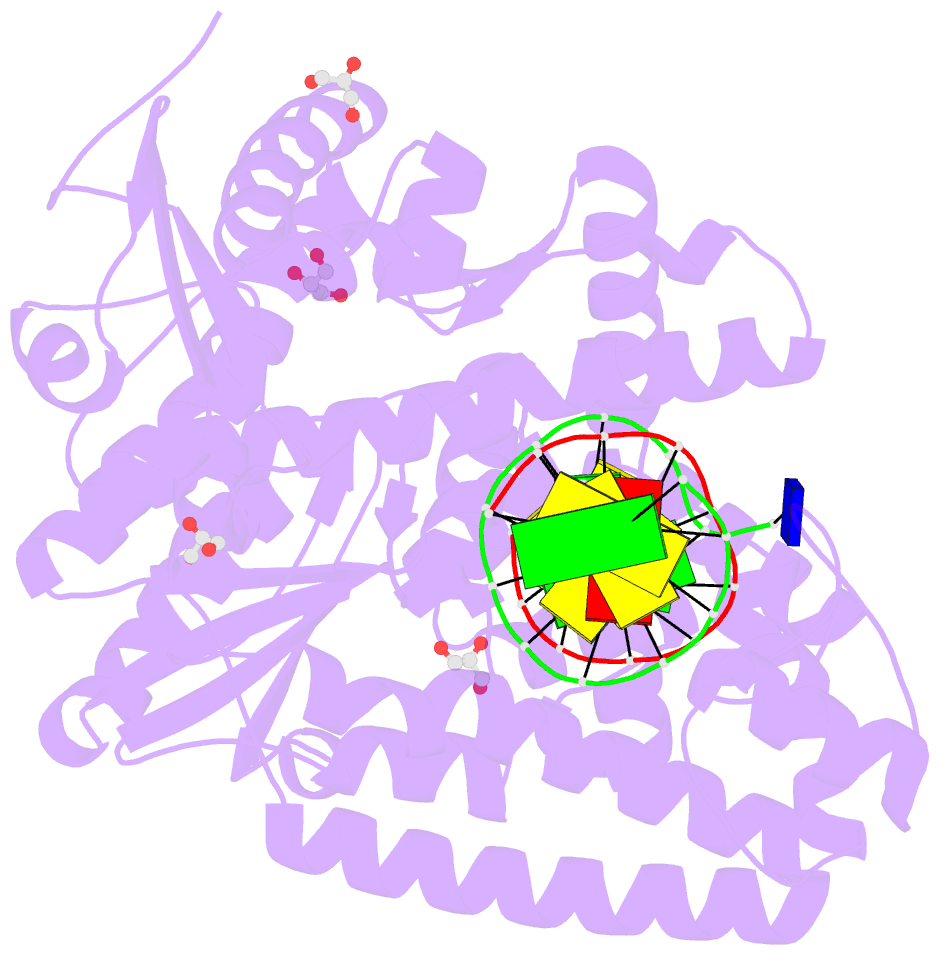
- Binary complex of the large fragment of DNA polymerase
i from thermus aquaticus with the aritificial base pair
d5sics-dnam at the postinsertion site (sequence context
2)
- Reference
-
Betz K, Malyshev DA, Lavergne T, Welte W, Diederichs K,
Romesberg FE, Marx A (2013): "Structural
Insights Into DNA Replication without Hydrogen
Bonds." J.Am.Chem.Soc.,
135, 18637. doi: 10.1021/JA409609J.
- Abstract
- The genetic alphabet is composed of two base pairs, and
the development of a third, unnatural base pair would
increase the genetic and chemical potential of DNA.
d5SICS-dNaM is one of the most efficiently replicated
unnatural base pairs identified to date, but its pairing is
mediated by only hydrophobic and packing forces, and in
free duplex DNA it forms a cross-strand intercalated
structure that makes its efficient replication difficult to
understand. Recent studies of the KlenTaq DNA polymerase
revealed that the insertion of d5SICSTP opposite dNaM
proceeds via a mutually induced-fit mechanism, where the
presence of the triphosphate induces the polymerase to form
the catalytically competent closed structure, which in turn
induces the pairing nucleotides of the developing unnatural
base pair to adopt a planar Watson-Crick-like structure. To
understand the remaining steps of replication, we now
report the characterization of the prechemistry complexes
corresponding to the insertion of dNaMTP opposite d5SICS,
as well as multiple postchemistry complexes in which the
already formed unnatural base pair is positioned at the
postinsertion site. Unlike with the insertion of d5SICSTP
opposite dNaM, addition of dNaMTP does not fully induce the
formation of the catalytically competent closed state. The
data also reveal that once synthesized and translocated to
the postinsertion position, the unnatural nucleobases again
intercalate. Two modes of intercalation are observed,
depending on the nature of the flanking nucleotides, and
are each stabilized by different interactions with the
polymerase, and each appear to reduce the affinity with
which the next correct triphosphate binds. Thus, continued
primer extension is limited by deintercalation and
rearrangements with the polymerase active site that are
required to populate the catalytically active, triphosphate
bound conformation.