Summary information and primary citation
- PDB-id
-
2ms0;
DSSR-derived features in text and
JSON formats; DNAproDB
- Class
- viral protein-RNA
- Method
- NMR
- Summary
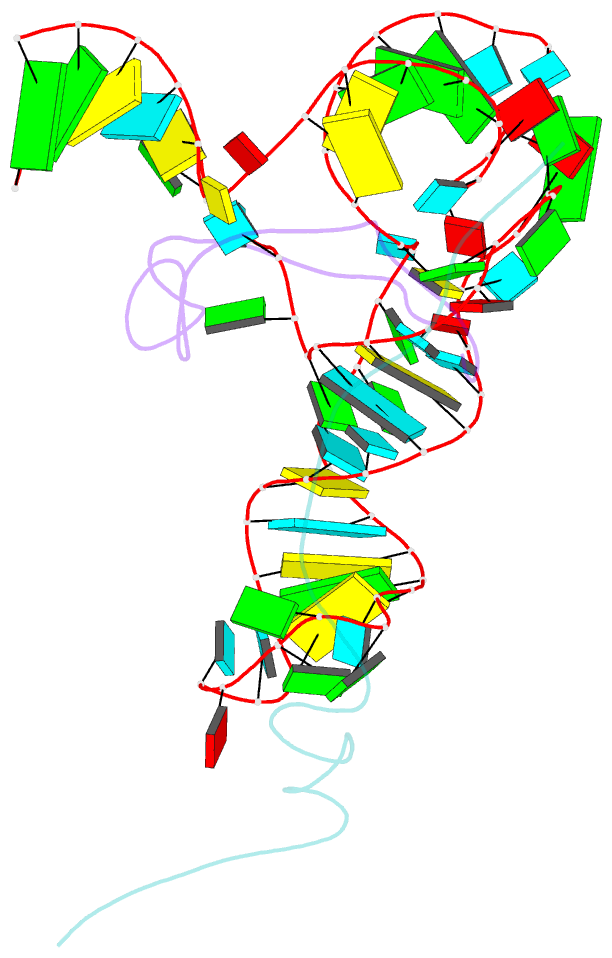
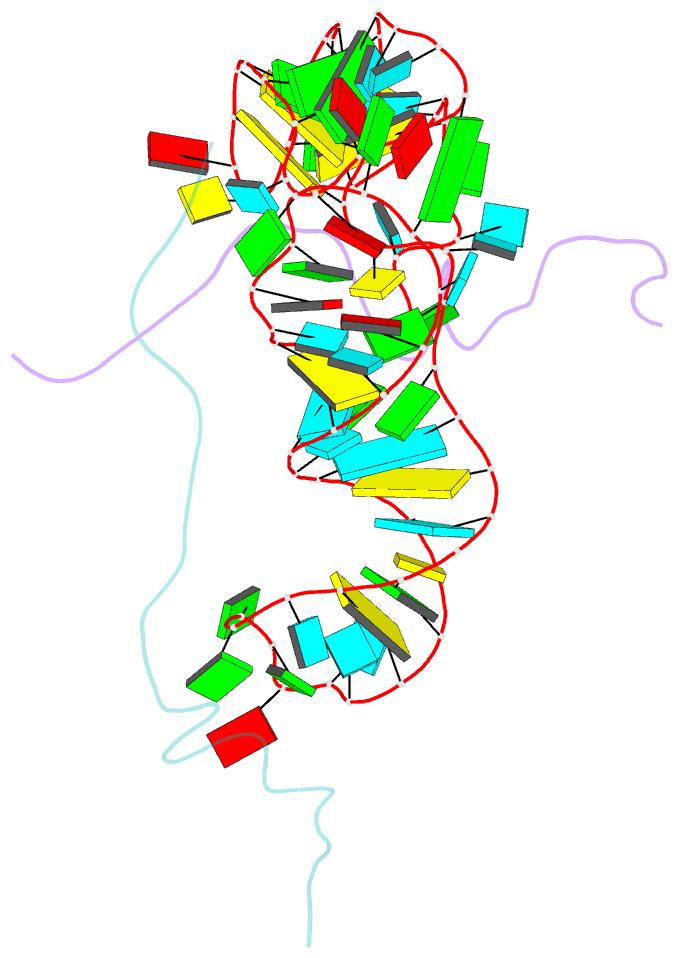
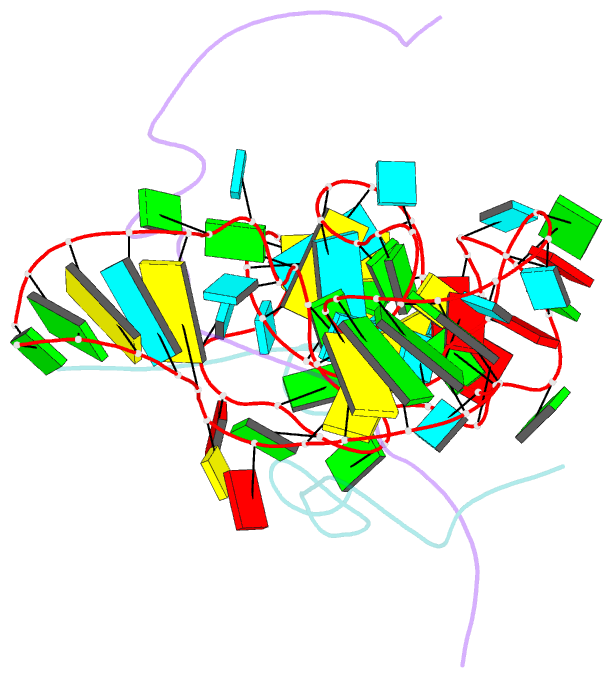
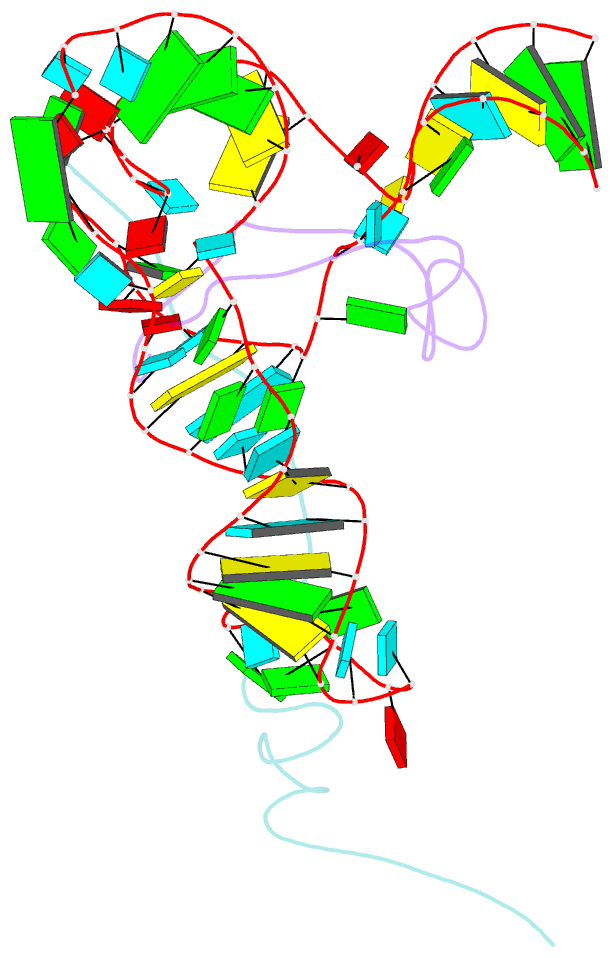
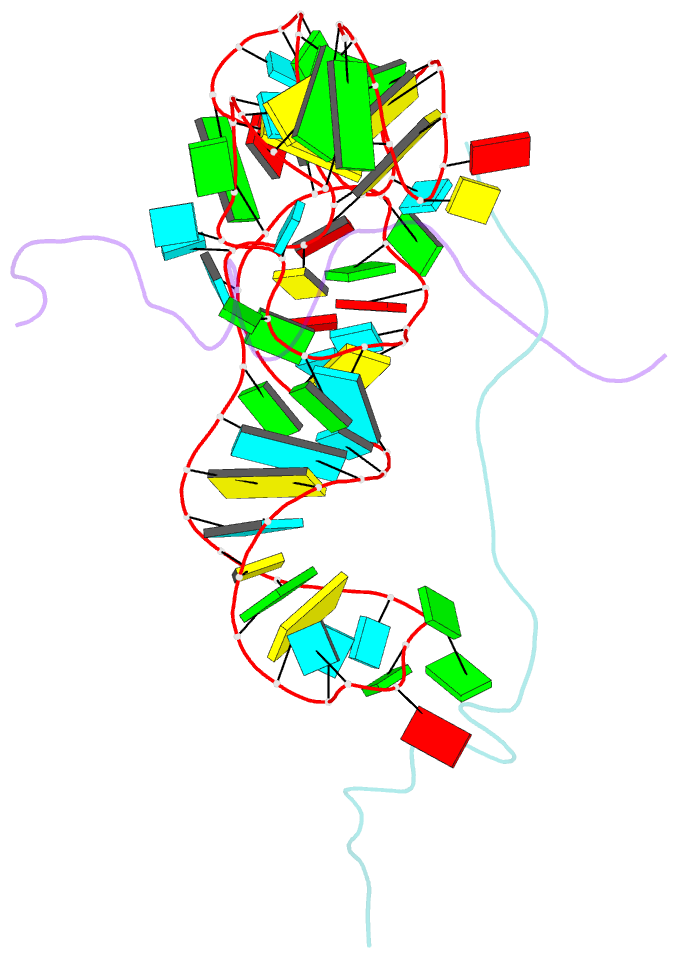
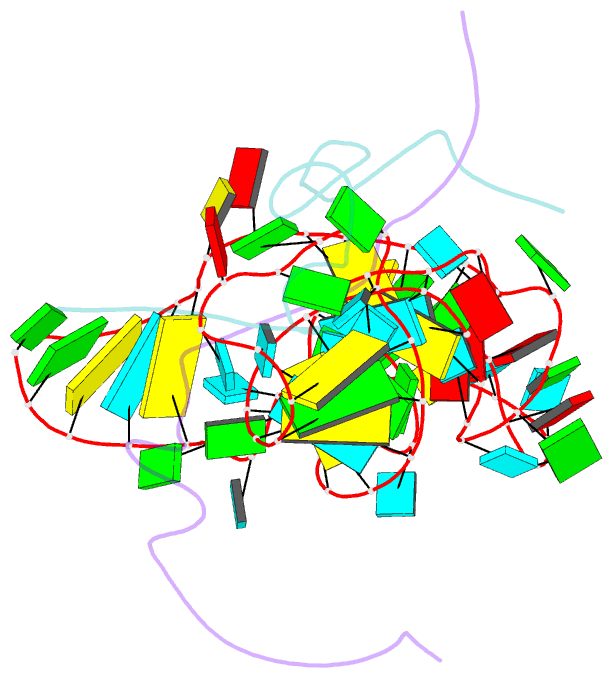
- Solution NMR structure pf trnapro:mlv-nucleocapsid
(1:2) complex
- Reference
-
Miller SB, Yildiz FZ, Lo JA, Wang B, D'Souza VM (2014):
"A
structure-based mechanism for tRNA and retroviral RNA
remodelling during primer annealing."
Nature, 515, 591-595. doi:
10.1038/nature13709.
- Abstract
- To prime reverse transcription, retroviruses require
annealing of a transfer RNA molecule to the U5 primer
binding site (U5-PBS) region of the viral genome. The
residues essential for primer annealing are initially
locked in intramolecular interactions; hence, annealing
requires the chaperone activity of the retroviral
nucleocapsid (NC) protein to facilitate structural
rearrangements. Here we show that, unlike classical
chaperones, the Moloney murine leukaemia virus NC uses a
unique mechanism for remodelling: it specifically targets
multiple structured regions in both the U5-PBS and
tRNA(Pro) primer that otherwise sequester residues
necessary for annealing. This high-specificity and
high-affinity binding by NC consequently liberates these
sequestered residues--which are exactly complementary--for
intermolecular interactions. Furthermore, NC utilizes a
step-wise, entropy-driven mechanism to trigger both
residue-specific destabilization and residue-specific
release. Our structures of NC bound to U5-PBS and tRNA(Pro)
reveal the structure-based mechanism for retroviral primer
annealing and provide insights as to how ATP-independent
chaperones can target specific RNAs amidst the cellular
milieu of non-target RNAs.