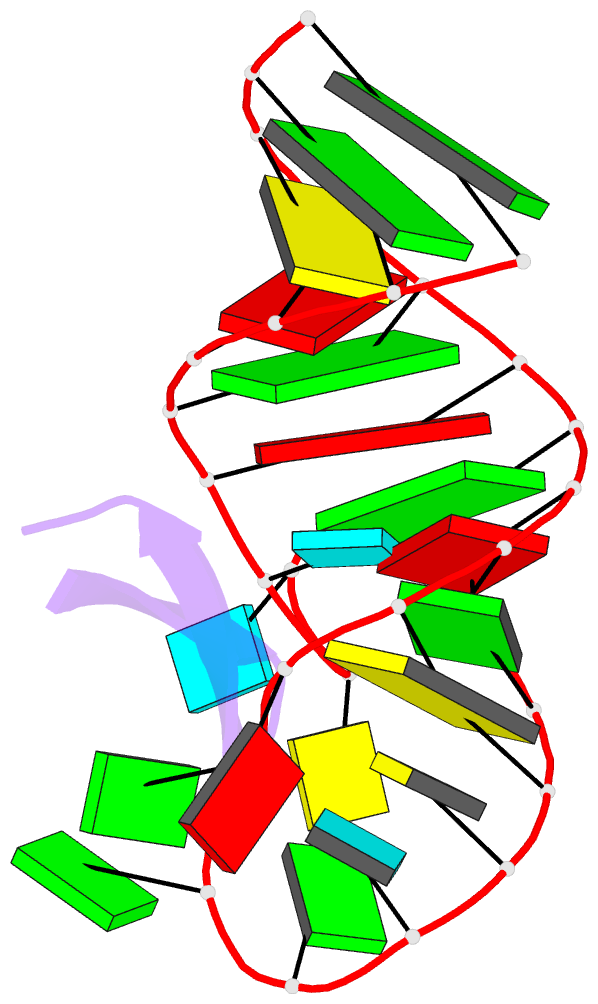
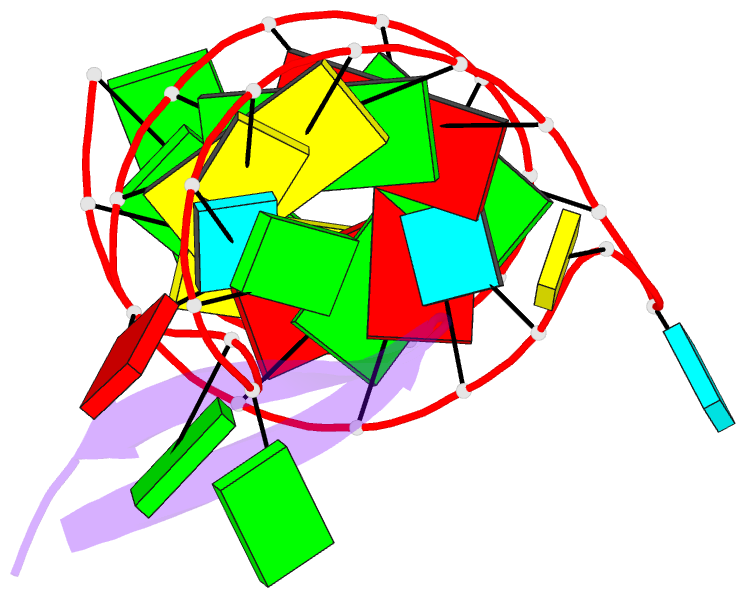
Summary information and primary citation
- PDB-id
-
2kx5;
DSSR-derived features in text and
JSON formats; DNAproDB
- Class
- RNA binding protein-RNA
- Method
- NMR
- Summary
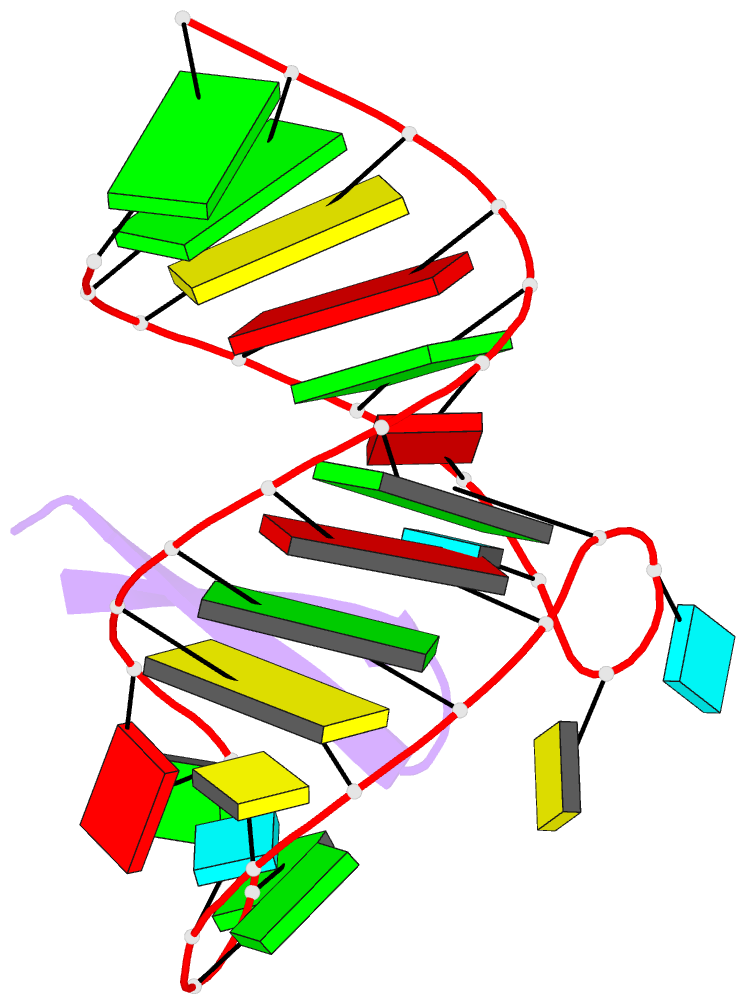
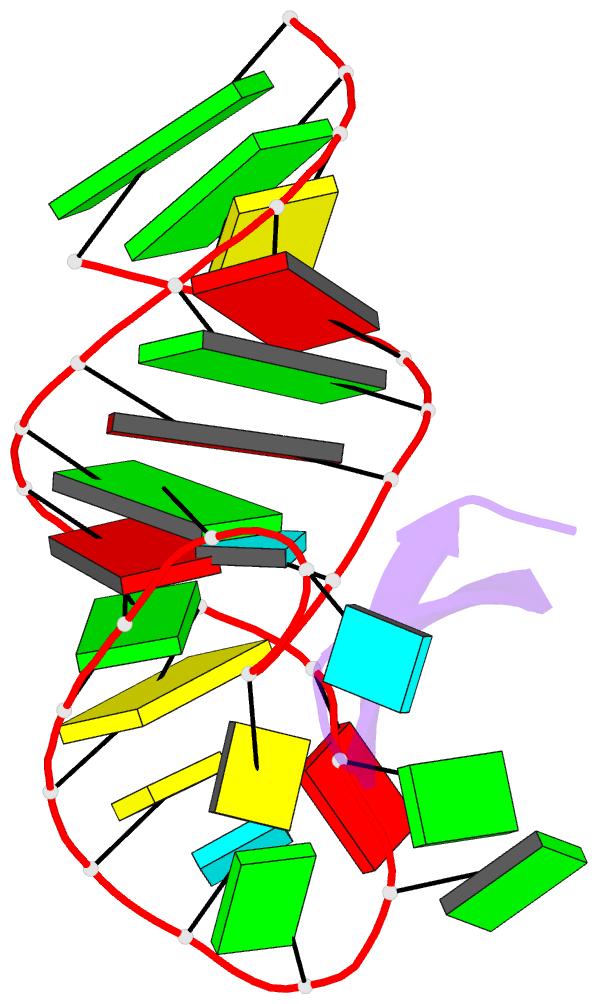
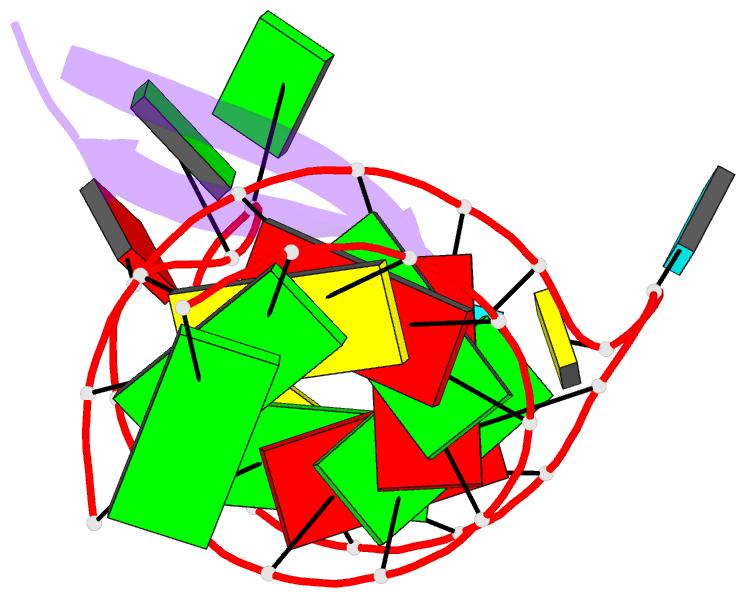
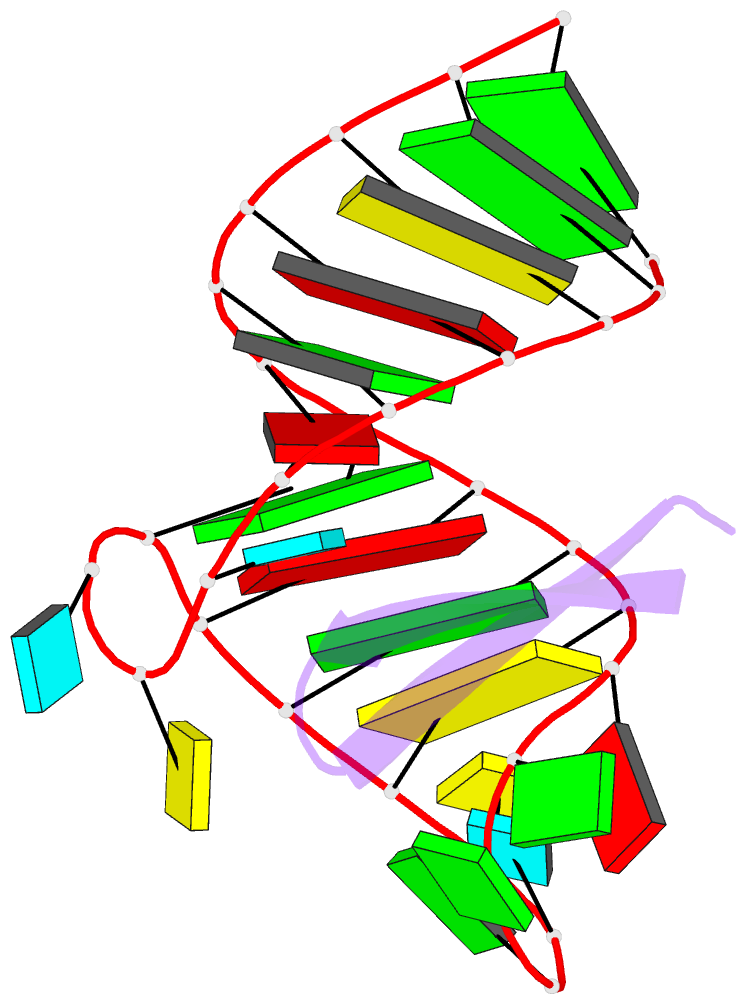
- Recognition of hiv tar RNA by peptide mimetic of tat
protein
- Reference
-
Davidson A, Patora-Komisarska K, Robinson JA, Varani G
(2011): "Essential
structural requirements for specific recognition of HIV
TAR RNA by peptide mimetics of Tat protein."
Nucleic Acids Res., 39,
248-256. doi: 10.1093/nar/gkq713.
- Abstract
- The pharmacological disruption of the interaction
between the HIV Tat protein and its cognate transactivation
response RNA (TAR) would generate novel anti-viral drugs
with a low susceptibility to drug resistance, but efforts
to discover ligands with sufficient potency to warrant
pharmaceutical development have been unsuccessful. We have
previously described a family of structurally constrained
β-hairpin peptides that potently inhibits viral growth in
HIV-infected cells. The nuclear magnetic resonance (NMR)
structure of an inhibitory complex revealed that the
peptide makes intimate contacts with the 3-nt bulge and the
upper helix of the RNA hairpin, but that a single residue
contacts the apical loop where recruitment of the essential
cellular co-factor cyclin T₁ occurs. Attempting to extend
the peptide to form more interactions with the RNA loop, we
examined a library of longer peptides and achieved >
6-fold improvement in affinity. The structure of TAR bound
to one of the extended peptides reveals that the peptide
slides down the major groove of the RNA, relative to our
design, in order to maintain critical interactions with
TAR. These conserved contacts involve three amino acid side
chains and identify critical interaction points required
for potent and specific binding to TAR RNA. They constitute
a template of essential interactions required for
inhibition of this RNA.