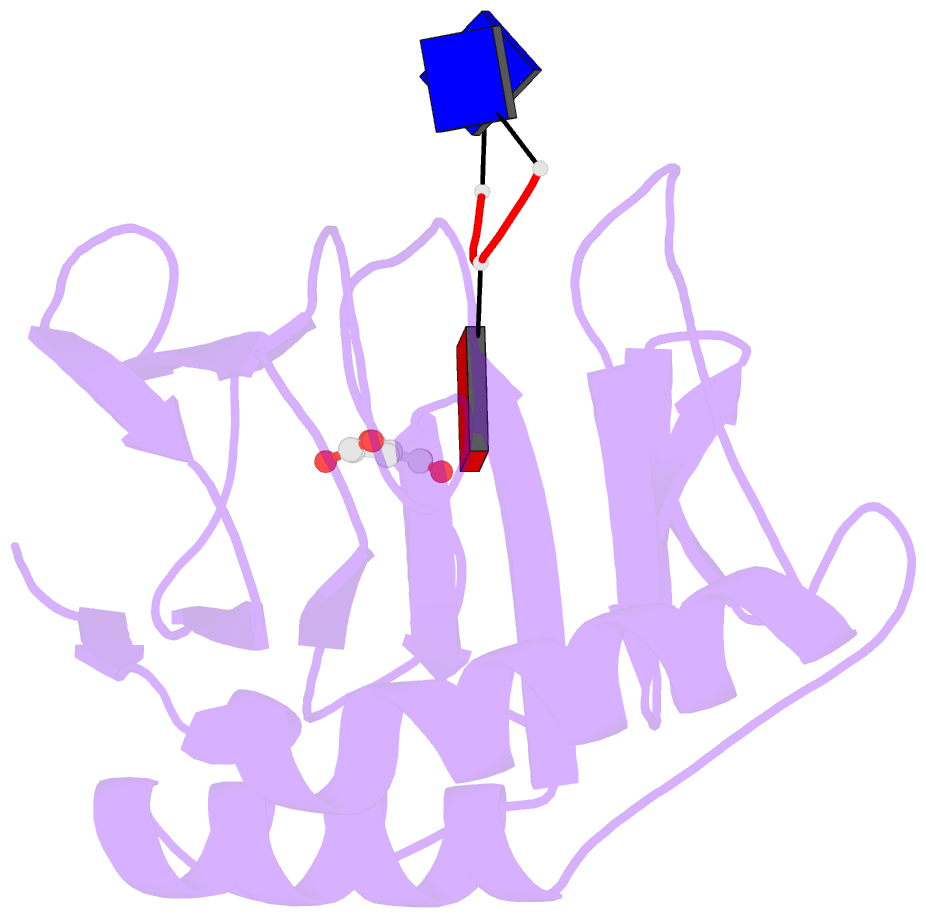
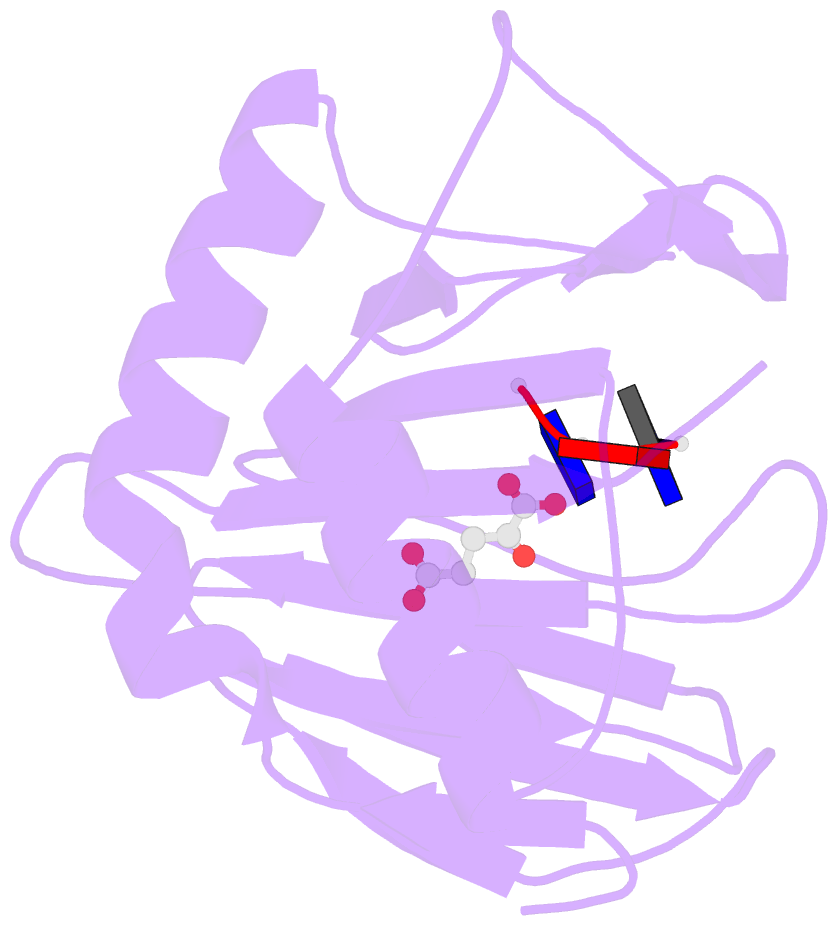
Summary information and primary citation
- PDB-id
-
2fdf;
DSSR-derived features in text and
JSON formats; DNAproDB
- Class
- oxidoreductase-DNA
- Method
- X-ray (2.1 Å)
- Summary
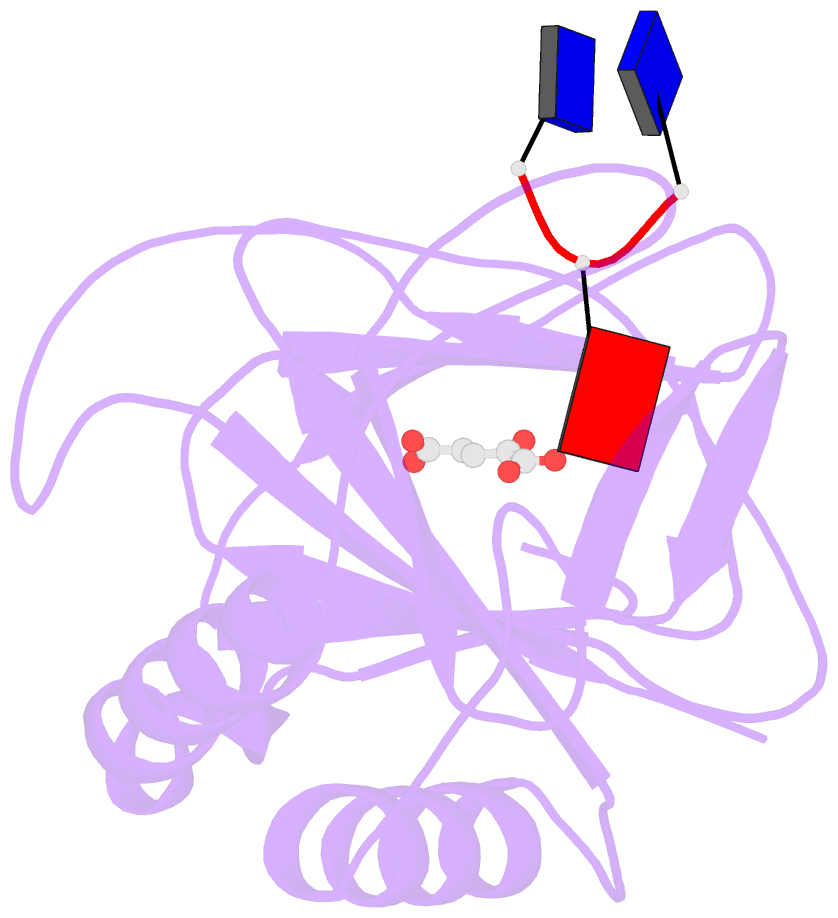
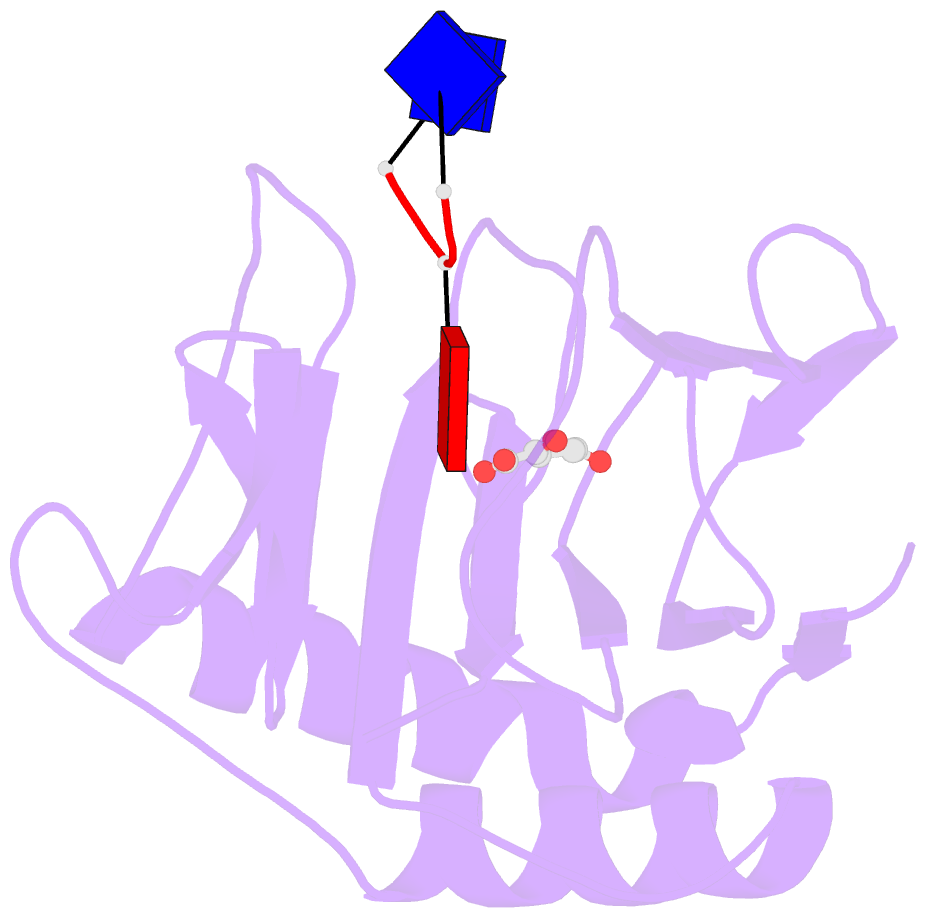
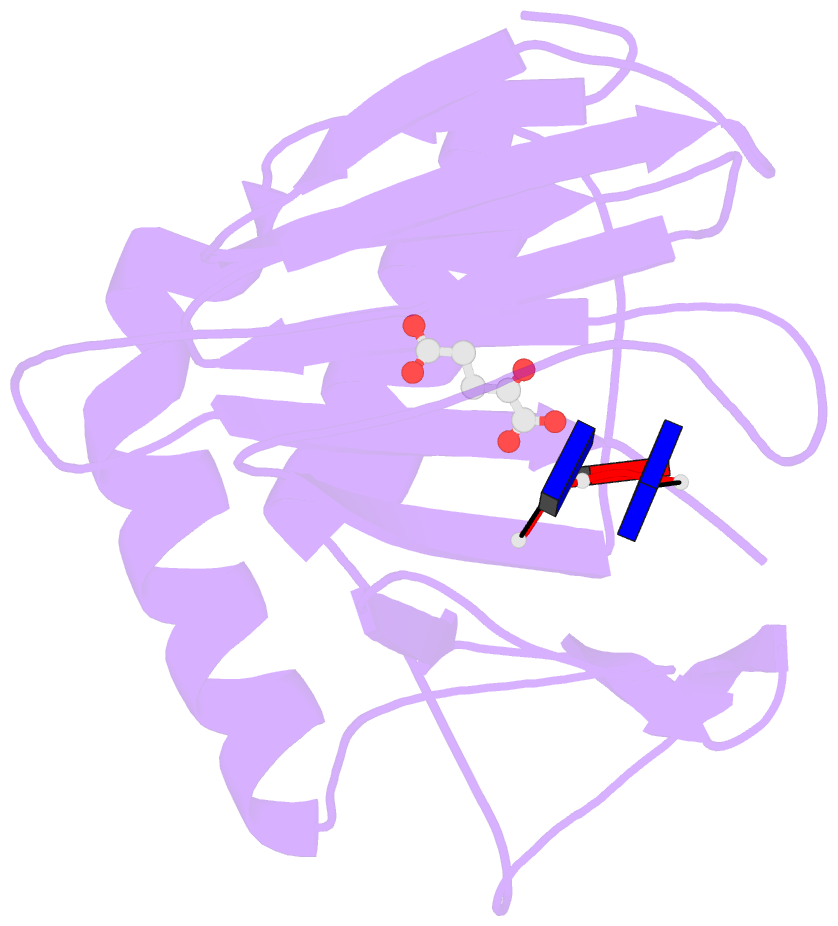
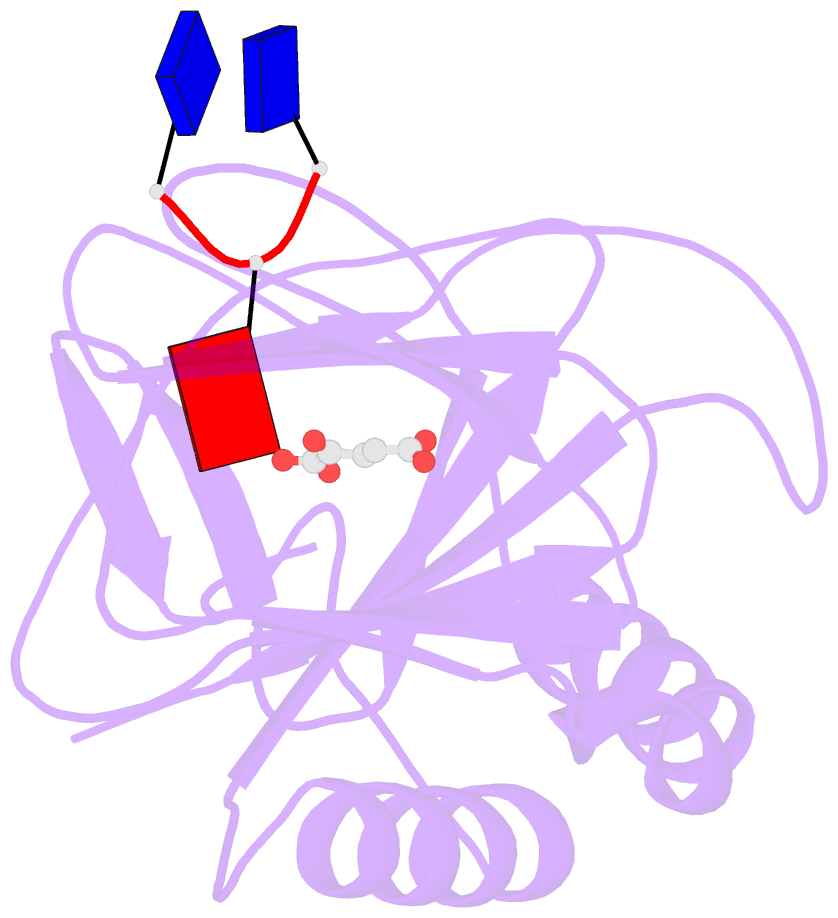
- Crystal structure of alkb in complex with co(ii),
2-oxoglutarate, and methylated trinucleotide t-mea-t
- Reference
-
Yu B, Edstrom WC, Benach J, Hamuro Y, Weber PC, Gibney
BR, Hunt JF (2006): "Crystal
structures of catalytic complexes of the oxidative
DNA/RNA repair enzyme AlkB." Nature,
439, 879-884. doi: 10.1038/nature04561.
- Abstract
- Nucleic acid damage by environmental and endogenous
alkylation reagents creates lesions that are both mutagenic
and cytotoxic, with the latter effect accounting for their
widespread use in clinical cancer chemotherapy. Escherichia
coli AlkB and the homologous human proteins ABH2 and ABH3
(refs 5, 7) promiscuously repair DNA and RNA bases damaged
by S(N)2 alkylation reagents, which attach hydrocarbons to
endocyclic ring nitrogen atoms (N1 of adenine and guanine
and N3 of thymine and cytosine). Although the role of AlkB
in DNA repair has long been established based on phenotypic
studies, its exact biochemical activity was only elucidated
recently after sequence profile analysis revealed it to be
a member of the Fe-oxoglutarate-dependent dioxygenase
superfamily. These enzymes use an Fe(II) cofactor and
2-oxoglutarate co-substrate to oxidize organic substrates.
AlkB hydroxylates an alkylated nucleotide base to produce
an unstable product that releases an aldehyde to regenerate
the unmodified base. Here we have determined crystal
structures of substrate and product complexes of E. coli
AlkB at resolutions from 1.8 to 2.3 A. Whereas the
Fe-2-oxoglutarate dioxygenase core matches that in other
superfamily members, a unique subdomain holds a methylated
trinucleotide substrate into the active site through
contacts to the polynucleotide backbone. Amide hydrogen
exchange studies and crystallographic analyses suggest that
this substrate-binding 'lid' is conformationally flexible,
which may enable docking of diverse alkylated nucleotide
substrates in optimal catalytic geometry. Different crystal
structures show open and closed states of a tunnel
putatively gating O2 diffusion into the active site.
Exposing crystals of the anaerobic Michaelis complex to air
yields slow but substantial oxidation of 2-oxoglutarate
that is inefficiently coupled to nucleotide oxidation.
These observations suggest that protein dynamics modulate
redox chemistry and that a hypothesized migration of the
reactive oxy-ferryl ligand on the catalytic Fe ion may be
impeded when the protein is constrained in the crystal
lattice.