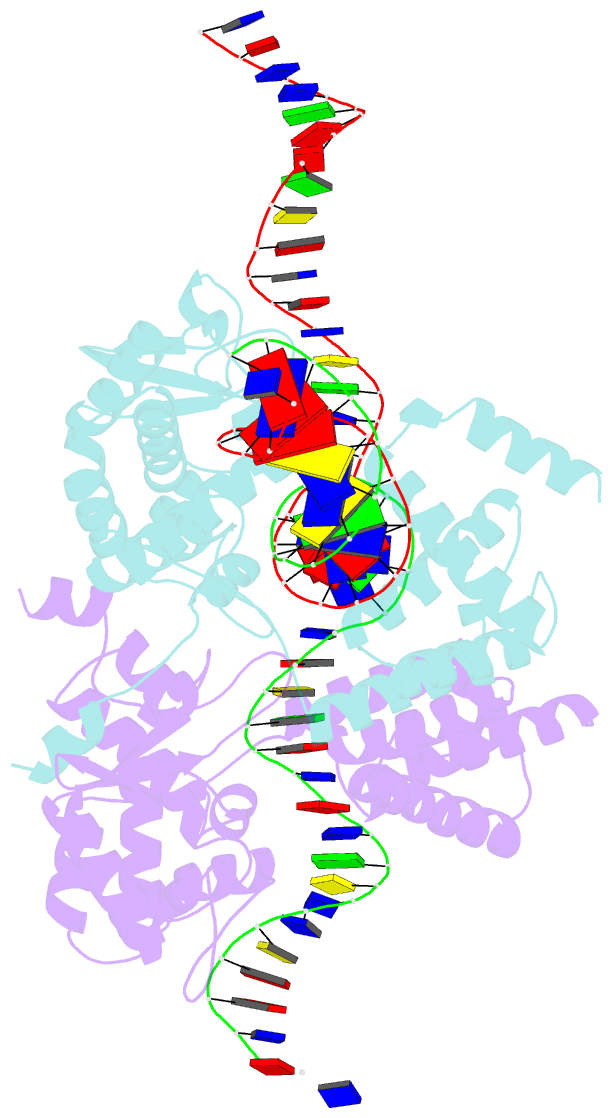
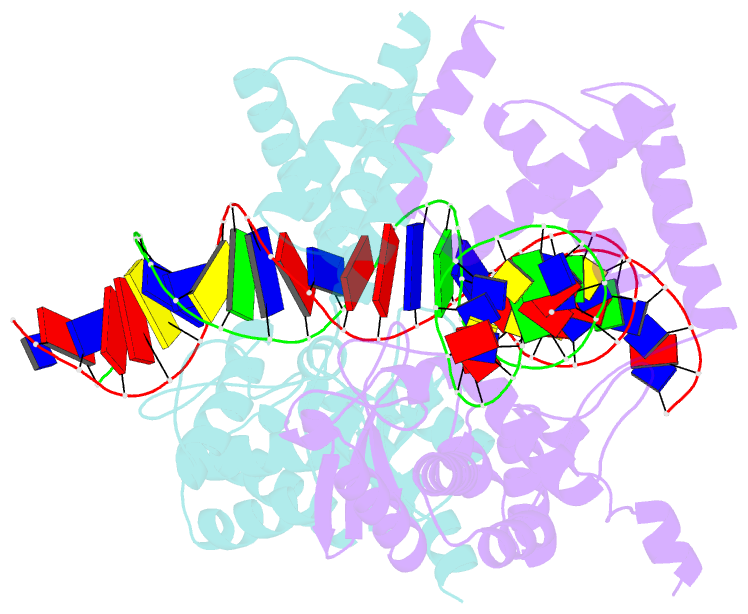
Summary information and primary citation
- PDB-id
-
1xo0;
DSSR-derived features in text and
JSON formats; DNAproDB
- Class
- hydrolase, ligase-DNA
- Method
- X-ray (2.0 Å)
- Summary
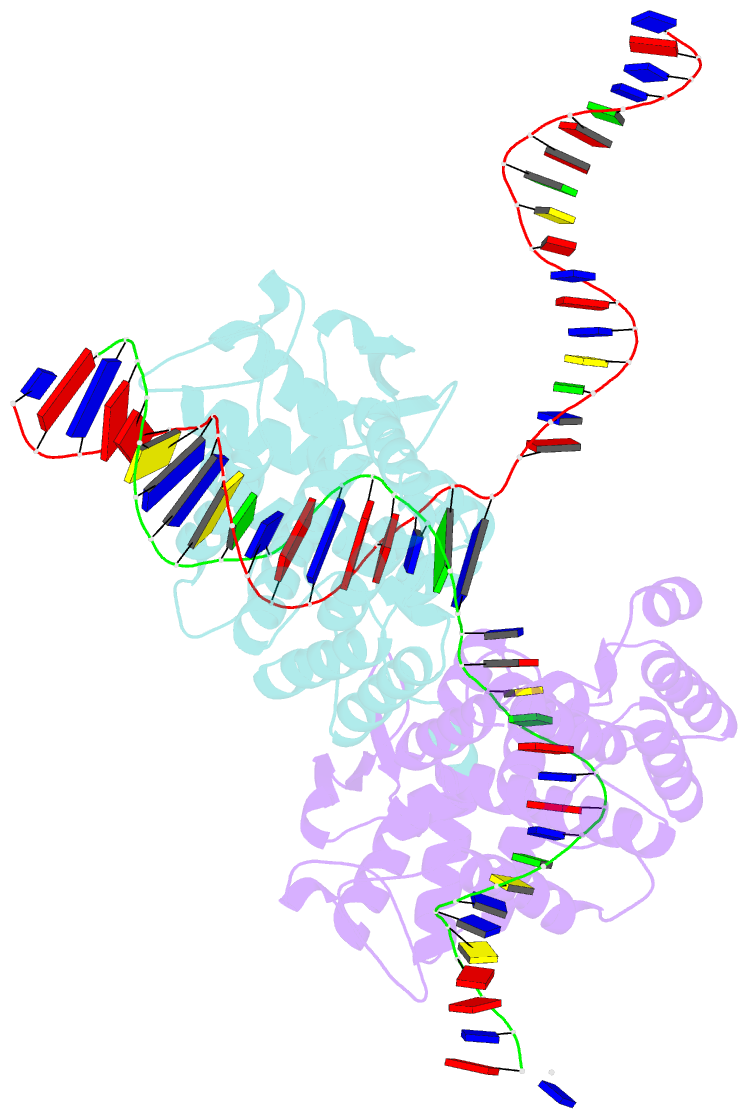
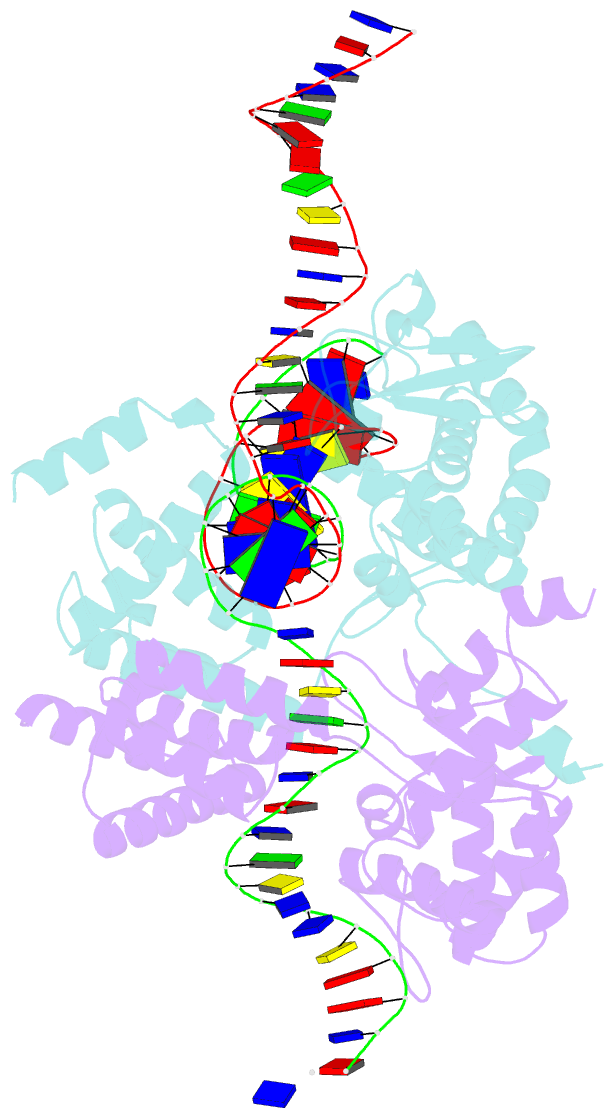
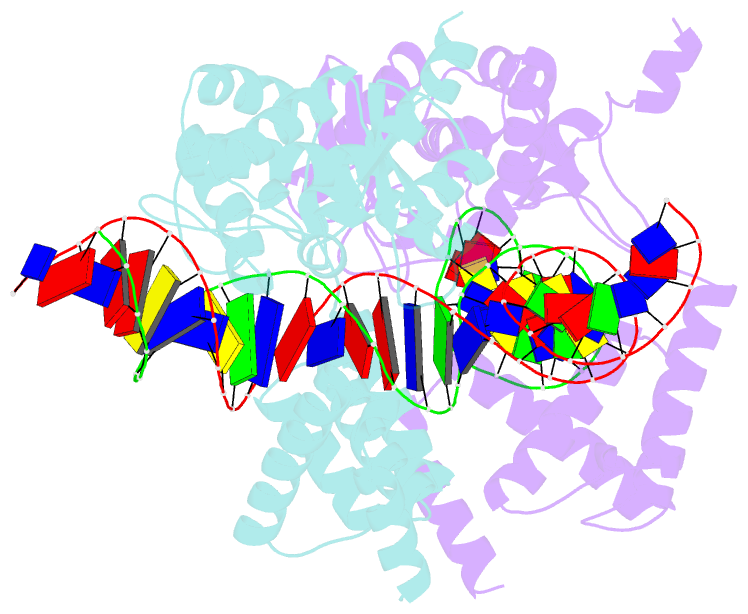
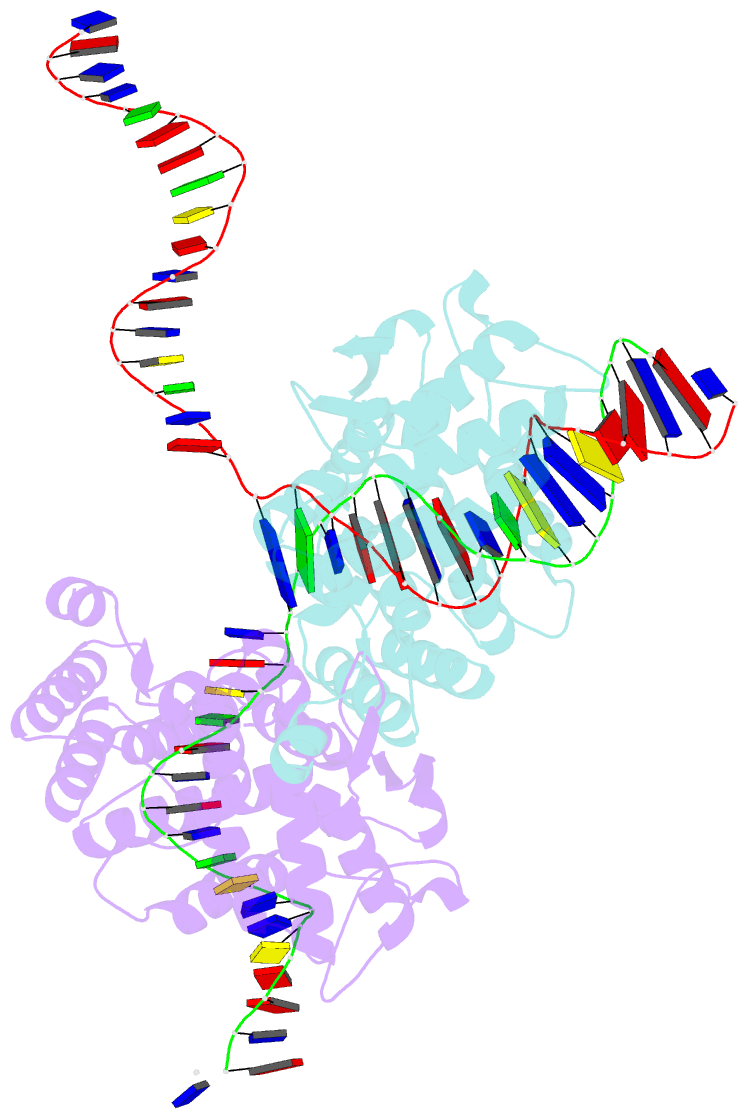
- High resolution structure of the holliday junction
intermediate in cre-loxp site-specific recombination
- Reference
-
Ghosh K, Lau CK, Guo F, Segall AM, Van Duyne GD (2005):
"Peptide
trapping of the Holliday junction intermediate in
Cre-loxP site-specific recombination."
J.Biol.Chem., 280, 8290-8299.
doi: 10.1074/jbc.M411668200.
- Abstract
- Cre recombinase is a prototypical member of the
tyrosine recombinase family of site-specific recombinases.
Members of this family of enzymes catalyze recombination
between specific DNA sequences by cleaving and exchanging
one pair of strands between the two substrate sites to form
a 4-way Holliday junction (HJ) intermediate and then
resolve the HJ intermediate to recombinant products by a
second round of strand exchanges. Recently, hexapeptide
inhibitors have been described that are capable of blocking
the second strand exchange step in the tyrosine recombinase
recombination pathway, leading to an accumulation of the HJ
intermediate. These peptides are active in the
lambda-integrase, Cre recombinase, and Flp recombinase
systems and are potentially important tools for both in
vitro mechanistic studies and as in vivo probes of cellular
function. Here we present biochemical and crystallographic
data that support a model where the peptide inhibitor binds
in the center of the recombinase-bound DNA junction and
interacts with solvent-exposed bases near the junction
branch point. Peptide binding induces large conformational
changes in the DNA strands of the HJ intermediate, which
affect the active site geometries in the recombinase
subunits.