Summary information and primary citation
- PDB-id
-
1t38;
DSSR-derived features in text and
JSON formats; DNAproDB
- Class
- transferase-DNA
- Method
- X-ray (3.2 Å)
- Summary
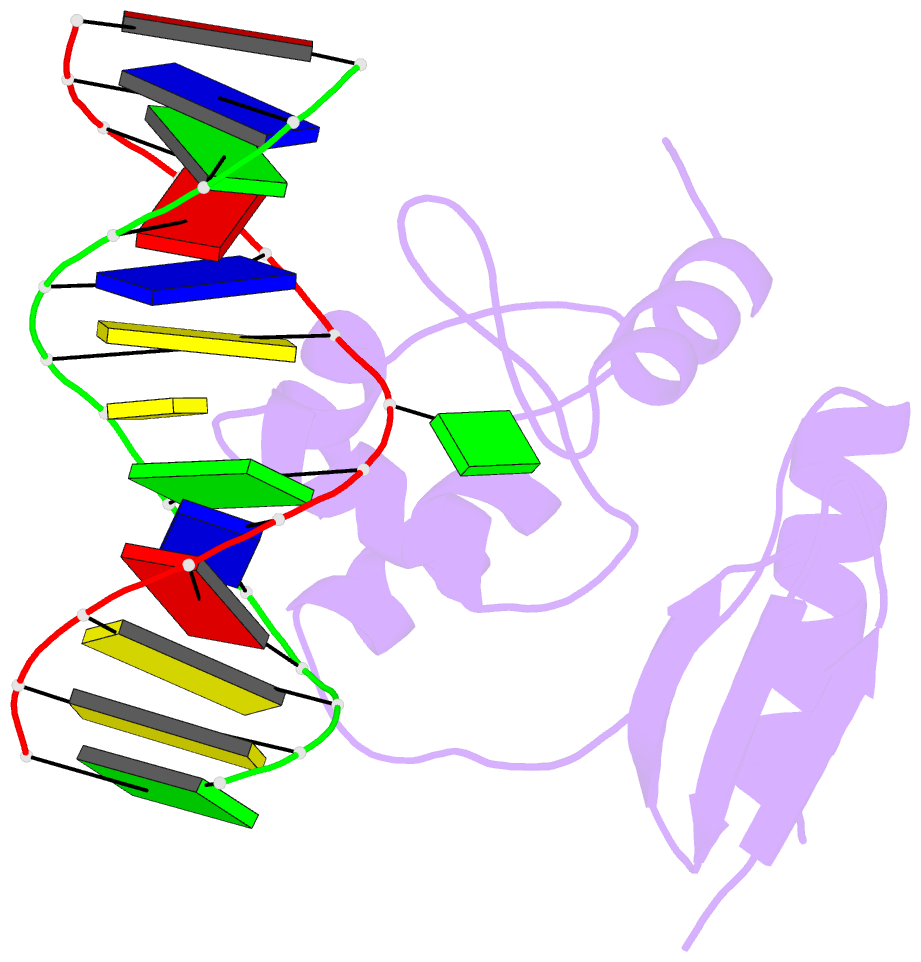
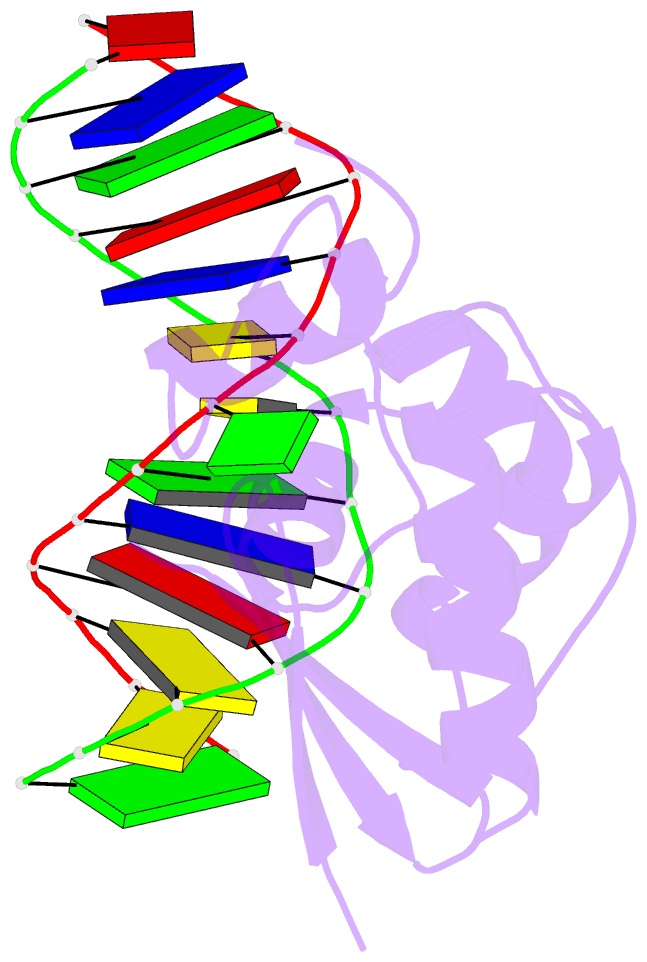
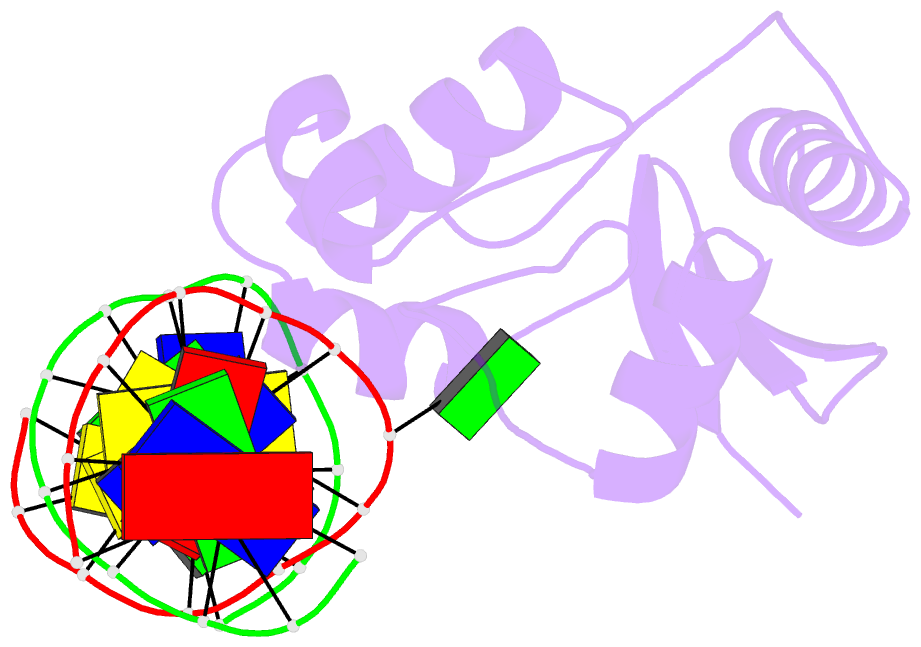
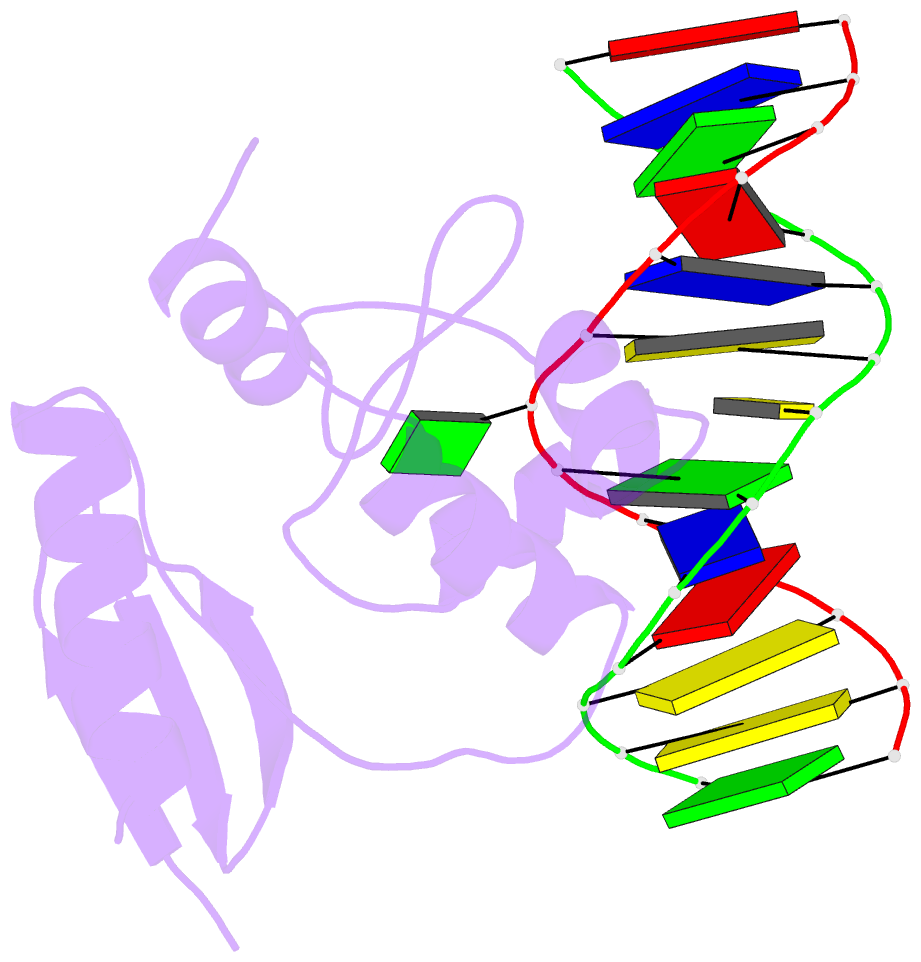
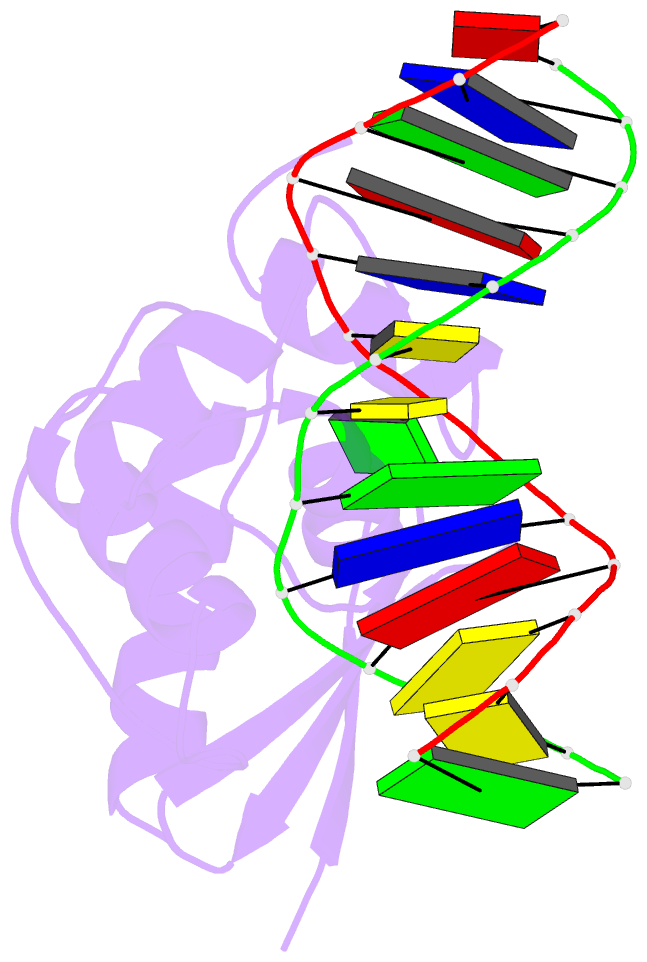
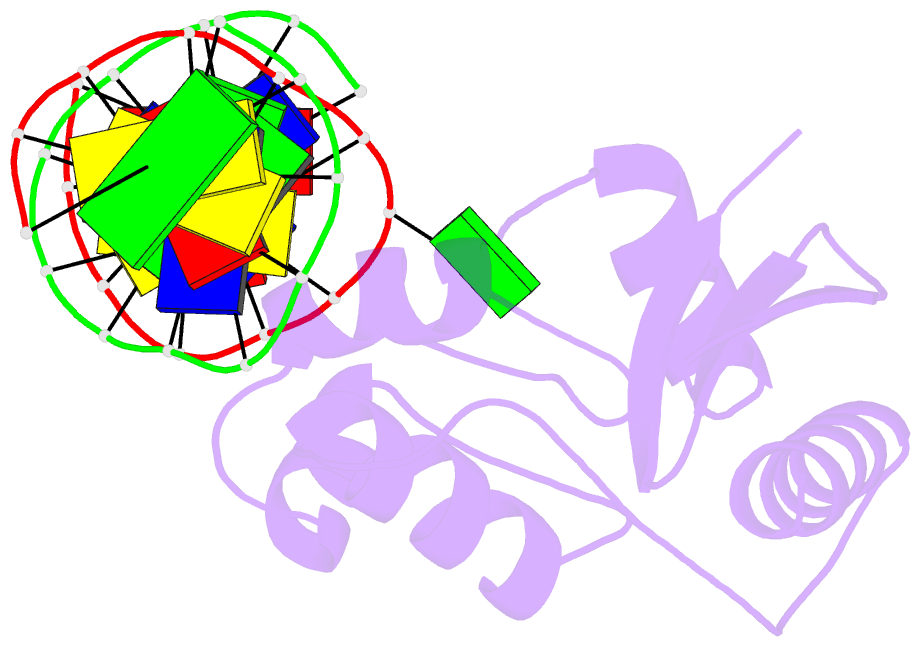
- Human o6-alkylguanine-DNA alkyltransferase bound to DNA
containing o6-methylguanine
- Reference
-
Daniels DS, Woo TT, Luu KX, Noll DM, Clarke ND, Pegg AE,
Tainer JA (2004): "DNA
binding and nucleotide flipping by the human DNA repair
protein AGT." Nat.Struct.Mol.Biol.,
11, 714-720. doi: 10.1038/nsmb791.
- Abstract
- O(6)-alkylguanine-DNA alkyltransferase (AGT), or
O(6)-methylguanine-DNA methyltransferase (MGMT), prevents
mutations and apoptosis resulting from alkylation damage to
guanines. AGT irreversibly transfers the alkyl lesion to an
active site cysteine in a stoichiometric, direct damage
reversal pathway. AGT expression therefore elicits tumor
resistance to alkylating chemotherapies, and AGT inhibitors
are in clinical trials. We report here structures of human
AGT in complex with double-stranded DNA containing the
biological substrate O(6)-methylguanine or crosslinked to
the mechanistic inhibitor N(1),O(6)-ethanoxanthosine. The
prototypical DNA major groove-binding helix-turn-helix
(HTH) motif mediates unprecedented minor groove DNA
binding. This binding architecture has advantages for DNA
repair and nucleotide flipping, and provides a paradigm for
HTH interactions in sequence-independent DNA-binding
proteins like RecQ and BRCA2. Structural and biochemical
results further support an unpredicted role for Tyr114 in
nucleotide flipping through phosphate rotation and an
efficient kinetic mechanism for locating alkylated
bases.